
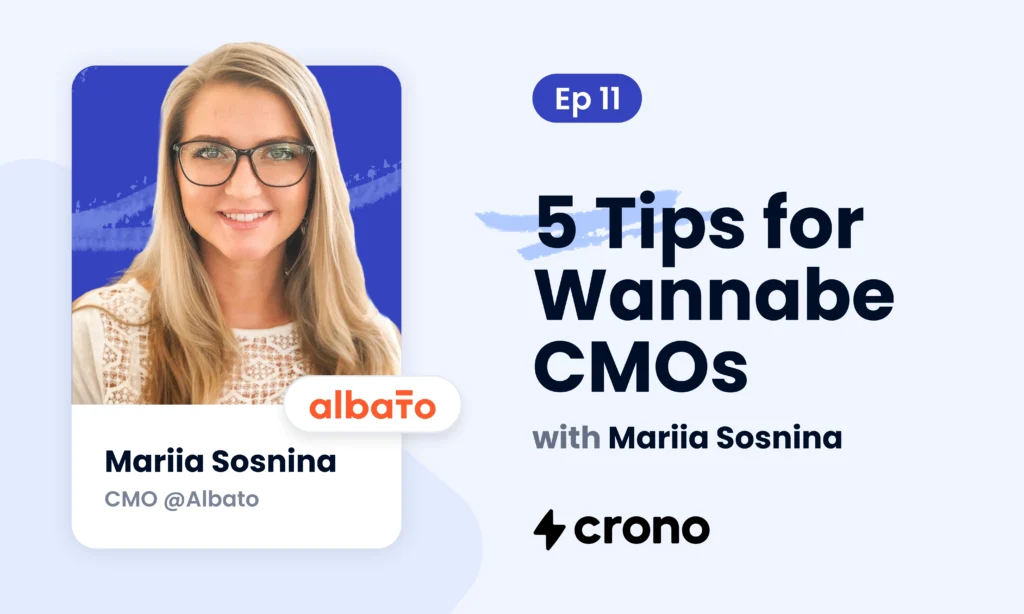
Welcome back to 5 Tips for Wannabe CMOs, our marketing column where we get to know great marketers, their stories and some inspiring tips for the next generation of CMOs.
Being a CMO isn’t about a single title. It’s about growth, curiosity and constantly solving problems.
In this episode, we featured Mariia Sosnina, CMO at Albato, who shared her journey in marketing, sharing insights on audience-first strategies, cross-functional collaboration, and how to avoid the common pitfalls that can slow down your rise to the top.
Whether you’re just starting out in marketing or aiming for the C-suite, Mariia’s story is packed with lessons you can apply today to level up your career.
1. Let’s start with your story.
Mariia, tell us a bit about your journey. How did you end up becoming CMO at Albato, and what have been the key milestones along your career path?
Honestly, it wasn’t some grand plan. I didn’t wake up one day and say “I’m going to be a CMO.” It was more like a series of problems I kept saying yes to.
I started as a PPC and account manager at a web dev agency, then went freelance for a while juggling multiple projects. Eventually got a full-time offer at an analytics platform, and my scope just kept growing. Websites, SEO, paid channels, all traffic. At some point the volume got too big for one person, so they let me hire help. That’s how I accidentally became a manager. We grew to six people running all lead gen and analytics for marketing.
But then I hit a ceiling. I was good at performance, but there was this whole world of marketing I didn’t understand. So I joined a startup where I had to do everything by hand. Content, email, even product tweaks. My brain was on fire, but it was exactly the push I needed.
When I joined Albato, I came in as CMO from day one. It’s a B2B SaaS integration platform, and my first priority was building a team. Because one person can’t be excellent at performance and content and community all at once.
The real milestone wasn’t the title though. It was realizing that things I thought were obvious, like positioning frameworks or ICP thinking, weren’t obvious at all. Not even to smart, experienced people. That changed how I approach everything.
2. Your 5 tips for wannabe CMOs: where should someone start if they dream of reaching your level?
This sounds painfully basic. I know. But most people skip it or do it superficially, and then wonder why their campaigns aren’t working.
You can’t build effective marketing if you’re targeting “SaaS companies” or “B2B clients” as some abstract category. Companies don’t see your ads. People do. And the CTO, the founder, and the growth lead all have completely different problems even though they work at the same company.
A CTO cares about security and whether your code is stable.
A founder cares about speed and cost.
A growth lead wants to know if you’ll scale with them.
If you’re running the same message for all of them, you’re basically talking to no one.
We made this exact mistake. We were writing content for “SaaS” as a whole instead of thinking about the specific person inside that SaaS company who would actually make the buying decision. The creatives looked great, the messaging felt clear, but nothing resonated. And it took us a while to understand why.
Before you build a strategy, before you pick channels, before you write a single piece of copy, figure out exactly who you’re talking to. Not the company type. Not the industry. The actual person sitting on the other side of the screen, with their specific frustrations and priorities.
Get this wrong, and honestly nothing else you do will matter much.
It’s easy to stay in your lane.
You’re in marketing, so you focus on campaigns, content, leads. And when those leads don’t convert… well, that’s sales’ problem, right?
That mindset will keep you stuck for years.
I was there. I’d look at my numbers, feel good about the leads we generated, and move on. But at some point I started sitting in on sales calls.
And that changed everything.
I heard the objections our messaging never addressed. I saw where deals were dying, and it had nothing to do with lead volume. It had to do with the kind of people we were attracting and what we were promising them before they even talked to sales.
Once you start looking at what happens after marketing hands off a lead, your whole strategy shifts.
You stop optimizing for “leads generated” and start thinking about what actually moves the business forward. It’s a completely different lens, and honestly, it’s uncomfortable at first because you realize some of the work you were proud of wasn’t really helping.
Read support tickets. Understand the product deeply. Look at what sales is dealing with every day.
The wider your view, the better your strategy.
It’s that simple, and that hard.
A CMO who only talks to their marketing team is basically a head of content with a fancier title.
And I mean that. Because if sales doesn’t trust your leads, they won’t follow up properly.
If product doesn’t involve you early enough, you’ll end up positioning features you don’t fully understand.
And if your CEO doesn’t see how marketing connects to revenue, your budget is always going to be the first thing that gets cut.
These aren’t hypothetical scenarios, this is just what happens when marketing operates in isolation.
The best campaigns I’ve ever built came from conversations with our product team, not from marketing brainstorms.
And the worst misses happened when marketing and sales were running in parallel without actually talking to each other. We were doing our thing, they were doing theirs, and nobody noticed we were solving different problems until it was too late.
So if you’re early in your career and want to eventually lead marketing, start going to meetings that aren’t yours. Ask questions outside your area. Build that cross-functional muscle now, because that’s genuinely what separates a CMO from a senior marketer.
Marketers love to launch things. New campaigns, new channels, new strategies. Launching feels productive, it’s exciting, everyone’s on board.
But nobody really teaches you the other part. When to stop.
I’ve held onto strategies way longer than I should have. You invest time, money, your team’s energy… and it’s clearly not working, but you keep thinking “maybe it just needs more time.” Or “we’ve already put so much into this, we can’t just drop it now.”
That’s the sunk cost trap, and in marketing it’s one of the most expensive mistakes you can make. Not because of the money you already spent, but because of the money you keep spending while you’re hesitating.
The real skill is knowing when to cut.
Killing the campaign that looked perfect on paper but isn’t converting. Dropping the channel that eats budget every month but doesn’t deliver anything qualified. And then being honest with your team and your leadership about why you’re doing it.
That takes more courage than any launch, honestly. But every resource you free up from something that’s not working is a resource you can put into something that actually might.
This is hard to admit, especially early in your career when you feel like you should know it all.
But the truth is, one person can’t be great at performance and content and community and design all at the same time. You’ll burn out trying, and everything will end up mediocre. I know because I’ve been there.
When I became CMO, my first priority wasn’t launching campaigns. It was hiring. I knew where my strengths were, things like performance, analytics, strategy. And I also knew what I wasn’t good at. So instead of pretending I could cover everything, I focused on finding people who were genuinely strong in the areas where I wasn’t.
And honestly, that’s probably the hardest shift for someone growing into a leadership role. You go from being valued for what you can do yourself to being valued for what your team can do together. It feels weird at first, almost like cheating. But it’s not. It’s the job.
The best CMOs I’ve seen aren’t the ones who do everything themselves. They’re the ones who know what they don’t know, and who build teams that make them better than they could ever be alone.
So if you’re still trying to be a one-person marketing department, the real question is… who do you need beside you?
3. Let’s talk about data: how do you define success in B2B SaaS marketing today, beyond vanity metrics?
For me it all comes down to qualified leads. Not just leads. Qualified ones.
We use AI to do the first layer of qualification, filtering out the noise before it even reaches sales. But the real validation happens when the sales team actually talks to the person and figures out if they’re a fit for our product or not. That feedback loop is critical because it directly impacts whether we close deals or just keep ourselves busy.
If I’m sending sales a hundred leads and only five of them are actually qualified, I’m not doing my job. I’m wasting their time and mine.
Beyond that, I do look at the full funnel. Traffic, engagement with content, social interactions. But only in the context of how they connect to qualified leads. A spike in website traffic means nothing if those visitors never convert into people sales actually wants to talk to. It’s a nice number on a dashboard, and that’s about it.
So success for me isn’t about how many people we reached or how much engagement we got. It’s about how many real, qualified opportunities we actually created for the business.
4. Looking back, what’s a professional mistake or challenge that taught you the most?
Positioning ourselves as “the cheaper alternative.”
It seemed smart at the time. There are bigger players in our space, and we were basically saying “hey, we do the same thing but it costs less.” And it worked, short-term. People came. But here’s what nobody warned me about… the internet remembers everything.
When you position yourself as the cheaper version of someone else, that comparison sticks. People stop saying “oh, that’s a great integration platform.” Instead they say “that’s like [bigger player], but cheaper.” And that label just lives there. In reviews, in comparison articles, in how people describe you to their colleagues.
The tricky part is when your product evolves and you actually want to be known for your own strengths. Flexibility, support quality, security. All real things. But that old “budget alternative” label follows you everywhere, and it’s incredibly hard to shake off. You’re essentially fighting your own past messaging.
I think the biggest lesson from that is: don’t borrow someone else’s brand to build yours. Even if it gets you quick wins. Even if it feels like a shortcut that makes total sense right now. Build your own identity from day one, because rebranding yourself later is so much harder than just getting it right from the start.
5. Let’s be honest, marketing and sales don’t always play on the same team (even if they should).
From your experience, what’s the best way to make sure feedback, insights, and goals actually flow between the two, instead of getting lost in the usual chaos?
I’ll be honest, this is a pain point for me right now too. We’re in a situation where marketing brings in leads, but sales aren’t closing. And it’s frustrating because you start pointing fingers. “The leads aren’t qualified enough.” “The follow-up isn’t fast enough.” The classic blame game that every B2B company knows.
What I’ve learned is that it starts with shared definitions. What does “qualified lead” actually mean? Because marketing and sales often have completely different answers to that question, and if you don’t align on it, you’re basically playing different games on the same field.
For us, what helps is that I have a really good relationship with our head of sales. We talk regularly, and we run weekly syncs between marketing and sales where we go through what’s working, what’s not, what feedback sales is hearing from leads. It sounds simple, but just having that rhythm of conversation makes a huge difference.
A lot of companies don’t even have that. Marketing and sales sit in separate rooms with separate dashboards and separate goals, and then everyone’s surprised when insights get lost between the two.
The other thing is honest ownership. I don’t think there’s a magic tool that fixes alignment. It’s about creating a culture where both teams feel responsible for the same number, which is revenue. Not just leads on marketing’s side, not just closed deals on sales’ side. When marketing genuinely cares about revenue and sales genuinely cares about lead quality, the conversations change completely. They become productive instead of defensive.
But if I’m being really honest… we’re still figuring this out too. Anyone who says they’ve fully solved the marketing-sales alignment problem is probably selling you a cours
Not sure where to start?
Let's talk.
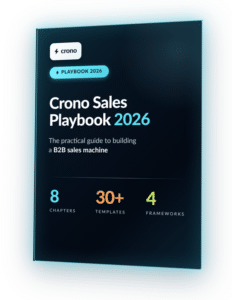
Schedule a session with one of our specialists and get our exclusive Sales Playbook 2026 for free.
 BANT, SPICED & MEDDPICC frameworks
30+ ready-to-use sales templates
2026 outbound & pipeline benchmarks
Don’t sell the product. Sell the change the product makes possible.
This playbook is step one.
