
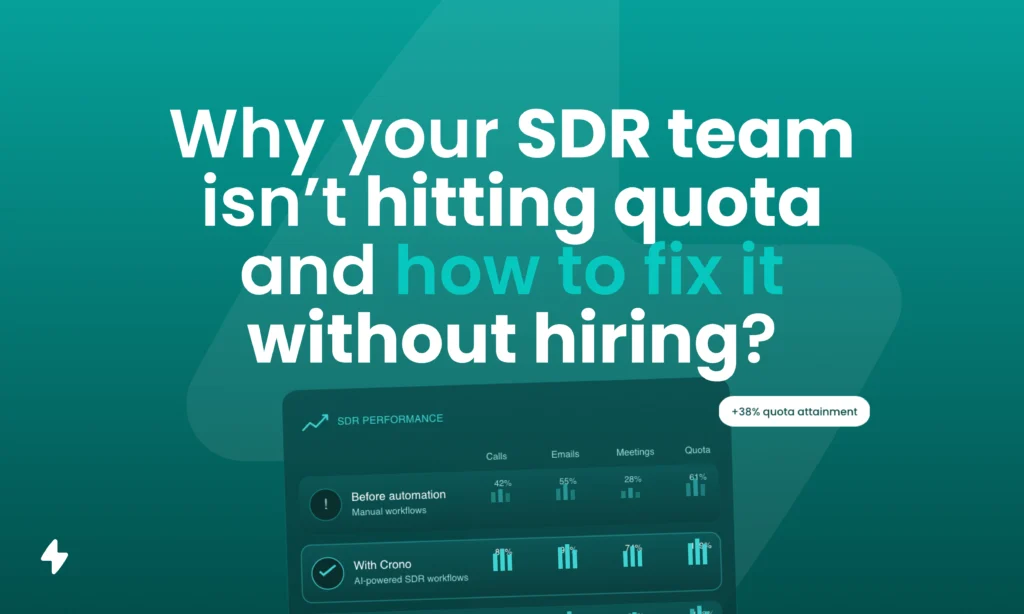
Your SDR team is active. They’re sending emails, logging calls, building sequences. And yet the pipeline number at the end of the month is disappointing. The problem almost certainly isn’t effort, it’s infrastructure.
This guide is for Sales Managers and VPs at companies between 50 and 1,000 employees who already have a B2B sales development representative function but aren’t getting the results they need from it.
average annual SDR turnover. You're replacing 1 in 3 reps every year.
median SDR tenure. Productivity plateau hits at 15 months.
of companies increased SDR headcount in 2025. The lowest figure on record.
of mid-market teams now run AI SDR tools in production. Up from 6% a year ago.
It's not a people problem. It's a systems problem.
When pipeline is low, the reflex is to look at individual reps, their call volume, email quality, follow-up cadence. But for companies between 50 and 1,000 employees, the SDR underperformance pattern is almost always structural. The reps are working hard. The system they’re working in is broken. The system they’re working in is broken and that system is what determines outbound sales productivity, not individual effort.
The fully loaded cost of a single SDR, salary, benefits, tools, management overhead, and ramp time, runs between $98,000 and $173,000 per year. With median tenure at 1.9 years and a productivity plateau hitting at 15 months, you’re paying peak cost right when the rep is about to leave. Adding more people to a broken system just multiplies the problem.
The uncomfortable math
Replacing a single SDR costs an estimated $100,000+ when you factor in recruiting, lost pipeline, onboarding time, and management bandwidth.
At 34% annual turnover, a 10-person SDR team is effectively replacing 3-4 people every year, a $300,000-400,000 annual drag that never shows up in the tool budget.
The 6 root causes of SDR underperformance in growing companies
1. No lead prioritisation, reps work the list top to bottom
2. Tool fragmentation, reps spend more time switching tabs than selling
3. Stale or inaccurate data, sequences going to wrong titles, old emails
4. Generic sequences, same message, different name field
5. No signal-based triggering, outreach is calendar-driven, not event-driven
6. Vanity metrics masking real performance, activity volume ≠ pipeline
Before fixing anything, you need to know where you stand. These benchmarks are based on Bridge Group SDR Metrics 2026 and Apollo/ZoomInfo outbound data for companies in the 50–1,000 employee range.
SDR Performance Metrics: What Good Actually Looks Like for Mid-Market B2B Teams
| Metric | Poor | Average | Top 25% |
|---|---|---|---|
| Monthly qualified meetings per SDR | < 8 | 10–14 | 18–20+ |
| Outbound reply rate | < 2% | 2.9–4% | 6–8% |
| Meeting show rate | < 65% | 70–78% | 80–85% |
| AE acceptance rate | < 60% | 70–80% | 85–92% |
| SDR ramp time to quota | 5–6 months | 3–4 months | < 2 months |
| Cost per qualified opportunity | > $450 | $300–450 | $180–225 |
| Pipeline generated per SDR / year | < $2M | $3–4M | $4.7M+ |
6 ways to improve SDR performance without adding headcount
1. Implement lead scoring
2. Add signal-triggered sequences
3. Audit and clean your data
4. Use AI for research and personalisation
5. Change what you measure
6. Consolidate your tool stack
One platform built for growing SDR teams
Crono is the agentic sales engine built specifically for B2B companies between 50 and 1,000 employees, the range where you’ve already invested in an SDR function but need to make it measurably more productive without expanding headcount.
With Crono, mid-market sales teams can:
- Automate multi-channel sequences (email, LinkedIn, phone) and track engagement at every step
- Measure connect rates, MBR, and QPG at the rep, team, and campaign level in real time
- Set up trigger-based enrollment to minimize Time-to-First-Meaningful-Touch
- Get AI-driven recommendations on sequence optimization based on engagement data
- Sync cleanly with your CRM to ensure pipeline metrics reflect what’s actually happening in deals
The result is a team that doesn’t just do more outbound, it does smarter outbound, grounded in the metrics that actually predict revenue.
Summary: The Outbound Metrics That Actually Matter for Mid-Market Teams
| Metric | What It Measures | Review Cadence |
|---|---|---|
| Connect Rate | Targeting & timing quality | Weekly |
| Meeting Booked Rate | Messaging & conversation quality | Weekly |
| Qualified Pipeline Generated | Pipeline building effectiveness | Weekly |
| Pipeline Coverage Ratio | Future revenue health | Weekly |
| Sales Velocity | Overall outbound engine efficiency | Monthly |
| Sequence Engagement Rate | Sequence resonance with ICP | Weekly |
| Stage Conversion Rates | Deal progression quality | Monthly |
| Outbound-Sourced Revenue % | Outbound ROI | Quarterly |
| SDR-to-AE Handoff Quality | Qualification alignment | Monthly |
| Time-to-First-Meaningful-Touch | Speed-to-relevance | Weekly |
Mid-market outbound success is not about doing more. It’s about knowing, with precision, what’s working and having the systems to do more of that.
Start with these ten metrics. Build the dashboard. Run the reviews. Then watch your pipeline stop being a mystery and start being a machine.
Ready to turn your outbound data into pipeline?
Not sure where to start?
Let's talk.
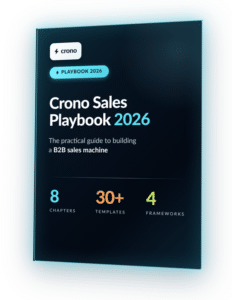
Schedule a session with one of our specialists and get our exclusive Sales Playbook 2026 for free.
 BANT, SPICED & MEDDPICC frameworks
30+ ready-to-use sales templates
2026 outbound & pipeline benchmarks
Don’t sell the product. Sell the change the product makes possible.
This playbook is step one.
