
B2B sales is defined as the process of one business selling products or services to another business, characterized by multi-person buying committees, longer sales cycles, and relationship-driven deal management. Unlike B2C sales, where a single buyer makes a fast, often emotional decision, B2B transactions require consensus across 6 to 10 decision-makers and typically span 60 to 120 days.
That complexity demands a structured process, measurable qualification criteria, and consistent follow-up across multiple channels. The teams that win in this environment treat every stage of the pipeline as a system, not a series of individual conversations.
What is the B2B sales process and its critical stages?
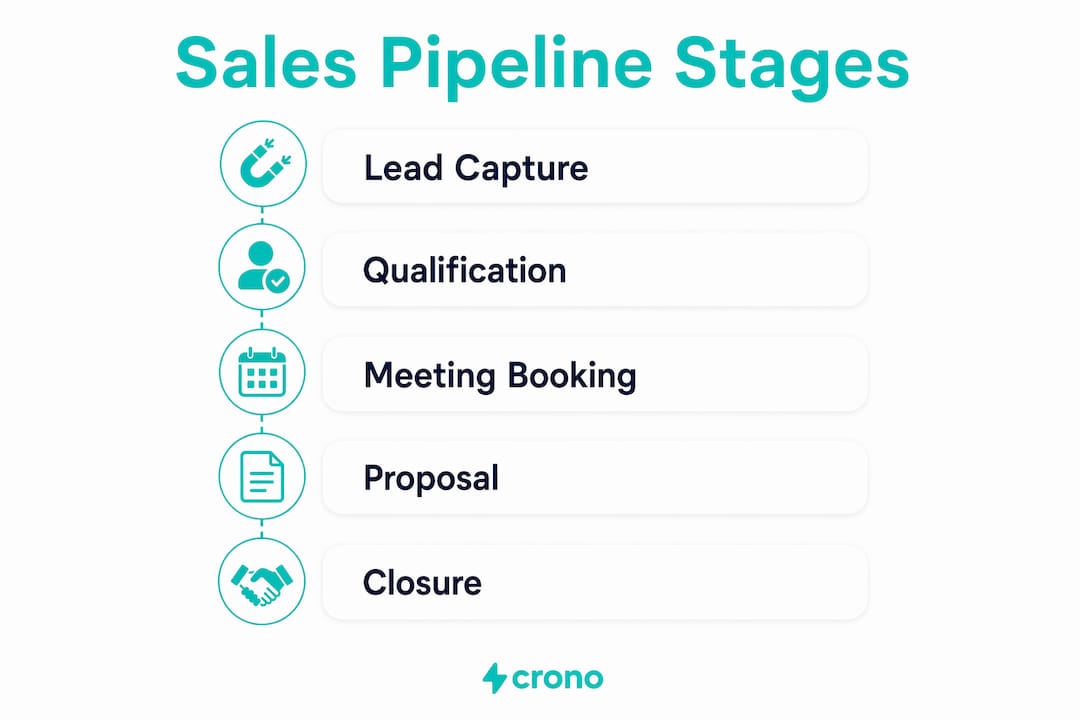
The B2B sales process is a repeatable sequence of steps that moves a prospect from initial identification to closed deal and beyond. Each stage has a specific goal, and skipping one creates compounding problems downstream.
-
Define your Ideal Customer Profile (ICP). Your ICP is the precise description of the company type most likely to buy, stay, and grow with you. Firmographics like industry, revenue band, headcount, and tech stack all belong here.
-
Prospecting. Sales Development Representatives (SDRs) identify and contact accounts that match the ICP through outbound cold outreach, LinkedIn, email sequences, and inbound lead follow-up. Both inbound and outbound channels are necessary. Inbound generates warmer leads; outbound gives you control over pipeline volume.
-
Qualification. Not every prospect deserves a full discovery call. Frameworks like BANT (Budget, Authority, Need, Timeline) filter out accounts that will never close, protecting the Account Executive’s (AE’s) time.
-
Qualified meeting. A booked meeting only has value when it meets authority, budget, need, and timeline criteria. Treating calendar events as wins without verifying these four factors wastes effort for both sides.
-
Closing. The AE runs discovery, maps stakeholders, presents a business case, handles objections, and negotiates terms. Internal approvals and stakeholder consensus frequently extend this phase beyond initial projections.
-
Expansion. Closed deals are the start of the revenue relationship, not the end. Renewals, upsells, and cross-sells compound over time and represent the most cost-efficient revenue a B2B company can generate.
The SDR-to-AE handoff is where most pipelines leak. SDRs book meetings; AEs close them. When qualification standards differ between the two roles, AEs waste time on unwinnable deals. Aligning both roles on a shared definition of “qualified” is the single highest-leverage fix most sales teams can make.
Pro Tip: Track the ratio of qualified meetings to closed deals, not just meeting volume. A high meeting count with a low close rate signals a qualification problem, not a closing problem.
Who are the decision-makers in B2B buying committees?
B2B buying committees typically include 6 to 10 people, each with different priorities and veto power. Selling to one champion and hoping they carry the deal internally is the most common reason complex deals stall.
The roles within a buying committee generally break down as follows:
| Role | Primary Priority |
|---|---|
| Economic Buyer (CFO, VP Finance) | Budget approval and ROI justification |
| Technical Buyer (IT, Security) | Integration, compliance, and risk |
| End User (Sales Ops, Marketing) | Usability and day-to-day workflow fit |
| Champion (Internal Advocate) | Internal selling and deal momentum |
| Legal / Procurement | Contract terms and vendor risk |
Each role evaluates your solution through a different lens. The CFO wants a payback period. The IT lead wants to know how your tool connects to existing systems. The end user wants to know if it makes their job easier. Addressing all three in a single pitch deck rarely works.
Effective stakeholder mapping means identifying who holds formal authority, who holds informal influence, and who can kill the deal quietly. Enabling your champion with ROI analysis, implementation plans, and objection-handling scripts gives them the tools to sell internally on your behalf.
- Build a stakeholder map for every deal above a defined deal size threshold.
- Send role-specific content: financial summaries for economic buyers, security documentation for IT, workflow demos for end users.
- Check in with your champion weekly to monitor internal sentiment and surface blockers early.
- Never assume silence means progress. Silence usually means a competing priority has taken over.
Pro Tip: Ask your champion directly: “Who else needs to say yes before this moves forward?” Most reps never ask this question, and it costs them deals in the final stage.
What are proven B2B sales strategies to improve pipeline and close rates?
The most effective B2B sales teams use a hybrid model that routes complex, high-value deals to field reps while managing early-stage outreach and routine check-ins with digital and AI tools. This approach maximizes both reach and resource efficiency.

Persistent follow-up is the clearest differentiator between teams that hit quota and teams that miss it. Most successful B2B deals require 5 to 8 touchpoints to close. Yet nearly half of sales professionals fail to follow up after the first contact. That gap is a direct revenue opportunity for teams willing to stay consistent.
Effective strategies that move pipeline forward include:
- Multichannel outreach sequences. Combine email, LinkedIn, phone, and video messages across a 2 to 3 week cadence. Each channel reaches a different segment of your prospect’s attention.
- Personalized messaging at scale. Generic outreach gets ignored. Reference the prospect’s recent funding round, a job posting that signals a pain point, or a public statement from their CEO.
- CRM-driven pipeline hygiene. Deals that sit in the same stage for more than two weeks need a defined next step or a disqualification decision. Stale pipeline distorts forecasts and wastes rep time.
- Inbound and outbound alignment. Inbound leads convert faster because intent is already established. Outbound builds pipeline volume. Both are required for a predictable revenue engine.
Lead nurturing is not just a marketing function. Sales teams that maintain contact with prospects who are not yet ready to buy consistently capture deals that competitors miss. A quarterly check-in email or a relevant industry article sent at the right moment keeps you top of mind when the buying window opens.
Consistent multichannel follow-up, rather than one-off contact, is the defining behavior of top-performing B2B sales teams. The data confirms it, and the logic is straightforward: buyers are busy, priorities shift, and the rep who stays present wins.
How is digital transformation reshaping B2B sales today?
The US B2B e-commerce market exceeds $1 trillion, with the global industry estimated at $28.86 trillion. Digital self-service procurement is now a standard buyer expectation, not a differentiator. B2B companies that still rely exclusively on phone calls and in-person meetings to move deals forward are losing ground to competitors who meet buyers where they already are.
Top B2B buyers now expect digital self-service capabilities including product configurators, instant quoting, mobile-optimized ordering, and ERP integration. These expectations come directly from the B2C experience buyers have in their personal lives. The line between B2B and B2C buyer behavior is narrowing every year.
AI and automation are changing what sales reps spend their time on. Repetitive tasks like data entry, meeting scheduling, follow-up reminders, and contact enrichment are now handled by AI tools, freeing reps to focus on relationship building and complex negotiation. Platforms like Crono connect buying signals, data enrichment, and multichannel engagement into a single execution layer, so reps act on the right opportunities at the right time.
The future of B2B prospecting is AI-assisted, not AI-replaced. The reps who learn to work with AI tools outperform those who resist them. The shift is not about removing human judgment from sales. It is about removing the low-value tasks that prevent reps from applying that judgment where it matters most.
Key Takeaways
B2B sales success requires a structured process, multi-stakeholder engagement, persistent follow-up, and digital tools working together to convert pipeline into predictable revenue.
| Point | Details |
|---|---|
| Buying committee complexity | Committees of 6–10 people require role-specific messaging and stakeholder mapping on every major deal. |
| Qualification discipline | Use BANT criteria to filter prospects early and protect AE time for winnable opportunities. |
| Follow-up persistence | Most deals need 5–8 touchpoints; nearly half of reps stop after the first contact. |
| Hybrid sales model | Route high-value deals to field reps and use digital tools for early-stage outreach and check-ins. |
| Client retention compounds | Renewals and upsells generate more efficient revenue than new logo acquisition alone. |
What I’ve learned about patience and pipeline in B2B sales
The hardest lesson I’ve absorbed from years of watching B2B sales teams operate is this: most reps are optimists with terrible follow-through. They send a great first email, get a lukewarm response, and move on. They book a meeting, deliver a solid demo, and then wait. Waiting is not a strategy.
The teams I’ve seen consistently outperform their peers share one habit. They treat follow-up as a system, not a feeling. They do not follow up when they feel like it or when the prospect seems “warm enough.” They follow up on a schedule, across multiple channels, with a reason to reach out each time. That discipline is unglamorous, but it is what separates a 20% close rate from a 35% close rate.
The second thing I’ve come to believe strongly is that client retention is the most underrated revenue lever in B2B. New logo acquisition gets all the attention and all the commission. But the compound value of a retained client, through renewals, expansions, and referrals, dwarfs the value of a single closed deal. Teams that measure and reward retention alongside new business build more durable revenue than those that treat every quarter as a fresh start.
Finally, the data-versus-relationship debate in B2B sales is a false choice. The best reps use data to know when to reach out, what to say, and which stakeholders to prioritize. Then they use genuine relationship skills to make that outreach land. Neither alone is enough.
How Crono helps B2B teams execute at every stage
Crono is built for the exact challenges this article describes: buying committee complexity, follow-up discipline, and the need to act on the right signals at the right time.
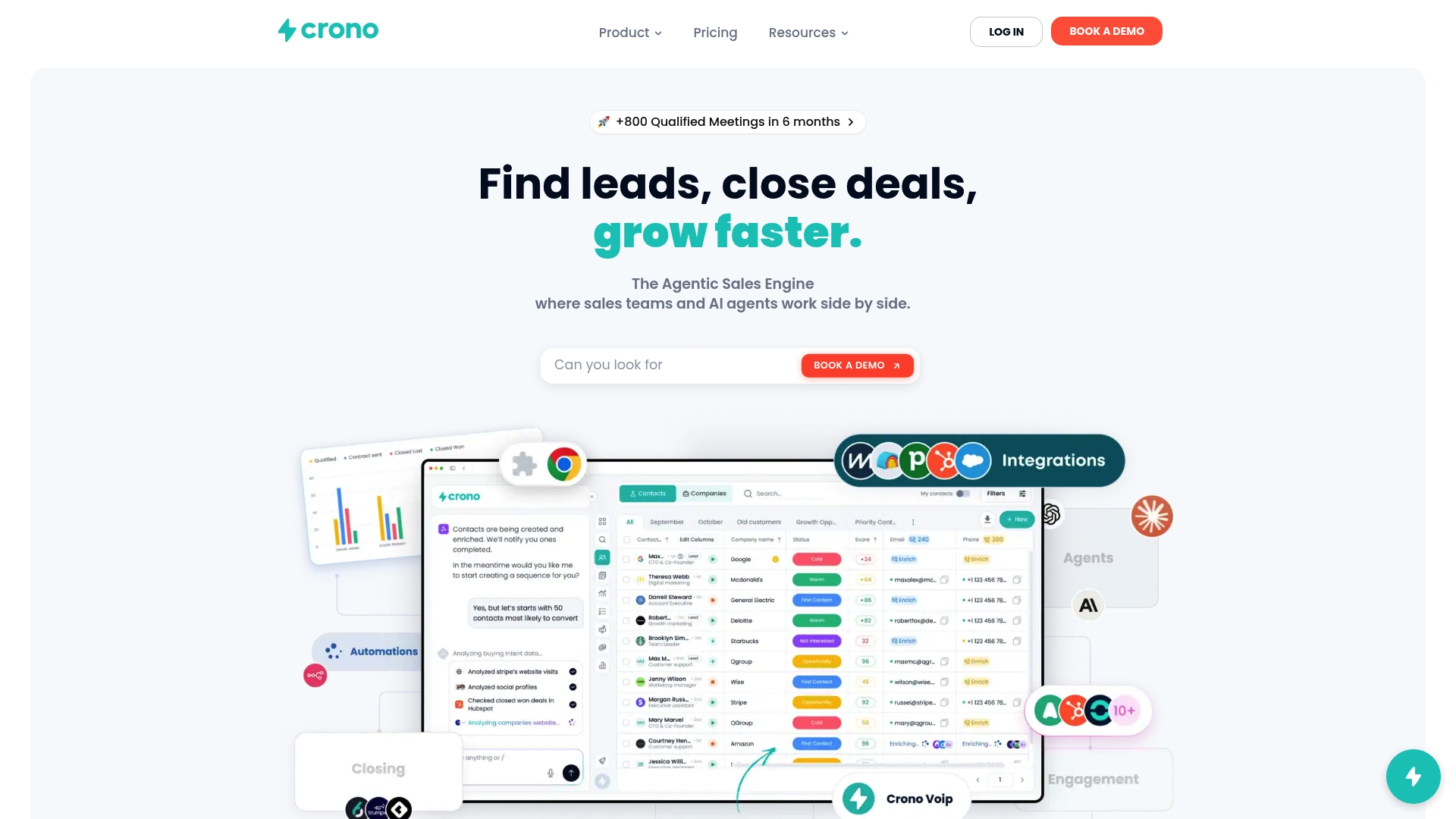
Crono connects your CRM, enrichment data, and multichannel outreach into one execution platform where AI agents handle repetitive tasks and reps focus on conversations that close deals. Teams use Crono to run automated outbound sequences, prioritize accounts by buying signal strength, and maintain consistent follow-up without manual tracking. For sales leaders building a scalable pipeline, the sales automation tools comparison is a practical starting point for evaluating where automation creates the most impact in your current process.
FAQ
What is B2B sales?
B2B sales is the process of one business selling products or services to another business. It involves longer sales cycles, multiple decision-makers, and relationship-driven deal management compared to B2C sales.
How long does a typical B2B sales cycle take?
B2B sales cycles typically span 60 to 120 days, depending on deal complexity and the number of stakeholders involved in the buying decision.
How many touchpoints does it take to close a B2B deal?
Most successful B2B deals require between 5 and 8 touchpoints to close. Nearly half of sales professionals stop following up after the first contact, which is a direct cause of lost revenue.
What is a buying committee in B2B sales?
A buying committee is the group of 6 to 10 people within a prospect organization who collectively evaluate and approve a purchase. Each member has different priorities, from budget and ROI to technical fit and legal risk.
How does B2B sales differ from B2C sales?
B2B sales involves longer cycles, larger deal values, and consensus-driven decisions across multiple stakeholders. B2C sales typically involves a single buyer making a faster, often emotion-driven purchase decision.
