
A call to action (CTA) is a clear prompt that tells your audience the exact next step to take, like “Start free trial” or “Download the guide.” CTAs show up as buttons, hyperlinked text, or short standalone phrases woven into marketing content. Two of the most cited references on the term back this up directly: Cambridge Dictionary defines it as language or acts that encourage people to act, while Investopedia frames it as a marketing prompt designed to trigger an immediate response.
If you’re building briefs or style guides, here’s the short version to reuse:
- Format: button, link, or short imperative phrase
- Function: tells the reader precisely what to do next
- Placement: websites, emails, ads, and social posts
- Goal: move a prospect one step closer to conversion
Key Takeaways
An effective call to action pairs a specific action verb with a clear benefit, and its wording should shift by funnel stage and channel rather than staying fixed across every touchpoint.
| Point | Details |
|---|---|
| Definition to reuse | A CTA is a prompt, button, or phrase telling the audience the exact next action to take. |
| Five core components | Verb, benefit, specificity, urgency signal, and visual affordance all need to work together. |
| Match CTA to funnel stage | Use soft CTAs like “Learn more” early and hard CTAs like “Start free trial” closer to decision. |
| Test before scaling | Track click-through rate, conversion rate, and downstream conversion, since performance varies by channel. |
| No formal legal definition | CTAs are an industry term governed by truth-in-advertising standards, not a distinct legal category. |
| Operationalize across channels | Crono helps B2B teams sequence and measure CTA triggers across email, LinkedIn, and calls in one workflow. |
Table of Contents
- What Makes Up an Effective Call to Action?
- What Are Some Effective Call to Action Examples?
- Where Should You Place a Call to Action?
- How Do You Write a Call to Action That Converts?
- How Do You Test and Measure Call to Action Performance?
- Is There a Legal Definition of a Call to Action?
- Put Your CTA Strategy Into a Working Sales Sequence
- Sources
What Makes Up an Effective Call to Action?
A CTA is only as good as its weakest component. Break one down and you’ll find five parts working together: the action verb, the stated benefit, specificity about what happens after the click, an urgency or scarcity cue, and a visual affordance that makes it impossible to miss.
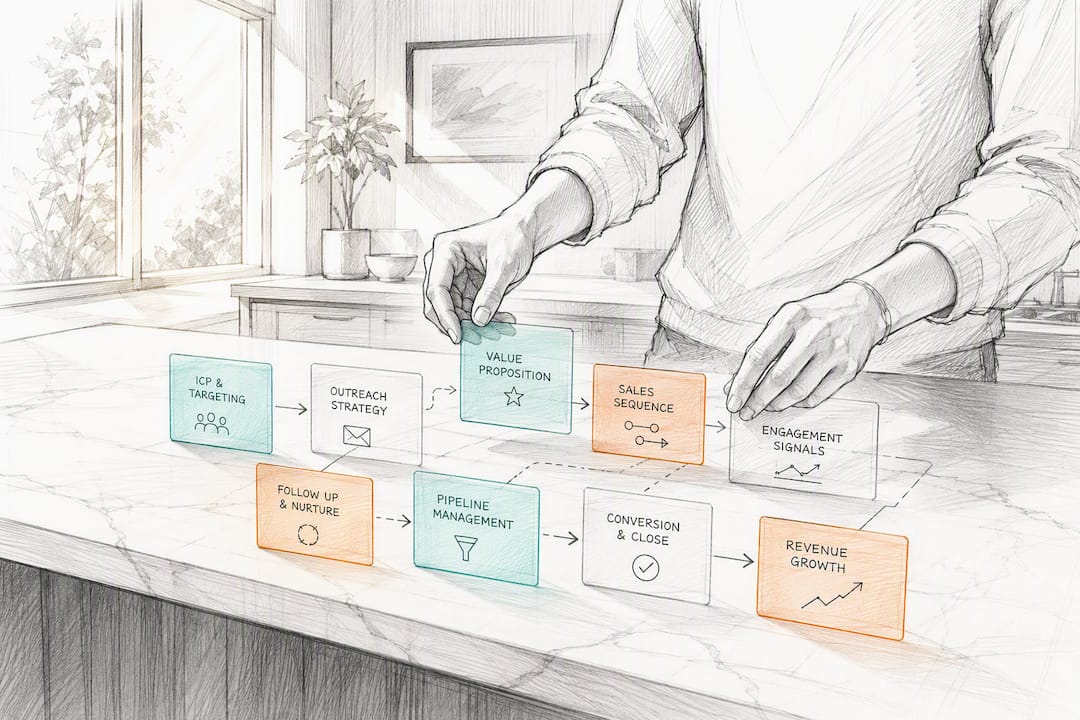
The verb carries the weight. “Get,” “Start,” “Download,” and “Schedule” outperform passive phrasing like “Click here” because they name the action directly. Shopify’s guidance on CTAs points out that pairing an action verb with a clear benefit, not just an instruction, is what separates a CTA that converts from one that gets ignored. “Start your free trial” tells a visitor both what to do and what they get for doing it.
Specificity matters just as much. A button that says “Submit” leaves the reader guessing. “Get my pricing quote” removes the guesswork entirely. Mailchimp’s definition of a CTA treats this specificity, alongside visual contrast and placement, as core to what makes the element function as a conversion tool rather than decoration.
A few other things to check before you ship a CTA:
- Does the button have enough size and color contrast to stand out from surrounding content?
- Is the label accessible to screen readers through proper ARIA attributes, not just visually clear?
- Does the microcopy beneath the button (like “No credit card required”) remove a real objection?
- Does urgency language (“Ends Friday”) reflect something actually true, not manufactured pressure?
What Are Some Effective Call to Action Examples?
CTAs change shape depending on where a prospect sits in the funnel. Early-stage visitors need low-commitment invitations; late-stage buyers respond to direct, high-commitment prompts. Here’s a working list organized by funnel stage:
- Read more — awareness stage, blog posts and social captions
- Learn how it works — awareness stage, homepage sections
- Watch the demo — consideration stage, product pages
- Download the guide — consideration stage, gated content and email
- Subscribe for updates — awareness stage, blog sidebars
- Compare plans — consideration stage, pricing pages
- Get a free quote — consideration stage, landing pages
- Start free trial — decision stage, homepage hero and pricing page
- Schedule a demo — decision stage, product and pricing pages
- Buy now — decision stage, ecommerce product pages
- Join the waitlist — decision stage, pre-launch landing pages
- Talk to sales — decision stage, enterprise pricing pages
This mirrors how B2B SaaS teams typically sequence CTAs, starting with soft, educational prompts and escalating to harder asks like “Schedule demo” as a lead moves closer to a buying decision.
Pro Tip: Test first-person phrasing (“Start my free trial”) against standard second-person copy (“Start your free trial”). Some audiences respond better to first-person because it reflects ownership of the decision, not just an instruction from the brand.
Where Should You Place a Call to Action?
CTA form and wording should shift depending on the channel and what the visitor is trying to accomplish there. A homepage hero needs a single, high-visibility CTA above the fold, usually one primary action and, optionally, one secondary soft link. Product and pricing pages benefit from repeated CTAs at natural decision points, not just at the bottom of the page.
- Homepage: one dominant CTA, minimal competing buttons
- Blog posts: contextual CTAs mid-content and at the end, tied to the article’s topic
- Email: one clear CTA button above the fold, repeated once further down for long emails
- Social posts: short, direct phrasing that fits native platform behavior (link in bio, swipe up)
- In-product: contextual nudges tied to a feature the user just touched
Mobile visitors need larger tap targets and shorter labels since long CTA text often wraps awkwardly on small screens, and the SBA’s guidance on why websites need a CTA reinforces that a visitor without a clear instruction is a visitor who leaves without converting.
How Do You Write a Call to Action That Converts?
Six rules separate CTAs that convert from ones that get scrolled past: use active verbs, lead with the benefit rather than the mechanism, keep the copy short, be specific about the outcome, make the claim testable, and write it so assistive technology can read it correctly.
Three templates you can adapt directly into campaign copy:
- [Action] + [benefit] — [timeframe or offer]
Example: “Start your trial and see your pipeline in 5 minutes — no card required.” - [Verb] + [what they get] + [urgency]
Example: “Download the playbook before Friday’s price change.” - [Question] + [direct answer CTA]
Example: “Ready to see it in action? Book a demo.”
Weak copy almost always shares the same flaw: it describes the mechanism instead of the outcome. Compare these rewrites:
- Before: “Submit form” → After: “Get my custom pricing”
- Before: “Click here to learn more” → After: “See how it works in 2 minutes”
The second version in each pair states a concrete result, which is exactly what separates a CTA that gets clicked from one that blends into the page.
Pro Tip: The subtext under your CTA button often does more conversion work than the button label itself. A line like “Cancel anytime, no setup fees” answers the hesitation a prospect has before they even click.
How Do You Test and Measure Call to Action Performance?
Track four numbers when evaluating a CTA: click-through rate, conversion rate on the destination page, downstream conversion (did the lead eventually close), and engagement broken out by audience cohort. A CTA that pulls a strong click-through rate but a weak downstream conversion usually means the offer overpromised relative to what the destination page delivers.
Run A/B tests with a clear hypothesis, adequate sample size, and a fixed test duration before declaring a winner. Small, cheap experiments worth running first:
- Swap the verb (“Get” vs. “Start” vs. “Try”)
- Add offer specificity (“Free trial” vs. “14-day free trial, no card”)
- Increase button size or contrast against the background
Data point: Investopedia notes that CTA performance varies meaningfully across channel and audience segment, meaning a CTA that wins in email may underperform on a paid ad or pricing page, which is exactly why testing needs to happen per channel, not once globally.
Is There a Legal Definition of a Call to Action?
There’s no formal legal definition of “call to action.” It’s an industry marketing term, not a regulated legal category, and Wikipedia’s overview of the term) confirms this directly.
That said, CTAs still fall under general truth-in-advertising standards enforced by the Federal Trade Commission. The practical rule: never write a CTA that materially misleads a reader about price, availability, or what happens next, and disclose any material condition (auto-renewal, hidden fees, time limits) clearly near the button, not buried in fine print elsewhere.
Why call-to-action clarity still drives B2B pipeline
CTAs map directly to buyer intent across multichannel sequences, from a soft “Learn more” in a cold email to a hard “Book a demo” once a prospect has engaged three times. A well-timed CTA in an outreach sequence often does more to move a deal forward than the message copy around it.
— Alex
Put Your CTA Strategy Into a Working Sales Sequence
A great CTA definition only matters once it’s deployed consistently across email, LinkedIn, and calls, and that’s where most teams lose momentum without a system to enforce it. Crono is built as the execution layer that maps CTA triggers to buyer signals and tracks which prompts actually move a prospect through your pipeline, instead of leaving that judgment to guesswork spread across five disconnected tools.
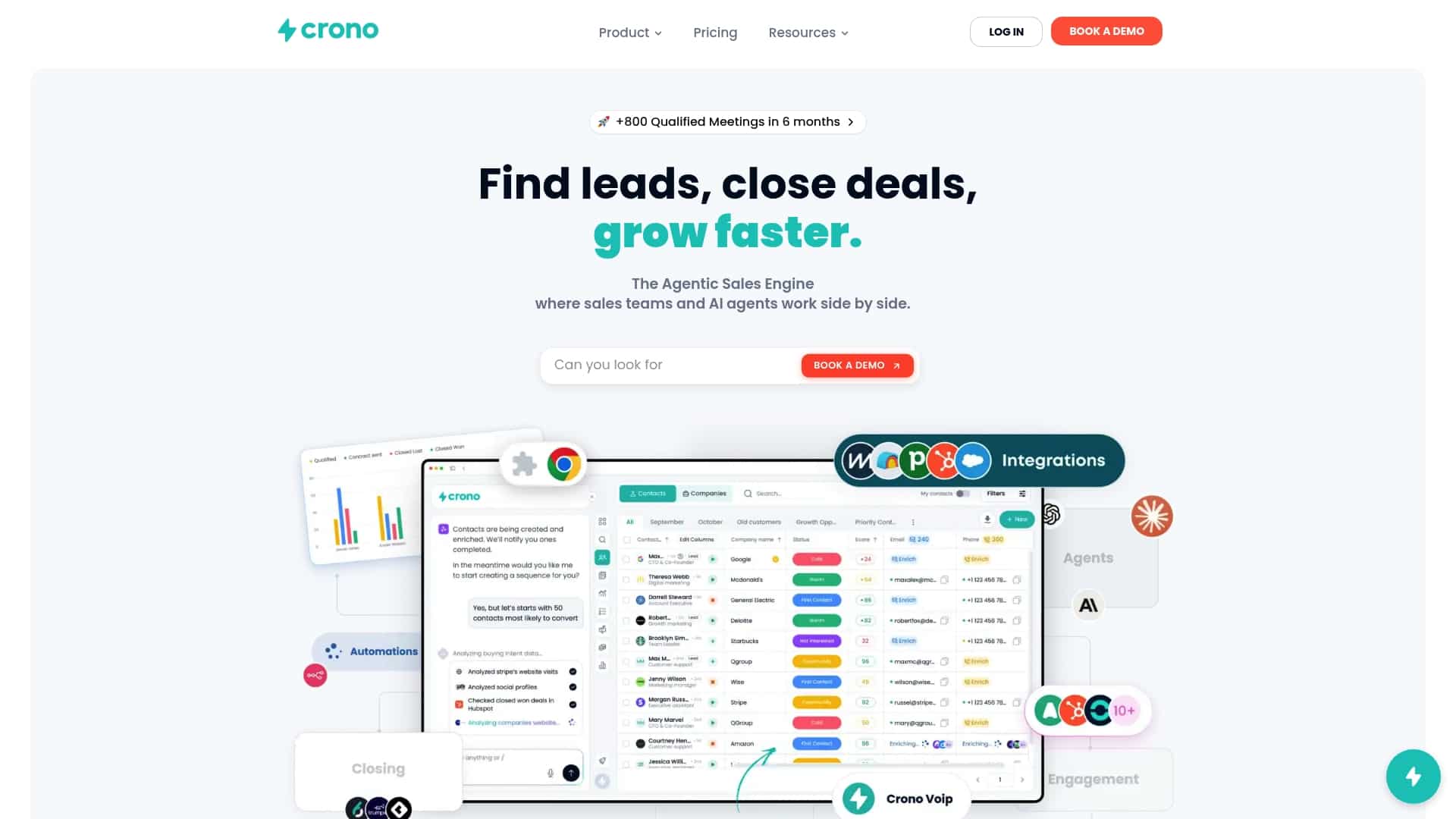
For advertisers optimizing CTA performance at the platform level, BidSurvivor’s look at ad platform data is worth a read alongside your own testing. But for B2B teams running multichannel sequences, coordinating CTA timing across email, LinkedIn, and calls is the harder problem, and it’s the one Crono’s sales orchestration platform is built to solve. If you’re ready to see how phased CTAs perform inside a real outreach sequence, explore Crono’s platform and book a walkthrough with your team.
Sources
- CALL TO ACTION definition | Cambridge English Dictionary
- What a Call to Action (CTA) Is and How It Works — Investopedia
