
European B2B sales challenges arise from longer procurement cycles, trust-first buying behaviors, and regulatory complexity that most North American playbooks simply ignore. European enterprise buyers take 20–30% longer to complete procurement cycles than their North American counterparts, with DACH region deals often stretching 6–12 months.
Cold outreach response rates in Europe average just 3.1%, compared to 4.1% in North America. The good news: once you understand the structural reasons behind these patterns, you can build a sales motion that actually works here.
1. Why European B2B sales cycles are significantly longer
European sales cycles are longer by design, not by accident. Buying decisions involve procurement, legal, IT, finance, and in some countries, works councils. No single champion can push a deal through without full committee buy-in.
Formal RFP processes are common across DACH and regulated sectors like financial services and healthcare. These processes add weeks of documentation, security reviews, and compliance sign-offs before any contract moves forward. Skipping or rushing these steps signals inexperience and kills deals.

Seasonality compounds the problem. European business nearly pauses during August and late December, disrupting pipeline momentum and making quarterly forecasting unreliable for teams used to North American rhythms.
| Factor | Impact on sales cycle |
|---|---|
| Multi-departmental approval | Adds 4–8 weeks per additional stakeholder group |
| Formal RFP process | Extends evaluation phase by 6–12 weeks in regulated sectors |
| August and December downtime | Effectively removes 6–8 weeks of active selling per year |
| Compliance documentation | Delays contract execution by 2–4 weeks on average |
Pro Tip: Build your European pipeline calendar around the actual selling window. Plan major outreach pushes for september through november and february through may. Treat August and late December as relationship-nurturing months, not closing months.
2. Why cold outbound fails in European markets
Volume-based cold outbound is the single biggest reason over 80% of companies fail to gain traction in European markets. The failure is not a product problem. It is a go-to-market misalignment problem.
German buyers operate on a principle called Vertrauensvorschuss, meaning advance trust. A vendor must establish credibility before a commercial conversation can begin. Cold emails from unknown senders are routinely ignored in Germany, where cold outbound response rates can fall as low as 0.5–2%. That is not a messaging problem you can A/B test your way out of.
European buyers also engage sellers only after completing about 68% of their buying journey. By that point, 78.5% already have a preferred vendor in mind. If your brand is not visible during the research phase, you are competing for the remaining 21.5% of deals.
The fix is precision over volume. Targeted cold outreach aligned with local work rhythms, cultural norms, and genuine buyer context outperforms mass sequencing every time in European markets.
- Lead with third-party validation: analyst mentions, local press, and ecosystem partners
- Reference local customers by name and region, not global logos
- Match outreach timing to regional work patterns, avoiding Monday mornings and Friday afternoons
- Keep messaging concise and compliance-aware, especially regarding GDPR consent
Pro Tip: Before sending a single cold email in Germany or the Nordics, ask yourself: “Would a trusted colleague forward this?” If the answer is no, rewrite it. European buyers apply that exact filter.
3. How GDPR and compliance complexity shape buyer behavior
GDPR is not just a legal checkbox. It actively shapes how European buyers evaluate vendors. A company that cannot demonstrate data residency compliance, processing agreements, and security documentation early in the sales process loses credibility fast.
Customer acquisition costs in Europe include a 20–40% additional upfront investment for compliance, localization, and regulatory readiness. That cost is real, but it is also a competitive filter. Teams that arrive prepared with Data Processing Agreements, ISO 27001 documentation, and clear data residency answers move faster than those who treat compliance as an afterthought.
The EU AI Act adds another layer for SaaS and AI vendors. Buyers in regulated industries now ask about AI transparency, model explainability, and risk classification before procurement. Sales teams that cannot answer these questions confidently lose deals to vendors who can.
Regional variation matters too:
- DACH: Highest compliance scrutiny; works councils often have formal veto power over software purchases
- France: Strong data sovereignty preferences; local hosting or EU-based infrastructure is frequently required
- Nordics: Privacy-first culture; buyers expect proactive disclosure, not reactive compliance
- UK: Post-Brexit, the UK GDPR mirrors EU standards but operates independently; dual compliance is often needed
4. Cultural and market fragmentation across Europe
Europe is not one market. It is 30-plus distinct buying cultures operating in different languages, with different risk tolerances, decision-making speeds, and vendor expectations. A pan-European go-to-market strategy that treats the continent as a single audience consistently underperforms.
Localized credibility requires more than translating your website. It means EU legal entity setup, VAT compliance, local customer references, and ecosystem partnerships with regionally recognized firms. A US or global customer reference carries little weight in Germany or the Nordics. A local reference from a recognized brand in the same vertical carries enormous weight.
Messaging tone also varies sharply by region. UK buyers respond to directness and ROI framing. DACH buyers want technical depth, process rigor, and risk mitigation. Southern European buyers often prioritize relationship warmth before business substance. Applying the wrong tone to the wrong region signals that you do not understand the market.
Pro Tip: Start with one country or one vertical, not all of Europe. Prove the model with local references, then expand. Trying to cover DACH, Nordics, and Southern Europe simultaneously with one team and one message is a reliable path to burning budget with no results.
5. Multi-stakeholder decision-making and the full buying committee
European B2B procurement is adversarial by design. Buying decisions involve multiple departments, and champion approval is never sufficient without full decision-making unit buy-in. Procurement, legal, IT security, finance, and end users each apply their own evaluation criteria.
Sales teams that map only the economic buyer miss the deal. A legal team can block a contract over data processing terms. An IT security team can stall a deal for months over penetration testing requirements. A works council in Germany can formally object to software that changes employee workflows.
The practical response is early, wide stakeholder mapping. Identify every department that will touch the evaluation and prepare materials tailored to each. Legal needs DPAs and security certifications. Finance needs TCO models and ROI documentation. IT needs architecture diagrams and integration specs. End users need workflow demonstrations.
Sales orchestration tools help teams manage these parallel tracks without losing momentum. Coordinating multiple stakeholder conversations across a 9-month cycle requires systematic tracking, not manual follow-up.
6. Building ecosystem presence before outbound
The most effective way to reduce a European sales cycle is to be known before the first outreach. Buyers who recognize your brand from a conference, a podcast, or an analyst mention engage faster and require less trust-building during the sales process.
Ecosystem presence means showing up where your buyers learn. That includes:
- Speaking at regional industry events like SaaStr Europe, B2B Rocks, or sector-specific trade shows
- Contributing to editorial publications read by your target buyers
- Building partnerships with regional system integrators and consultancies
- Earning mentions in analyst reports from firms your buyers already trust
- Hosting local roundtables or executive dinners in key cities
This is not brand awareness for its own sake. It is pre-sale trust accumulation that directly shortens the time from first contact to signed contract. Building trust online through consistent, credible content and community presence is a proven accelerator for European B2B sales cycles.
7. Practical strategies to expand your European B2B pipeline
Expanding your pipeline in Europe requires a different operating model, not just a different script. The following approaches consistently outperform volume-based tactics in European markets.
-
Map the full decision-making unit on day one. Do not wait until late-stage to discover the legal or IT blocker. Ask your champion directly who else will be involved and what each stakeholder cares about.
-
Prepare compliance documentation before it is requested. Arrive at the first meeting with a DPA, security overview, and data residency statement ready. This signals maturity and removes a common stall point.
-
Use local references as your primary proof point. A case study from a recognized local company in the same industry is worth more than ten global logos. Invest in building these early.
-
Align outreach cadence with regional calendars. Plan your highest-intensity prospecting for september through november. Use Q1 to re-engage deals that stalled before the December freeze.
-
Shift from email volume to multichannel precision. Combine LinkedIn engagement, targeted email, and phone contact in sequences designed for specific personas. Multichannel outreach timed to buyer context outperforms single-channel blasting.
-
Invest in long-term pipeline, not just near-term quota. European sales cycles mean that deals you open today may close in 9–12 months. Teams that only focus on this quarter’s pipeline consistently miss next quarter’s number.
Pro Tip: Track deal velocity by country and sector, not just by stage. A deal in Germany that has been in “evaluation” for 10 weeks is normal. The same deal in the UK is a warning sign. Regional benchmarks give you the right frame for intervention.
Key takeaways
European B2B sales success requires trust-first positioning, full stakeholder mapping, and compliance readiness before the first outreach, not after.
| Point | Details |
|---|---|
| Sales cycles are structurally longer | DACH enterprise deals average 6–12 months; plan pipeline and forecasting accordingly. |
| Cold outbound underperforms without trust | European cold outreach averages 3.1% response rates; ecosystem presence closes the gap. |
| Compliance is a sales asset | Arriving with GDPR and security documentation ready removes a major deal blocker. |
| Localization goes beyond language | Local references, EU legal presence, and regional messaging are non-negotiable for credibility. |
| Stakeholder mapping starts on day one | Champion buy-in is never enough; engage procurement, legal, and IT from the first discovery call. |
Why patience is the actual competitive advantage in European B2B sales
I have watched well-funded teams enter European markets with aggressive outbound targets, tight quarterly timelines, and North American playbooks. Most of them stall within two quarters. The ones that succeed share one trait: they treat the sales process friction as information, not obstruction.
The friction European buyers create is not bureaucracy for its own sake. As one framework puts it, the friction is a core element of risk reduction that buyers genuinely value. When a German procurement team asks for a 40-page security questionnaire, they are telling you exactly what they need to feel safe. Answer it thoroughly and you have differentiated yourself from every vendor that pushed back or sent a generic response.
The false economy of volume outbound is the other trap I see repeatedly. Sending 10,000 cold emails across Europe feels like activity. It produces unsubscribes, spam complaints, and GDPR exposure. Sending 200 precisely targeted, culturally calibrated messages to buyers who already recognize your name from a conference or a LinkedIn article produces pipeline. The math is counterintuitive until you run it.
My honest advice: treat compliance readiness as a sales capability, not a legal cost. The teams that arrive in European markets with their documentation in order close faster, face fewer late-stage surprises, and build the kind of reference base that makes the next deal easier. Patience and preparation are not soft skills in European B2B. They are the actual product.
How Crono helps B2B teams execute in complex European markets
Managing a 9-month, multi-stakeholder European sales cycle across multiple countries is an execution problem as much as a strategy problem.
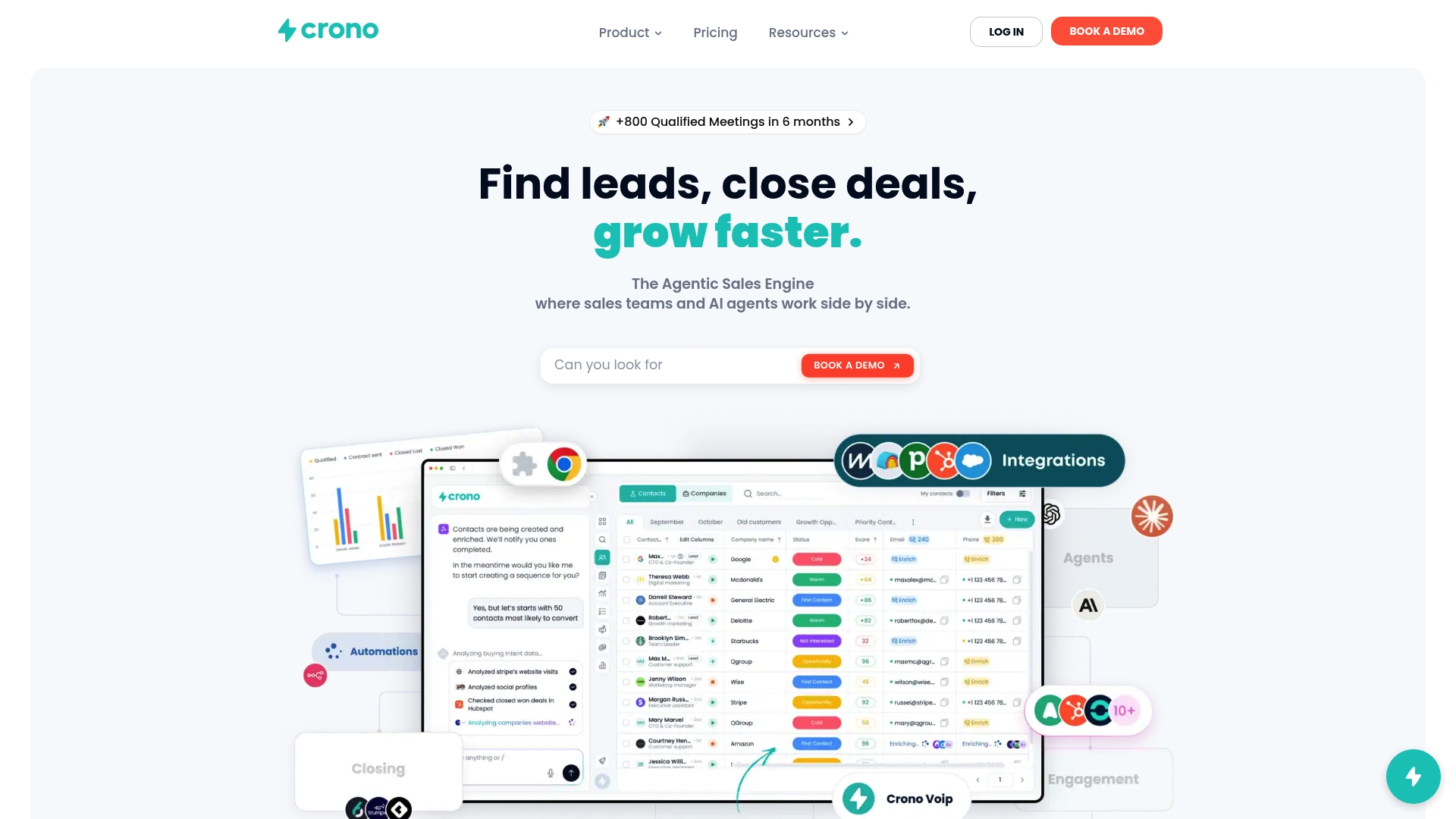
Crono’s sales orchestration platform gives revenue teams the tools to coordinate parallel stakeholder tracks, automate compliance-aware outreach sequences, and track deal velocity by region and persona. AI agents inside Crono handle data enrichment, signal detection, and follow-up timing so your team focuses on the conversations that move deals forward. For teams ready to build a repeatable European pipeline, Crono’s AI sales execution capabilities replace manual coordination with systematic, documented engagement at every stage.
FAQ
Why are European B2B sales cycles longer than in North America?
European sales cycles are longer because buying decisions require consensus across procurement, legal, IT, and finance. Enterprise deals in the DACH region typically run 6–12 months due to formal RFP processes, compliance reviews, and works council involvement.
Why does cold outbound fail in European B2B markets?
Cold outbound fails because European buyers require advance trust before engaging with unknown vendors. Cold email response rates average 3.1% across Europe, dropping as low as 0.5–2% in Germany, where ecosystem credibility matters far more than outreach volume.
How does GDPR affect B2B sales outreach in Europe?
GDPR restricts how sales teams collect, store, and use prospect data, requiring lawful basis for outreach and clear opt-out mechanisms. Non-compliance creates legal exposure and damages buyer trust before a commercial conversation even begins.
What is the most effective way to build pipeline in Europe?
Building ecosystem presence through conferences, editorial content, and regional partnerships before outbound is the most effective pipeline strategy. Buyers who recognize your brand before first contact engage faster and require less trust-building during the sales cycle.
How should sales teams handle European market fragmentation?
Start with one country or vertical and build local references before expanding. DACH, Nordics, and Southern Europe each have distinct buying behaviors, compliance expectations, and messaging preferences that require separate, localized approaches.
