
A leads sale is the purchase or sale of contact records or verified buyer opportunities, usually priced per lead, per credit, or through a subscription. A sales lead itself is a person or business that has signaled interest and handed over enough contact information to enable structured follow-up. Buying makes sense when you need to cover a niche segment fast or test demand for a new offer; building your own pipeline wins when brand fit and long-term unit economics matter more than speed.
Before you commit budget either way, run this:
- Audit your team’s speed-to-contact and CRM hygiene for the last 90 days.
- Pilot a small batch of 25 to 50 purchased leads for 2 to 4 weeks.
- Measure cost per opportunity before scaling any provider relationship.
Key Takeaways
Buying leads works when speed-to-contact, scoring discipline, and provider exclusivity are all in place before the first contact arrives.
| Point | Details |
|---|---|
| Know your product type | Exclusive, live, verified leads cost more but convert better than shared or aged lists. |
| Pilot before scaling | Test 25 to 50 leads over 2 to 4 weeks and measure cost per opportunity, not just cost per lead. |
| Demand integration | Only buy from providers offering webhook or CRM delivery, not just CSV exports. |
| Score and route fast | Predictive scoring plus a tight SLA for first contact drives most of the conversion gain. |
| Execute with Crono | Crono enriches, scores, and routes purchased leads into multichannel outreach automatically. |
Table of Contents
- What Counts as a Sales Lead in a Leads Sale?
- How Do Providers Price and Deliver a Leads Sale?
- How Do You Evaluate a Lead Provider Before You Buy?
- How Do You Sell Leads Without Damaging Your Reputation?
- How Do You Turn Purchased Leads Into Pipeline?
- How Crono Helps You Execute on Purchased Leads
- When Does Buying Leads Actually Make Sense?
- Put Purchased Leads to Work Faster With Crono
- Sources
What Counts as a Sales Lead in a Leads Sale?
A lead, a prospect, and an opportunity are not interchangeable. A lead has given you contact details and shown some interest. A prospect fits your ideal customer profile and has been at least loosely qualified. An opportunity has an active buying process with budget and timeline attached.
Within a leads sale, you’ll encounter several distinct product types:
- B2B vs. B2C leads. B2B leads carry firmographic data (company size, industry, role); B2C leads carry personal and household data.
- MQL vs. SQL. A marketing-qualified lead engaged with content; a sales-qualified lead has been vetted for budget, authority, need, and timeline, and typically converts at a meaningfully higher rate.
- Exclusive vs. shared leads. Exclusive leads go to one buyer only; shared leads get resold to several competitors, which drives down both price and reply rates.
- Live vs. aged leads. Live leads are delivered in real time after a signal event; aged leads sit for days or weeks and cost far less but convert far worse.
Contact completeness (verified email, direct-dial phone, current role) and intent signals (a demo request versus a newsletter signup) are what separate a $2 record from a $200 one.
How Do Providers Price and Deliver a Leads Sale?
Sellers structure a leads sale around four common commercial models, each with different tradeoffs for buyers.
- Per-lead or pay-per-credit pricing. You pay a flat fee per contact or spend credits from a prepaid pack. Simple to budget, but quality varies wildly between providers.
- Subscription access. A monthly fee grants ongoing access to a feed or database. Works well for high-volume outbound teams, poorly for niche verticals.
- Auction or marketplace bidding. Some marketplaces run auction models where buyers bid for exclusive, single-buyer leads with real-time delivery, which tends to push prices higher but removes the problem of competing against five other companies for the same contact.
- Verified opportunity marketplaces. Private marketplaces publish human-verified sales-qualified opportunities that buyers unlock with credits, skipping the raw-lead stage entirely and selling something closer to a warm handoff.
Delivery method matters almost as much as price. A bulk CSV export dumped once a week is fine for aged leads, but live leads need webhook integration or direct CRM push. Speed to contact is the single biggest lever on conversion for purchased leads, according to lead management platforms that track inbound routing behavior. A lead that sits in an inbox for six hours behaves very differently than one your rep calls in six minutes.
How Do You Evaluate a Lead Provider Before You Buy?
Not every vendor selling a “sales lead management” feed is worth your budget, and the difference usually shows up before you sign anything. Run through this checklist with any provider:
- Ask directly whether leads are exclusive or shared, and get it in writing.
- Request their validation process: email verification, phone confirmation, or manual review.
- Get a sample batch delivered before committing to volume.
- Confirm they support CRM import or webhook integration, not just CSV exports.
- Clarify their refund or replacement policy for bad or duplicate contacts.
- Check that their targeting actually maps to your ideal customer profile, not just adjacent industries.
Watch for red flags: providers who dodge questions about list sourcing, resold databases disguised as “fresh” leads, no integration path beyond spreadsheets, and vague language around consent and data origin.
Pro Tip: Run a two-week pilot with a fixed, small volume, say 30 to 50 leads, before negotiating any long-term contract. Measure reply rate and cost per opportunity, not just cost per lead. A cheap list that converts at 1% often costs more per closed deal than an expensive exclusive feed converting at 8%.
A short, disciplined pilot is usually the most cost-effective way to test a provider’s actual claims against their marketing copy.
How Do You Sell Leads Without Damaging Your Reputation?
Selling leads well requires the same discipline you’d want from a vendor you’re buying from, structured around three decisions.
- Pick your channel. Direct buyers give you the highest margin but require your own sales effort; broker platforms and real-time marketplaces move volume faster but usually take a cut or push prices toward the shared-lead range.
- Price on signal strength. Intent level, exclusivity, industry vertical, contact completeness, and historical conversion data all justify a higher price. An exclusive SQL with a confirmed budget timeline is worth far more than an anonymous form fill.
- Protect your reputation with basic hygiene. Validate contacts before delivery, document consent and source where required, offer a small sample before a bulk sale, and support both webhook and CSV delivery so buyers can integrate on their terms.
How Do You Turn Purchased Leads Into Pipeline?
Buying leads only pays off if what happens after purchase is disciplined. Lead management works best as an iterative process, define assignment rules, duplicate detection, and scoring criteria before you automate anything downstream.
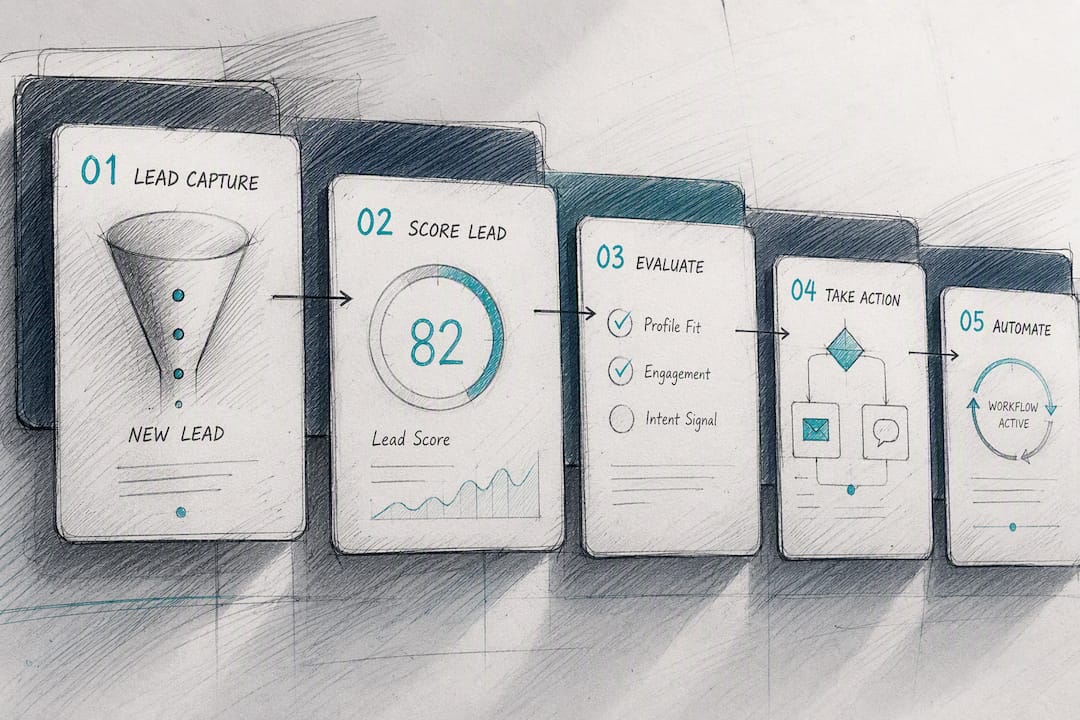
Start with scoring. Predictive lead scoring, where your system weighs firmographic fit and behavioral signals together, beats static point systems because it adjusts as your close-won data accumulates. Route your highest-scored leads with a strict SLA, ideally under 15 minutes for live leads, since response time correlates directly with reply rate.
Automation handles the repetitive part: enrichment fills in missing fields, duplicate detection prevents your reps from working the same contact twice, and a refresh cadence, monthly for most B2B lists, keeps job titles and emails current. None of this replaces judgment; it just removes the busywork that eats a rep’s morning.
Track four numbers religiously:
- Cost per lead (what you paid the provider)
- Cost per opportunity (what it actually took to generate a qualified deal)
- Reply rate (how many contacts respond to first outreach)
- Conversion rate (leads to closed-won)
If cost per opportunity climbs while reply rate stays flat, the problem usually isn’t the leads. It’s how fast and how well your team is engaging them after delivery.
How Crono Helps You Execute on Purchased Leads
Buying a leads sale is only step one. Turning that list into revenue requires enrichment, prioritization, and fast, coordinated outreach, which is exactly where most bought-lead programs fail.
- Buying-signal enrichment surfaces which purchased contacts are actually in-market right now.
- AI agents draft and personalize outreach at the volume a large purchased list demands.
- Multichannel orchestration coordinates email, LinkedIn, and calls without manual handoffs.
- CRM integration keeps assignment rules, scoring, and SLAs enforced automatically.
Crono’s B2B lead scoring guide and Prospecting Masterclass walk through both pieces in more depth.
When Does Buying Leads Actually Make Sense?
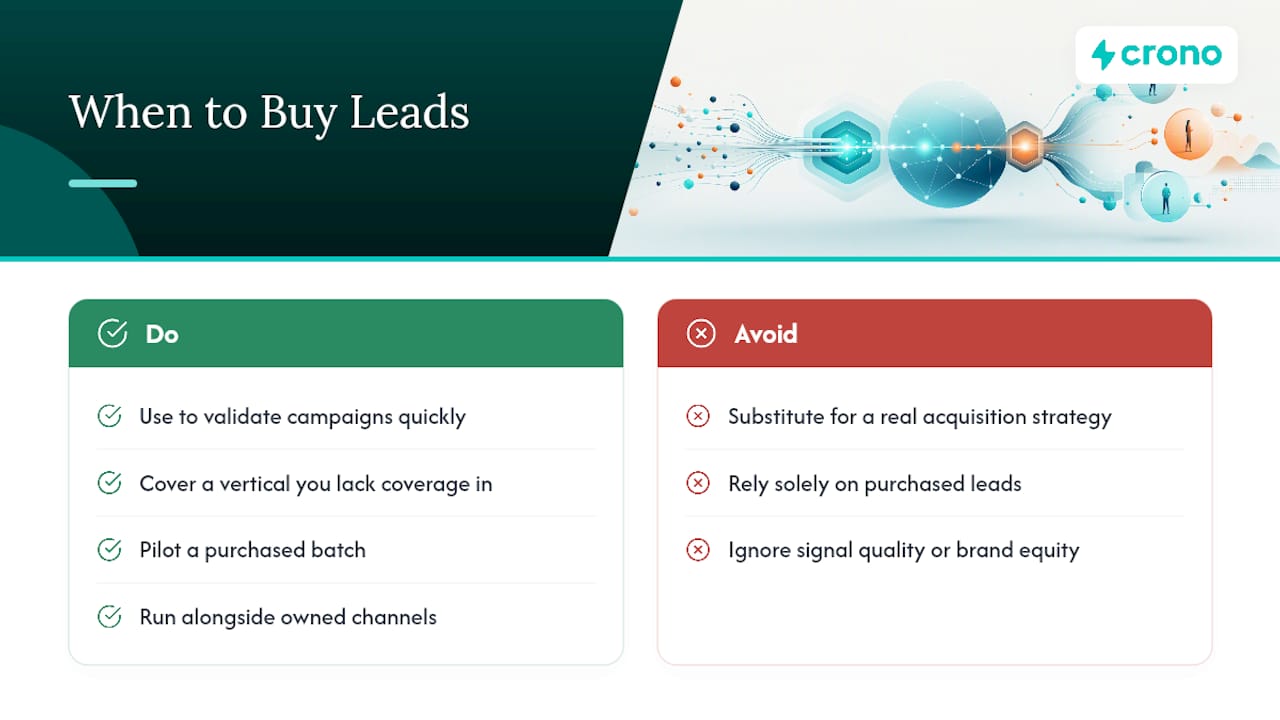
Buying leads is the right call when you need to validate a campaign fast or cover a vertical you don’t have coverage in yet. It’s the wrong call when you’re trying to substitute for a real acquisition strategy.
Building wins on signal quality, brand equity, and long-term cost per acquisition. Most revenue leaders who get this right run both in parallel: pilot a purchased batch alongside an owned channel like content-driven lead generation, then shift budget toward whichever produces cheaper qualified opportunities.
Put Purchased Leads to Work Faster With Crono
A leads sale only pays off if your team can act on the list before intent cools, and that’s the gap Crono closes. Instead of dumping a CSV into your CRM and hoping reps get to it, Crono enriches every purchased contact with live buying signals, scores it against your ICP, and routes it into a multichannel sequence across email, LinkedIn, and calls automatically.
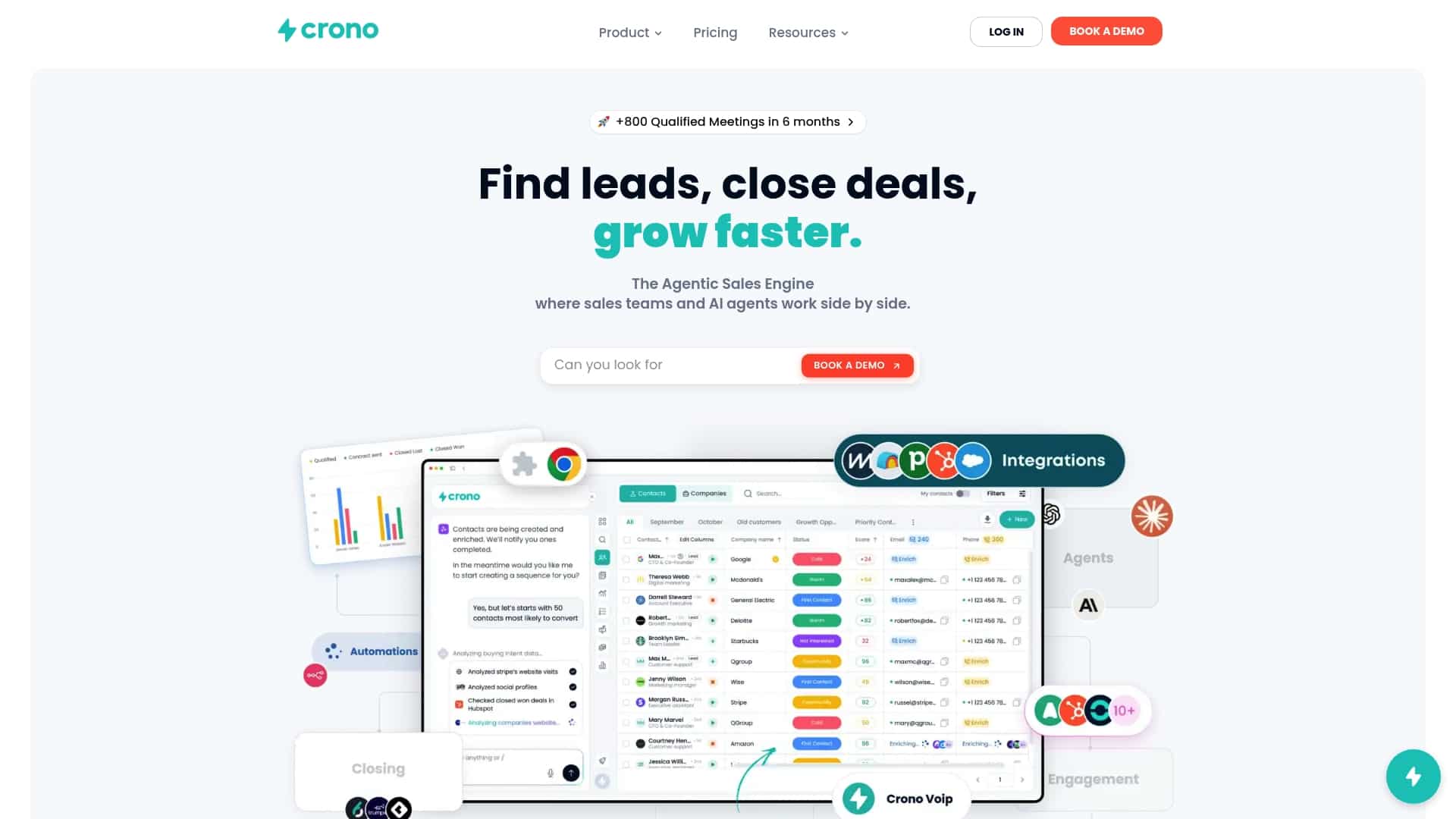
That means the lead you paid for gets a personalized first touch in minutes, not days, which is usually the difference between a reply and a bounce. If you’re running a pilot batch this quarter, start with Crono’s sales engagement and outbound practices guide to set up scoring and routing before your leads even arrive, then book a demo to see how fast a purchased list can move through your pipeline.
Sources
- Dynamics 365 release notes: lead-management guidance
- Investopedia — Sales lead definition
- Leadyen — real-time B2B lead marketplace
- LeadSuggest — verified sales opportunities
