
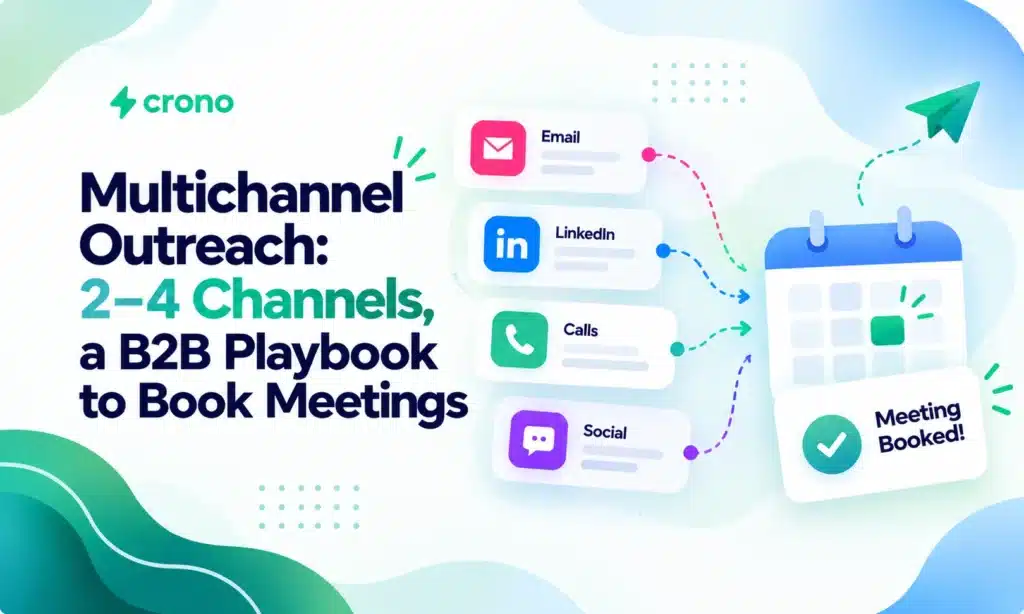
Multichannel outreach means reaching the same prospect through two to four coordinated channels, sequenced around their role and buying stage, instead of relying on a single email thread. The approach works because synchronized touches across email, LinkedIn, and phone build recognition and trust faster than any single channel can on its own. For B2B sales leaders, the practical starting point is a sequence built on email, LinkedIn, and phone, with SMS or ads layered in for specific segments.
TL;DR:
- Build a 21 to 27 day sequence with six to eight touches, alternating channels every three to four days after the opening contacts.
- Match channels and message depth to the buyer: economic buyers favor concise calls and email, while technical evaluators need detailed content and explanations.
- Treat replies as a stop signal for automation, honor requests to stop promptly, and meet separate rules for email, phone, SMS, and LinkedIn outreach.
- Test changes against randomized account controls for four to six weeks, exclude accounts exposed to paid ads, and track meetings alongside deliverability and replies.
Table of Contents
- What multichannel outreach is and why single-channel outreach falls short
- Key channels for B2B outreach and how to weigh them by persona and stage
- How to build a multichannel outreach sequence: a step-by-step playbook
- Messaging personalization and content strategy for sequences
- Automation, ops, and the tech stack that supports multichannel outreach
- Tracking performance: KPIs, A/B tests, and optimization
- Crono practitioner’s corner: applying the playbook with a sales execution layer
- Examples of successful multichannel outreach campaigns
- Compliance and privacy considerations in multichannel outreach
- Common challenges in executing multichannel outreach
- Priorities and trade-offs leaders should weigh
- How Crono brings multichannel orchestration into one workflow
- FAQ
- Sources
What multichannel outreach is and why single-channel outreach falls short
Multichannel outreach is the practice of coordinating a sequence of touches across several channels so a prospect encounters a consistent message at the right moments, rather than one channel carrying the entire burden of starting a conversation. It’s a narrower, execution-focused cousin of broader multichannel marketing, which spans brand campaigns and demand generation. Here, we’re talking specifically about prospecting and pipeline-building sequences run by sales teams.
Single-channel outreach tends to get ignored for a few structural reasons:
- A single cold email competes with hundreds of others in a crowded inbox and rarely builds enough trust on its own.
- A LinkedIn message alone misses prospects who check the platform infrequently.
- A phone call with no prior touchpoint often reads as an interruption rather than a relevant conversation.
The shift toward synchronized, multi-touch engagement isn’t just a sales team preference. McKinsey’s research found that a large share of B2B buyers report inconsistencies between a company’s website and what sellers tell them directly, a gap that erodes trust before a deal even starts. Buyers now expect engagement across many channels, and McKinsey ties orchestration and personalization directly to market-share gains. At the same time, discovery itself has changed. G2’s analysis of buyer behavior shows that prospects increasingly form shortlists through AI search tools and review platforms before a rep ever reaches out, which means outreach sequences now compete with channels sales teams don’t directly control.
Key channels for B2B outreach and how to weigh them by persona and stage
Not every channel earns a place in every sequence. The right mix depends on who you’re reaching and where they sit in the buying process.
- Email scales easily and creates a paper trail, but deliverability depends heavily on domain reputation and list hygiene.
- LinkedIn works well for warming up a cold contact and signaling relevance through shared connections or content, though messaging limits cap volume.
- Phone remains the fastest way to get a real-time answer, particularly with economic buyers who want a direct conversation before committing time to a demo.
- SMS gets high open rates for time-sensitive confirmations but is risky for first-touch cold outreach.
- Ads and events build awareness ahead of a sequence and work best as a supporting layer rather than a primary channel.
Persona matters as much as channel mix. An economic buyer, the person who signs off on budget, typically responds better to concise phone and email touches that lead with business outcomes. A technical buyer evaluating fit usually wants more detail, so LinkedIn content and longer email explanations land better. A champion inside the account, someone who will advocate internally, often engages most through LinkedIn, where they can see your activity and credibility over time.
A Gartner sales survey found that many B2B buyers actively avoid suppliers who send irrelevant outreach, while 61% say they’d prefer a rep-free buying experience entirely. That figure should shape channel selection: every touch needs to earn its place by adding something a buyer can’t get by researching alone. Gartner also notes that buyers complete multiple activities both online and with supplier reps across the buying journey, which reinforces why sellers need to act as a resource at specific moments rather than a constant presence.
Channel selection should also account for deliverability risk and compliance exposure. Email carries legal obligations under CAN-SPAM, LinkedIn automation carries platform terms-of-service risk, and cold calling is subject to its own regulatory patchwork depending on the list source.
How to build a multichannel outreach sequence: a step-by-step playbook
A sequence works best when it’s built in a deliberate order rather than assembled touch by touch.
- Segment your audience first. Group prospects by firmographic fit, role, and intent signal before writing a single message, since the sequence structure should differ for a hot inbound lead versus a cold enterprise target.
- Prioritize by signal strength. Accounts showing active buying signals, such as recent funding, hiring sprees, or technology changes, deserve faster, more aggressive cadences than cold list-based outreach.
- Map the channel order. A common pattern opens with a LinkedIn connection request, follows with an email two days later, adds a phone call around day five, and alternates channels every three to four days afterward.
- Set the cadence length. A 21 to 27 day cadence covering six to eight touches gives enough time for a prospect to notice the pattern without feeling chased, a timing window we cover in more detail in our playbook on multichannel timing.
- Decide parallel versus serial sequencing. Parallel touches, like sending an email and a LinkedIn message the same day, work for high-priority accounts where speed matters; serial touches, spaced a few days apart, suit lower-priority segments where you want to conserve sender reputation.
- Build in escalation and breakoff rules. A reply triggers an immediate pause on automated touches, while silence after the full sequence should trigger either a breakoff into a long-term nurture track or a handoff to a different rep for a fresh angle.
- Run operational checks before launch. Confirm sending domains are warmed up, email volume per domain stays within safe thresholds, and LinkedIn activity avoids flagging automated behavior.
- Review and refresh quarterly. Messaging that worked last quarter can decay as market conditions shift, so sequences need scheduled review and performance monitoring.
For additional tactical detail on crafting individual touches, our guide to cold outreach strategies walks through message construction channel by channel.
Pro Tip: Start new domains and LinkedIn accounts with light activity for the first two weeks before ramping to full sequence volume, since sudden spikes are the most common trigger for spam filters and platform restrictions.
Messaging personalization and content strategy for sequences
Personalization in a multichannel sequence works on four levels, each requiring a different amount of research time.
- Signal-based personalization references something timely, like a job change or a recent announcement, and takes the least effort to scale.
- Role-based personalization tailors the value proposition to what a specific title cares about, such as cost savings for finance versus adoption risk for IT.
- Company-based personalization ties the message to the account’s industry, size, or stack.
- Trigger-based personalization responds to a specific event, like a competitor’s price increase or a recent funding round, and tends to produce the highest reply rates because it’s the most relevant to the moment.
Each touch in a sequence should accomplish something distinct rather than repeating the same pitch. An opening touch should deliver value or a relevant insight, a middle touch should offer proof such as a case study or data point, and a later touch should make a direct, low-friction ask, like a 15-minute call.
Micro-testing keeps messaging sharp over time. Testing two subject line variants, two LinkedIn opening lines, or two voicemail scripts against a consistent sample size reveals what resonates without requiring a full sequence rebuild.
Common personalization mistakes include leading with company history instead of the prospect’s problem, over-personalizing to the point where the message feels researched but still generic in its ask, and skipping the proof touch entirely, which leaves buyers without a reason to trust the claim.
Automation, ops, and the tech stack that supports multichannel outreach
A multichannel sequence only scales if the tools behind it talk to each other. CRM sync matters more than almost any other technical decision, since missed activity logging creates blind spots that lead to duplicate outreach or dropped follow-ups.
- Engagement platforms handle sequence building, email sending, and LinkedIn task queues.
- Enrichment tools keep contact and firmographic data current so personalization doesn’t rely on stale information.
- Dialing tools support call logging and local presence dialing for better connect rates.
- Orchestration layers tie these categories together so reps and automated steps work from one shared record instead of fragmented tools.
Operational guardrails protect the sequence from damaging sender reputation: throttle sending volume per domain, honor opt-outs immediately, respect each platform’s terms of service for automated activity, and run regular data hygiene passes to catch duplicate or outdated contacts, something we cover in detail in our guide to CRM deduplication.
Pro Tip: Document your sequence logic as a written SOP, not just a configured workflow, so a new rep can understand the reasoning behind each touch without reverse-engineering the tool.
Tracking performance: KPIs, A/B tests, and optimization
A multichannel sequence needs a small set of KPIs tracked consistently rather than a sprawling dashboard nobody checks.
- Deliverability rate tells you whether emails are landing in inboxes at all, which should be checked before judging any downstream metric.
- Open and reply rates by channel show which touches are earning attention.
- Meetings booked measures whether engagement converts into real pipeline activity.
- Pipeline conversion ties the sequence back to revenue, the metric that ultimately justifies the investment.
To test whether a sequence change actually works, hold out a randomized control group of accounts that doesn’t receive the new variant, then compare meetings booked across a four to six week window. Gartner’s guidance on buyer engagement supports designing these tests carefully, since buyers who feel over-targeted actively disengage, which can distort results if the control group isn’t clean. Exclude accounts touching paid ad channels during the test window to avoid contamination.
Attribution for multichannel sequences works best as a mix of first-touch and multi-touch views rather than a single model, since the channel that starts a conversation and the channel that closes it are often different. Decision rules should be simple: scale a sequence that beats the control by a meaningful margin, iterate one variable at a time when results are mixed, and pause a sequence that underperforms for two consecutive cycles rather than letting it run on autopilot.
Crono practitioner’s corner: applying the playbook with a sales execution layer
Running this playbook by hand across dozens of accounts is where most teams lose consistency. We built Crono as a sales execution layer specifically to operationalize the steps above: signal-driven prioritization surfaces which accounts deserve the aggressive cadence from step two of the playbook, enrichment keeps contact data current for the personalization levels in the messaging section, and AI agents handle repetitive sequence execution across email, LinkedIn, and phone so reps spend their time on conversations instead of task queues.
- Orchestration connects CRM activity, outreach tasks, and AI agent actions into one workflow instead of fragmented tools.
- Signal-based prioritization flags which accounts match the trigger-based personalization criteria covered earlier.
- Enrichment and list building reduce the manual research time that company and role-based personalization normally require.
Impact is best measured the same way the KPI section outlines: reply rate, meetings booked, and pipeline conversion, tracked before and after introducing orchestration into an existing sequence. For teams exploring what sequencing at scale looks like with signal data built in, our multichannel campaign guide walks through a practical setup.
Examples of successful multichannel outreach campaigns
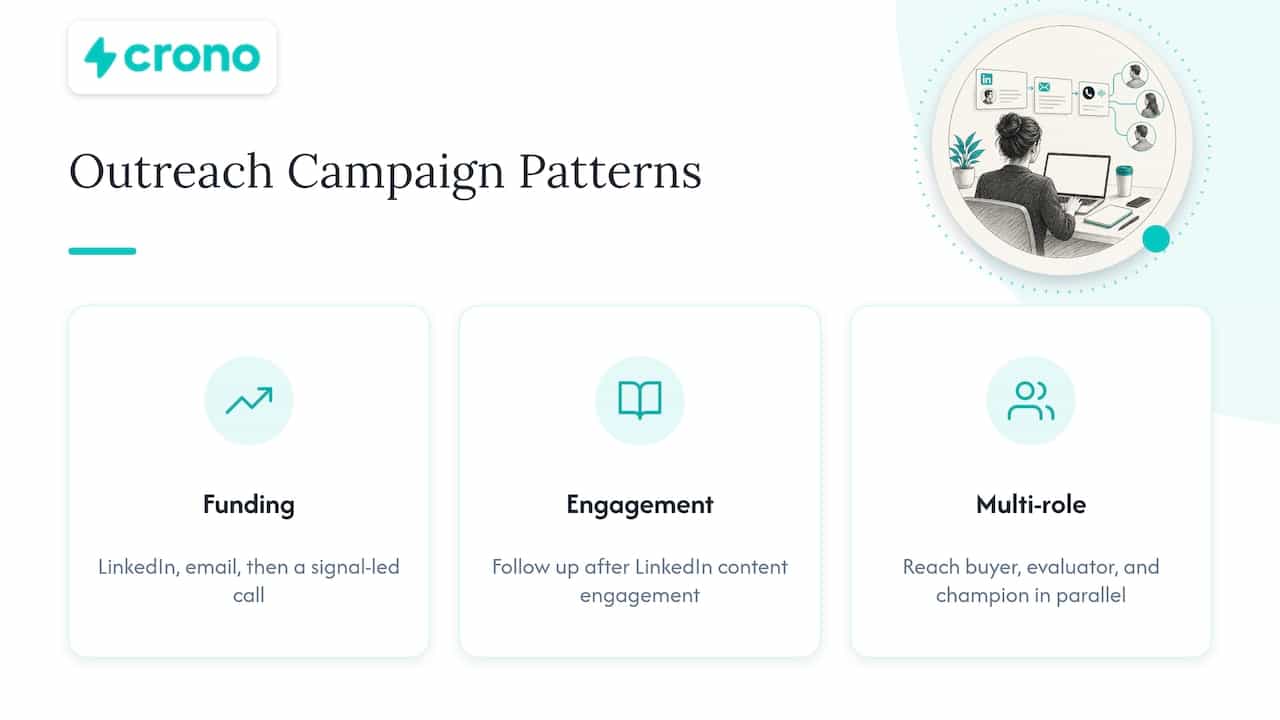
A common pattern among effective sequences is pairing a trigger event with a tight channel sequence rather than relying on volume alone. A team targeting accounts that recently raised funding, for instance, might open with a LinkedIn connection referencing the announcement, follow two days later with an email tying the funding to a specific growth challenge, and add a phone call once the prospect has viewed the LinkedIn profile or opened the email, since that activity signals warm attention before the call happens.
Another pattern that performs well pairs content with direct outreach: a rep shares a relevant industry insight on LinkedIn, waits for engagement from target accounts, then follows up directly with contacts who interacted with the post. This sequence works because the cold outreach no longer feels cold. The prospect has already seen the name and the content before the direct message arrives.
A third pattern applies to champion-building within an account. Rather than pursuing a single contact, a sequence runs in parallel across two or three people at the same company, roughly the economic buyer, a technical evaluator, and a potential champion, with messaging tailored to each role but timed to land in the same week. This creates internal conversation about the vendor before any single rep conversation happens, which tends to shorten the path to a first meeting.
What ties these examples together isn’t a specific channel order but the discipline of matching the trigger, the channel, and the message to a specific moment in the prospect’s attention rather than running the same generic cadence against every account.
Compliance and privacy considerations in multichannel outreach
Email outreach carries the clearest regulatory obligations. The FTC’s CAN-SPAM compliance guide applies to commercial B2B email and requires accurate sender information, a physical postal address, and a clear, functioning opt-out mechanism. Opt-out requests must be honored promptly, generally within the timeframe required by applicable law, and sender responsibility doesn’t transfer to a vendor just because a third-party tool sends the email on your behalf. Our own breakdown of CAN-SPAM compliance requirements covers the header and opt-out mechanics in more detail.
LinkedIn outreach falls under the platform’s own terms of service rather than a specific federal statute, but automated connection requests and messages at aggressive volume can trigger account restrictions. G2’s research on buyer behavior recommends favoring lighter engagement, like profile views, before scaling to direct messaging, both to protect account health and to avoid the kind of irrelevant, high-volume outreach that erodes buyer trust.
Phone outreach is subject to its own rules depending on the list source and jurisdiction, and SMS carries additional consent requirements in many regions. The safest operating principle across every channel is the same: collect contact data through legitimate means, keep an accurate record of consent and opt-outs, and build opt-out handling into the sequence tooling itself rather than relying on manual tracking.
Common challenges in executing multichannel outreach
Most teams run into the same handful of obstacles when scaling a multichannel program.
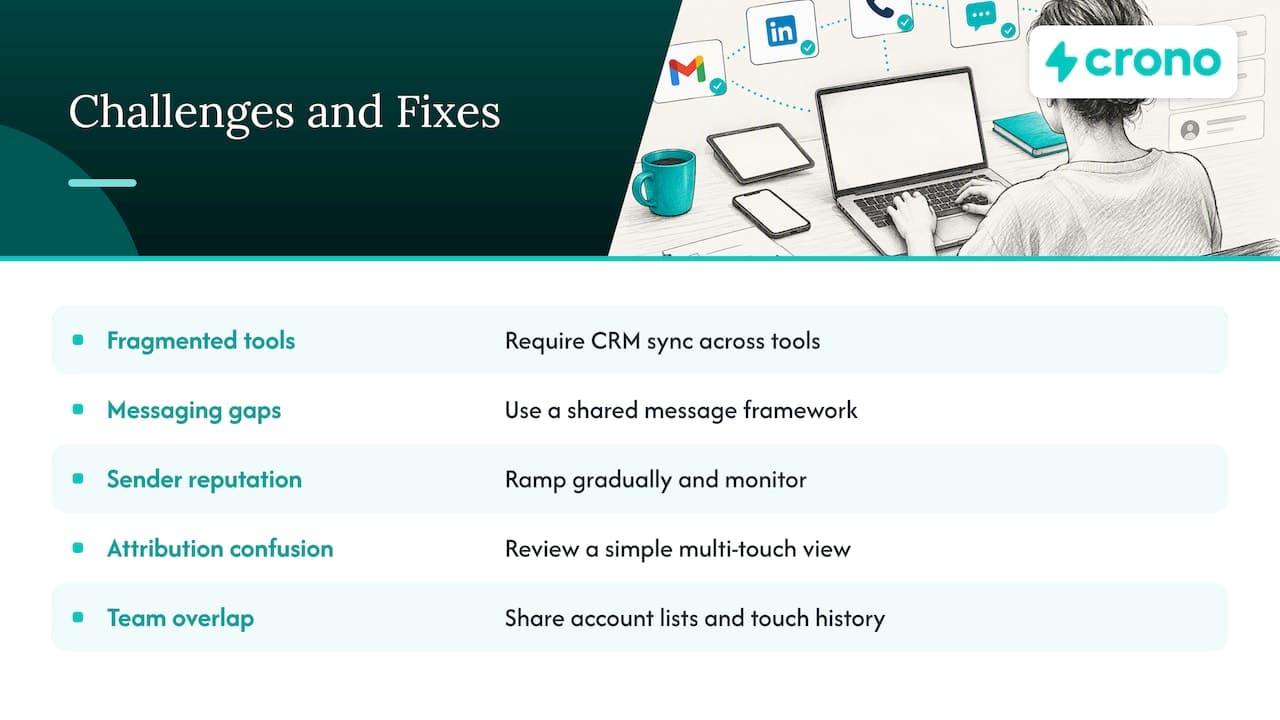
Fragmented tooling is the most common one. When email, LinkedIn, and dialing tools don’t share data, reps end up duplicating outreach or missing a reply logged in a different system. The fix is CRM sync as a non-negotiable requirement for any tool added to the stack, not an optional integration.
Inconsistent messaging across channels is the second major issue, and it ties directly back to McKinsey’s finding that 69% of buyers notice a gap between company messaging and what reps actually say. Sequences need a shared message framework that every channel touch pulls from, so a LinkedIn message and a follow-up email tell the same story.
Sender reputation damage shows up when teams scale volume too quickly on a new domain or account, triggering spam filters or platform restrictions that take weeks to recover from. Gradual ramp-up and ongoing monitoring prevent this from becoming a recurring problem.
Attribution confusion is the fourth common challenge. When a deal touches four channels before closing, teams often struggle to credit the right activity, which makes it hard to justify continued investment in any single channel. A simple multi-touch view, reviewed consistently, resolves most of this confusion without requiring a complex attribution model.
Alignment between sales and marketing rounds out the list, particularly when both teams run outreach to the same accounts without visibility into each other’s activity. Shared account lists and a single source of truth for touch history prevent the overlap that frustrates prospects and wastes effort.
Priorities and trade-offs leaders should weigh
The teams that get multichannel right treat synchronization as a shared metric between sales and marketing, not a sales-only initiative. I’d rather see a leader run one disciplined pilot sequence across ten accounts than roll out a five-channel program company-wide before anyone knows what’s actually working.
— Alex
How Crono brings multichannel orchestration into one workflow
Everything in this playbook, from signal-based prioritization to channel sequencing to opt-out hygiene, gets harder to manage once a team scales past a handful of reps. That’s the gap our platform closes: Crono connects CRM, enrichment, and multichannel sequencing into a single execution layer so reps and AI agents work from the same account view instead of juggling disconnected tools.
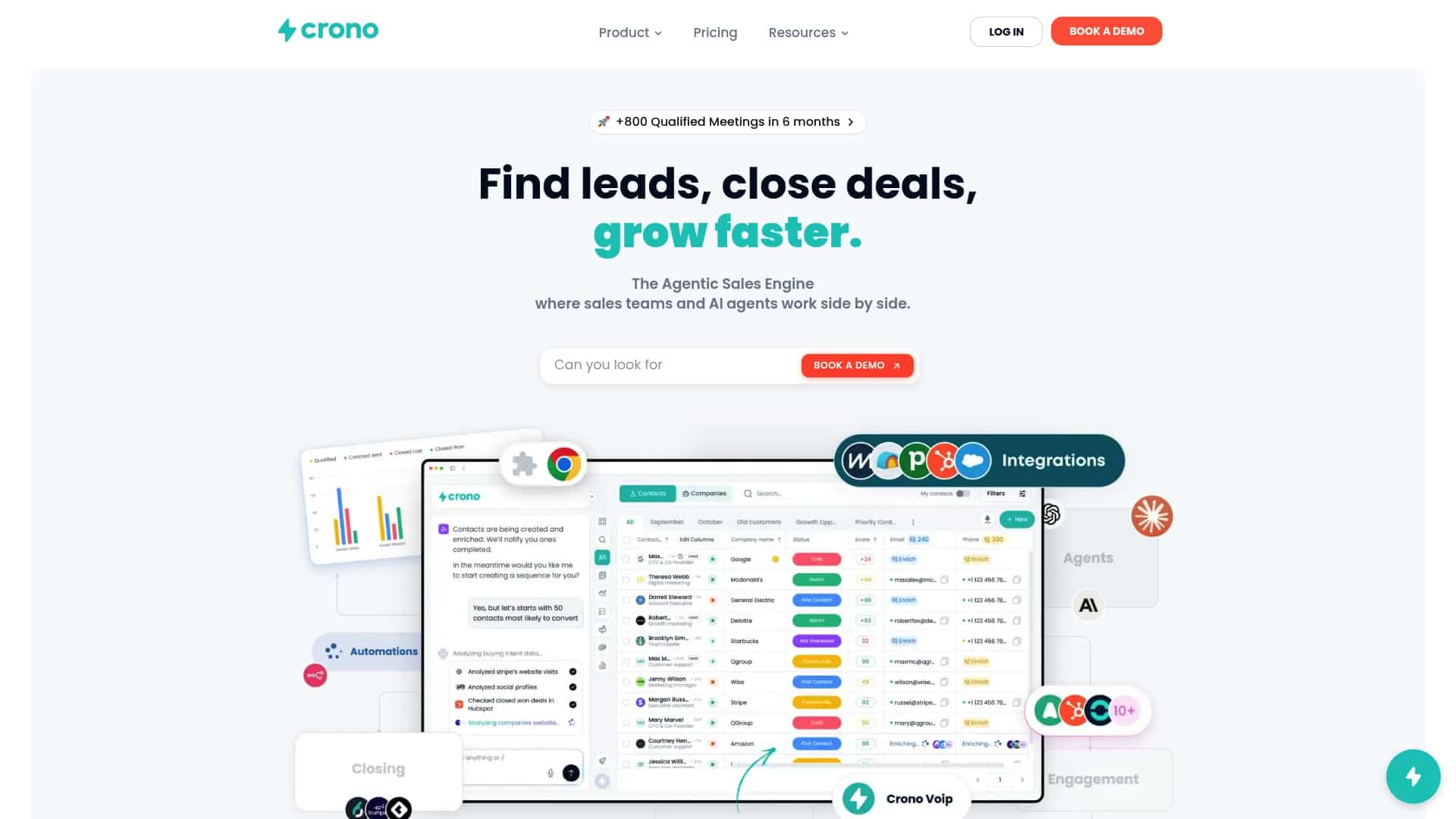
Teams that want to see the orchestration layer in action can review current plans on our pricing page, which includes Pro and Ultra tiers along with Agentic Sales Engine options for teams scaling AI-assisted outreach. If you’re ready to test how signal-driven sequencing performs against your current process, that’s the fastest next step.
FAQ
What are examples of outreach strategies?
Common outreach strategies include cold email sequences, LinkedIn-based social selling, cold and warm calling, and trigger-based outreach tied to events like funding rounds or leadership changes. Most effective programs combine two or more of these into a coordinated sequence rather than relying on one approach alone.
Can you give me an example of multichannel marketing?
A typical example pairs a LinkedIn connection request with a follow-up email referencing a recent company announcement, then adds a phone call once the prospect has engaged with either touch. The channels reinforce each other instead of operating as separate, disconnected efforts.
What is multichannel marketing in simple terms?
Multichannel marketing means reaching an audience through several channels, such as email, social media, and phone, as part of one coordinated plan rather than isolated campaigns. In a sales context, this narrows to multichannel outreach: sequencing touches across channels to reach a specific prospect or account.
What is a multichannel sales strategy?
A multichannel sales strategy coordinates outreach across channels like email, LinkedIn, and phone into a structured sequence, timed and personalized based on the prospect’s role and buying stage. Gartner’s research found that 73% of B2B buyers avoid suppliers who send irrelevant outreach, which is why channel and message selection need to match the buyer’s actual context rather than following a generic template.
How long should a multichannel outreach sequence run?
Most effective sequences run for several weeks and include multiple touches spread across two to three channels. Shorter sequences often don’t give a prospect enough exposure to notice the pattern, while longer ones risk feeling like persistent, unwanted contact.
Sources
- The new B2B growth equation
- Gartner sales survey finds 61% of B2B buyers prefer a rep-free buying experience
- CAN-SPAM Act: A Compliance Guide for Business | Federal Trade Commission
- Buyer behavior in 2025 (G2)
