

SDR burnout is defined as the chronic exhaustion and disengagement that results from structurally unsustainable work conditions, not from individual weakness or lack of motivation.
Understanding why SDR burnout happens in B2B requires looking at the systems around reps, not the reps themselves.
The root causes are systemic: unrealistic activity targets, low-quality data, fragmented tools, and a near-total absence of meaningful feedback. In 2026, 61.3% of SDR teams fall below 70% quota attainment, down from 75% in 2024.
That collapse did not happen because reps stopped trying. It happened because the playbook stopped working.
Why SDR burnout happens in b2b: volume metrics are the first cause
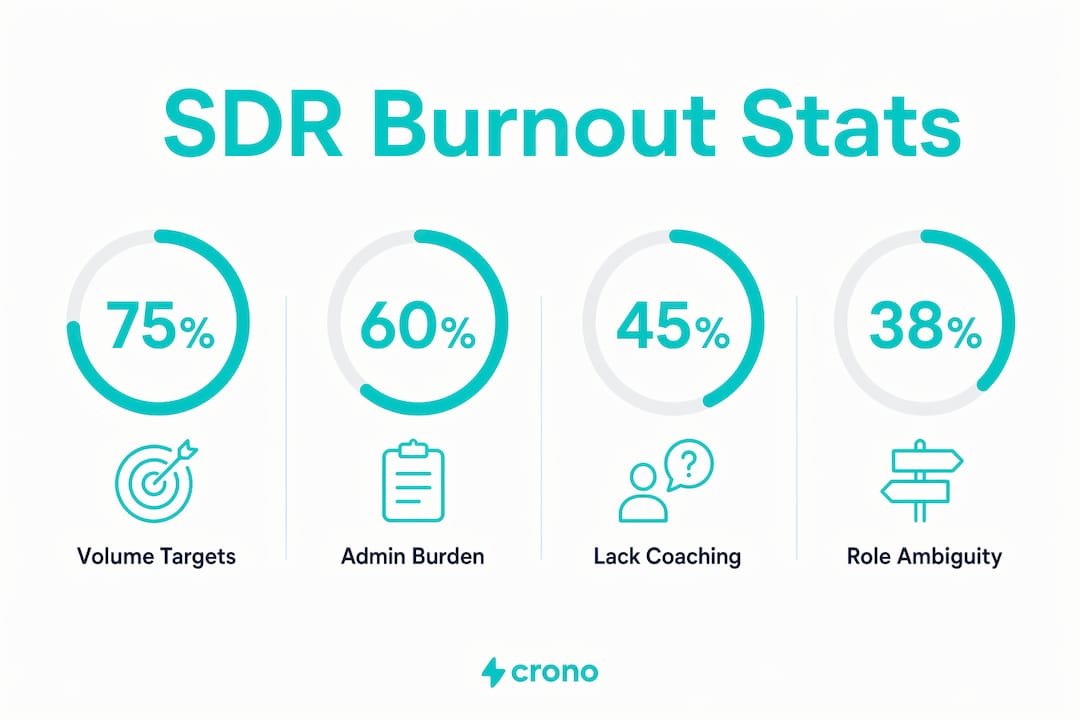
The dominant cause of SDR fatigue in B2B is a volume-based activity model that measures the wrong things. Most SDR teams track emails sent, calls made, and sequences launched. Those numbers are easy to report but they measure effort, not effectiveness.
B2B decision-makers now receive over 120 sales emails per week. That level of inbox saturation means reply rates have dropped to the point where volume-heavy strategies produce diminishing returns at scale. When reps send hundreds of emails and hear nothing back, the work starts to feel meaningless. That perceived meaninglessness is one of the clearest psychological drivers of burnout.

The data tells the same story. Look at how quota attainment has shifted as outreach volume increased:
| Year | SDR Teams Below 70% Quota | Avg. Weekly Outreach Volume |
|---|---|---|
| 2024 | 25% | Moderate |
| 2025 | ~40% | High |
| 2026 | 61.3% | Very High |
More volume has produced worse results. That correlation is not coincidental. When the shift from volume to quality metrics like reply rate, conversation rate, and qualified meeting rate happens, teams report better quota attainment and lower burnout.
The key causes of SDR burnout tied to volume strategies include:
- Chasing bad data: High-volume outreach relies on large contact lists, which are often outdated or poorly segmented.
- No signal from the noise: When every sequence looks the same, reps get no feedback on what actually works.
- Quota pressure without a path: Reps are told to do more of something that is not working, with no alternative direction.
Sales leaders who balance quantity and quality in outreach design consistently see better rep retention and pipeline quality.
How tool overload and admin burden accelerate SDR fatigue
Administrative overhead is the second major driver of B2B sales stress. The average sales rep today does not spend most of their day selling. They spend it switching between tools, updating CRM records, logging calls, and managing sequences across disconnected platforms.
Research shows reps experience 4+ pre-call context switches, meaning they touch four or more systems before a single conversation happens. Each switch costs focus and time. Across a full week, that overhead adds up to hours of lost selling time.
The paradox of modern sales tech is real. More tools were supposed to make reps more productive. Instead, the administrative burden from CRM updates and fragmented platforms creates a reinforcing cycle. Reps cut corners on data entry to save time. Data quality drops. Management adds more oversight to compensate. Reps face more controls, more reporting, and less autonomy. Stress increases.
Here is how that cycle typically unfolds:
- Tool sprawl increases: Teams add new platforms for prospecting, sequencing, calling, and enrichment without removing old ones.
- Context switching rises: Reps spend more time managing tools than using them to sell.
- Data quality degrades: Rushed CRM updates produce unreliable forecasts.
- Management controls tighten: Leaders add review layers to compensate for bad data.
- Rep autonomy shrinks: Less freedom plus more oversight equals faster burnout.
The solution is not always adding another tool. The right outbound tech stack consolidates workflows so reps spend time on conversations, not configuration.
Pro Tip: Audit your SDR team’s daily workflow and identify the top three revenue-driving activities. Protect time for those three things first. Automate or eliminate everything else.
Does lack of coaching cause SDR burnout?
The short answer is yes. The absence of structured skill development turns the SDR role into an endurance test rather than a career path. That shift is one of the clearest predictors of short tenure and high turnover.
SDRs operate in what researchers call a feedback vacuum. Their outreach goes out, results come back slowly or not at all, and there is no clear link between what they did and what happened. AI sequencing tools increase message volume but reduce signal quality, making it harder for reps to learn from their own activity. Without that feedback loop, reps cannot improve. They can only persist.
Only 12% of sales teams use AI for coaching. That means most managers spend their time firefighting pipeline problems instead of developing rep skills. The result is predictable: 52% of companies report SDR tenure under one year. High turnover is expensive and it signals a coaching deficit, not a hiring problem.
The difference between teams that coach and teams that do not is measurable:
| Factor | Teams With Structured Coaching | Teams Without Coaching |
|---|---|---|
| SDR Tenure | 18+ months average | Under 12 months |
| Quota Attainment | Higher, improving over time | Flat or declining |
| Burnout Rate | Lower | Higher |
| Pipeline Quality | Consistent | Variable |
AI-powered coaching tools can close this gap by giving reps real-time feedback on message quality, call performance, and outreach patterns. They do not replace manager coaching. They make it possible.
How role ambiguity and quota pressure affect SDR mental health
Mental health is a direct factor in SDR performance, and it is still underaddressed in most B2B sales organizations. Research using structural equation modeling shows that role ambiguity and high job demands significantly predict anxiety and depressive symptoms among sales professionals, with β=0.38 for anxiety and β=0.32 for depression. Those are not small effects. They translate directly into lower performance and higher turnover intention.
The Job Demands–Resources (JD-R) framework explains why. When job demands (quota pressure, volume targets, unclear expectations) consistently outpace job resources (coaching, autonomy, clear goals), burnout follows. The JD-R model predicts that this imbalance does not just reduce motivation. It produces measurable psychological harm over time.
One finding that surprises most leaders: high-performing reps are more vulnerable to burnout than average performers. Traits like perfectionism and resilience allow top reps to absorb more stress for longer. That means burnout often hits your best people hardest, and it hits them before you see it coming.
Sales leaders can buffer these effects by taking specific steps:
- Set clear role expectations in writing. Ambiguity about what success looks like is a direct stressor.
- Separate pipeline reviews from coaching conversations. Mixing the two signals that development is secondary to numbers.
- Normalize mental health conversations. Teams where managers acknowledge stress openly report lower turnover.
- Provide access to support resources. Employee assistance programs and mental health days are not soft benefits. They are retention tools.
Pro Tip: Run a quarterly “role clarity check” with each SDR. Ask them to describe their top three priorities and what success looks like. If their answers do not match yours, that gap is a burnout risk.
Practical strategies to prevent SDR burnout on your team
Preventing SDR burnout requires redesigning the conditions around the role, not coaching reps to tolerate bad conditions better. The following strategies address the structural causes directly.
-
Shift to quality metrics. Replace emails sent and calls made with reply rate, conversation rate, and qualified meetings booked. Reps who see their quality improving stay motivated even when volume is lower.
-
Simplify the workflow. Identify the three activities that drive the most pipeline and protect rep time for those. Cut or automate everything else. Reducing context switching by even two steps per day recovers meaningful selling time across a week.
-
Block non-negotiable coaching time. 30 minutes per rep per week dedicated to skill development, separate from pipeline reviews, is the highest-leverage leadership action available. Teams that protect this time report better retention and performance.
-
Automate administrative tasks. CRM updates, data enrichment, and sequence management should not require manual effort. Automation frees reps to focus on conversations. It also improves data quality, which reduces management oversight pressure.
-
Clarify expectations at every level. Define what quota looks like, what the ramp period covers, and what support reps can expect. Ambiguity is a stressor you can eliminate today.
For teams looking to understand why SDR quota attainment is declining and what structural changes actually move the needle, the evidence points consistently toward quality over volume.
Key takeaways
SDR burnout in B2B is a structural problem caused by volume-based metrics, tool overload, absent coaching, and role ambiguity, and it requires systemic fixes, not individual resilience.
| Point | Details |
|---|---|
| Volume metrics drive burnout | Measuring emails sent over reply rates creates futile work and erodes motivation. |
| Tool overload reduces selling time | Reps experiencing 4+ context switches per call lose hours of productive selling time weekly. |
| Coaching gaps shorten tenure | Only 12% of teams use AI coaching; 52% report SDR tenure under one year as a result. |
| Role ambiguity harms mental health | Unclear expectations predict anxiety and depression, which directly reduce performance. |
| Systemic fixes outperform individual fixes | Redesigning workflows, metrics, and coaching structures reduces burnout more than resilience training. |
The part most leaders miss about SDR burnout
I have worked with enough B2B sales teams to know that most leaders diagnose burnout as a motivation problem. They bring in a motivational speaker, run a team offsite, or adjust the commission structure. Those things can help at the margins. They do not fix the underlying issue.
The most overlooked cause of SDR burnout is not quota pressure. It is the absence of a learning loop. When reps cannot connect their daily actions to outcomes, the work stops making sense. That loss of meaning is more corrosive than any quota. I have seen reps survive brutal targets when they felt they were growing. I have seen reps quit easy roles because they felt stuck.
The other thing leaders consistently underestimate is the cost of tool sprawl. Every new platform added to the stack without removing an old one adds cognitive load. That load is invisible on a dashboard but it shows up in rep energy, data quality, and eventually, attrition.
The organizations that solve burnout sustainably do two things differently. They measure what matters, not what is easy to count. And they treat coaching as a non-negotiable operational commitment, not a nice-to-have. Everything else follows from those two decisions.
How Crono helps sales teams reduce SDR burnout
SDR burnout is a systems problem, and Crono is built to fix the systems. Crono’s Agentic Sales Engine combines AI agents, workflow automation, data enrichment, and multichannel engagement in a single platform, so reps spend time selling instead of switching tabs.
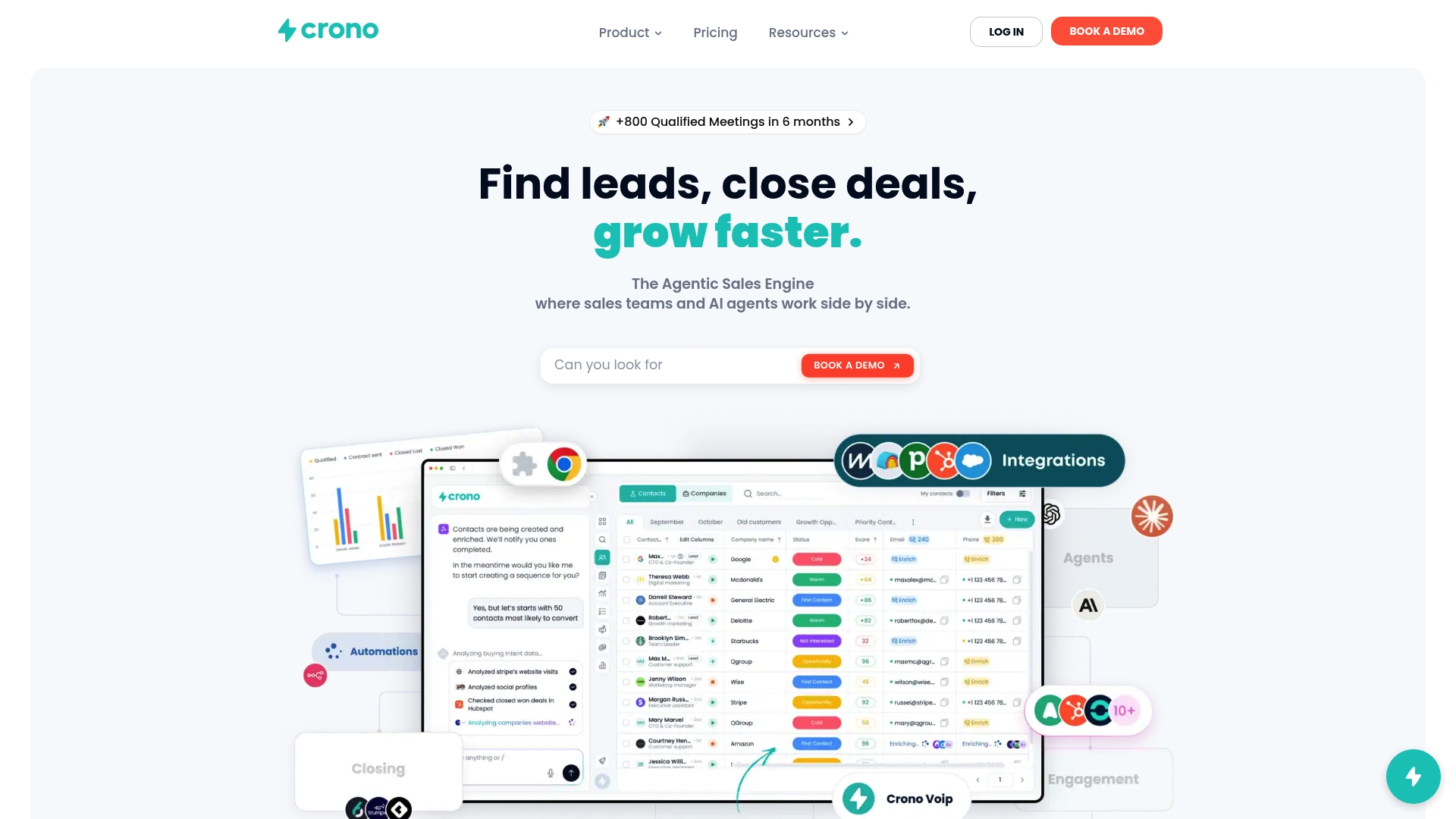
Crono reduces administrative overhead by automating CRM updates, sequence management, and data enrichment. It gives reps and managers real-time signal quality feedback, closing the coaching gap that drives short tenure. For teams ready to move from volume-based outreach to quality-driven pipelines, Crono’s AI sales agents guide shows exactly how to deploy intelligent automation without adding complexity. You can also explore Crono’s AI coaching tools to build the skill development loops your SDRs need to grow, not just endure.
FAQ
What is the main cause of SDR burnout in b2b?
SDR burnout is primarily caused by structural conditions: volume-based activity metrics, low-quality data, fragmented tools, and the absence of meaningful coaching. These systemic factors create futile work and block skill development, which drives disengagement faster than quota pressure alone.
How does lack of coaching contribute to SDR turnover?
Only 12% of sales teams use AI for coaching, leaving most managers focused on pipeline reviews rather than skill development. Without a feedback loop, SDRs build endurance instead of skills, and 52% of companies report SDR tenure under one year as a direct result.
Can role ambiguity actually cause burnout?
Yes. Research shows role ambiguity combined with high job demands predicts anxiety (β=0.38) and depression (β=0.32) among sales professionals. Those psychological effects reduce performance and increase turnover intention, making clarity of expectations a direct burnout prevention tool.
What metrics should replace volume tracking for sdrs?
Replace emails sent and calls made with reply rate, conversation rate, and qualified meetings booked. Teams that shift to quality metrics report better quota attainment and lower burnout because reps can see meaningful progress in their work.
How many tools is too many for an SDR team?
There is no fixed number, but reps experiencing 4 or more context switches before a single call lose significant selling time daily. If your stack requires reps to touch more than three platforms to complete a standard outreach sequence, tool consolidation is worth prioritizing.
