
The skills gap in B2B sales is the measurable distance between the competencies your sales team currently has and the skills required to consistently win deals and grow revenue.
This gap is not theoretical. 78.3% of B2B sellers missed quota in 2025, and fewer than half received formal sales skills training that year. The result is a performance distribution so skewed that only 14% of sellers generate 80% of total revenue.
Understanding the B2B sales skills deficit, its causes, and how to close it is the most direct path to improving quota attainment and reducing costly turnover.
What is the skills gap in B2B sales?
The skills gap in B2B sales is the difference between the competencies sellers demonstrate today and the behaviors required to execute a modern sales process effectively. Industry professionals also call this a sales competency gap or B2B sales skills deficit. Both terms describe the same core problem: sellers lack the specific, observable skills needed to move deals forward at each stage of the buying cycle.
The gap shows up in concrete ways. Reps struggle to engage executive buyers, fail to quantify value, and lose deals at the close because they never built a strong foundation in discovery. These are not attitude problems. They are skill problems, and they require training solutions, not performance management.

What makes this gap particularly damaging is its concentration. When only 14% of sellers drive 80% of revenue, the rest of the team is effectively a cost center. Sales leaders who misread this as a motivation problem will invest in the wrong interventions and watch performance stay flat.
What causes the skills gap in B2B sales teams?
Several structural and organizational factors drive the B2B sales skills deficit. The most common ones are not obvious until you look at the data.
- Lack of formal training. Fewer than half of B2B sellers receive structured sales skills training. Most onboarding programs focus on product knowledge and CRM navigation, not on the behavioral skills that actually close deals.
- The seller-manager perception gap. 83% of sellers rate themselves strong in executive engagement, but 41% of their managers disagree. This disconnect means sellers do not know what they do not know, and managers are not correcting it consistently.
- Inconsistent coaching. 73% of sellers receive no regular coaching. Without structured feedback loops, skill decay accelerates and bad habits become permanent.
- Tool overload without skill investment. The average rep uses seven tools daily but still struggles with execution. Sales teams overinvest in tools and underinvest in training, creating a false sense of productivity.
- Low AI adoption. Only 6% of sellers use AI for task prioritization despite more than half reporting they lack adequate AI toolsets. The technology exists; the skill to use it does not.
Pro Tip: Before buying another sales tool, audit how your team uses the ones they already have. Tool adoption rates are a leading indicator of skill gaps, not just change management problems.
The deeper issue is what researchers call skill debt. When teams skip reinforcement, skills erode and negative habits form. Those habits slow deal velocity and reduce win rates over time, compounding the original gap into a structural performance problem. You can read more about how B2B sales challenges are evolving as technology and buyer behavior shift.
How to identify and assess the skills gap in your sales team
Accurate diagnosis is the foundation of any skills gap analysis in B2B. Without it, you are guessing at solutions.
Separate skill gaps from will problems. Training does not fix motivation issues. A rep who knows how to run a discovery call but chooses not to has a will problem. A rep who does not know how has a skill gap. Conflating the two wastes your learning and development budget.
Run behavior-based assessments. Subjective self-ratings are unreliable. Simulated selling scenarios linked to CRM win-loss data produce observable, measurable benchmarks. These assessments show exactly where execution breaks down in the sales cycle.
Tie assessment results to pipeline metrics. Connect competency scores to deal stage conversion rates, average deal size, and close rates. This makes the business case for targeted coaching concrete and defensible.
Benchmark against top performers. Identify the specific behaviors your top 14% of sellers use consistently. Use those behaviors as the standard for your B2B sales competency model, then measure everyone else against it.
Reassess regularly. A one-time skills gap analysis is a snapshot. Quarterly reassessments track whether training is producing behavior change or just knowledge transfer.
| Assessment method | Best for | Limitation |
|---|---|---|
| Self-rating surveys | Quick baseline awareness | Inflated scores, low accuracy |
| Manager evaluations | Identifying execution gaps | Subject to bias, inconsistent |
| Simulated scenarios | Observable behavior benchmarking | Requires setup and facilitation |
| CRM win-loss analysis | Linking skills to revenue outcomes | Needs clean data and tagging |
Pro Tip: Link your competency model directly to your CRM stage definitions. When a rep advances a deal to “proposal,” that action should require evidence of specific discovery behaviors, not just a date change.
What are the most common skill gaps in B2B sales?
The most frequent deficiencies in B2B sales teams cluster around a handful of high-impact competencies. Each one has a direct revenue consequence.
- Value-based selling. Most sellers default to product features when buyers need to hear business outcomes. This is the single biggest gap beyond basic product knowledge, and it shows up in every deal where price becomes the primary objection.
- Discovery execution. Poor discovery is the root cause of most late-stage losses. Closing rates drop 71% when reps fail to secure specific next steps during calls. Weak discovery means weak closing, every time.
- Executive engagement. Sellers who cannot reach or hold the attention of economic buyers lose deals to competitors who can. This gap is especially damaging in enterprise B2B, where buying committees average six or more stakeholders.
- Multithreading. Single-threaded deals, where a rep has only one contact at an account, are fragile. When that contact leaves or loses internal support, the deal collapses. Top performers build relationships across multiple roles simultaneously.
- Risk detection. 56% of managers report that sellers miss critical deal risks. Sellers who cannot read warning signs fail to adjust their approach before it is too late.
The business consequences are severe. Win rates hover near 16% in many B2B organizations, and turnover can reach 35% where skill capacity is shallow and training reinforcement is absent. These numbers are not industry averages to accept. They are signals of a fixable problem.
How to overcome the skills gap in B2B sales
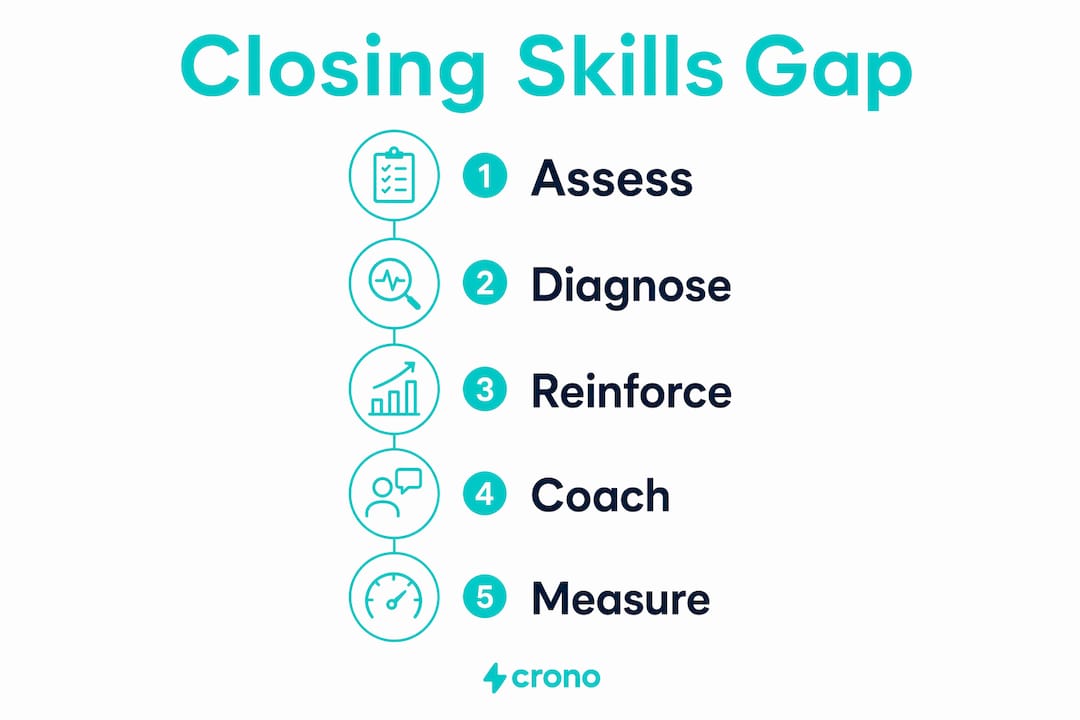
Closing the skills gap requires a system, not a single training event. 84% of sales training fails to change behavior after 90 days without ongoing reinforcement. That statistic defines the standard you need to beat.
- Build a continuous skill reinforcement system. Spaced repetition, role-based practice, and regular skill checks prevent the decay that kills one-off workshops. Training must function as an operating system, not a calendar event.
- Integrate coaching into the daily rhythm. Coaching cannot be a quarterly review. Managers need structured, weekly touchpoints tied to specific deal reviews and skill observations. AI-powered coaching tools can surface the right coaching moments automatically by analyzing call recordings and pipeline data.
- Use AI for personalized learning paths. AI tools for sales coaching can identify each rep’s specific skill deficits and deliver targeted content at the right moment. This is far more efficient than generic enablement programs. Crono’s approach to AI-powered sales coaching connects skill assessment directly to execution workflows.
- Standardize your sales framework. Frameworks like ValueSelling or MEDDIC give every rep a shared language and process. Consistency across the team makes coaching easier and performance more predictable.
- Measure behavior shifts, not just knowledge. Track leading indicators: discovery question quality, next-step commitment rates, and multi-stakeholder engagement. These behaviors predict revenue outcomes before the numbers move.
Pro Tip: Tie your skill reinforcement calendar to your sales cycle length. If your average deal takes 90 days, your reps need reinforcement touchpoints at least every 30 days to retain and apply new skills before the next deal closes.
Precision coaching tied to CRM data improves the targeting of skill gaps and increases training ROI. The goal is not more training. It is the right training, delivered at the right time, to the right rep.
Key Takeaways
The skills gap in B2B sales is a measurable, fixable problem that requires behavior-based diagnosis, continuous reinforcement, and coaching systems tied directly to pipeline performance.
| Point | Details |
|---|---|
| Define the gap precisely | Separate skill gaps from will problems before investing in any training program. |
| Use behavior-based assessments | Simulated scenarios linked to CRM data outperform self-ratings for accurate diagnosis. |
| Target the highest-impact deficits | Discovery, value-based selling, and multithreading drive the largest revenue losses. |
| Build a reinforcement system | 84% of training fails after 90 days without spaced repetition and structured coaching. |
| Measure behavior, not just knowledge | Track discovery quality and next-step commitment rates as leading revenue indicators. |
The uncomfortable truth about sales skills investment
Most sales leaders I talk to know their teams have skill gaps. What surprises them is how long those gaps have been hiding in plain sight, labeled as pipeline problems, territory issues, or market headwinds.
The real issue is that organizations have been buying tools as a substitute for developing people. The average rep now juggles seven tools daily, yet win rates sit near 16%. That math does not work. Technology amplifies skill. It does not replace it. When you hand a weak discovery process to an AI-powered sequencing tool, you get faster, more automated weak discovery.
The seller-manager perception gap is the part that concerns me most. When 83% of sellers think they are strong at executive engagement and 41% of their managers disagree, you have a coaching culture problem, not a training content problem. No amount of e-learning fixes a team where managers are not having honest, specific, behavior-level conversations with their reps.
What actually works is building observable benchmarks into your sales process and holding everyone accountable to them. Not “did you call the VP?” but “what specific business outcome did you connect to the VP’s top priority, and what was their response?” That level of specificity is what separates teams that compound skill over time from teams that stay stuck. The future of B2B sales belongs to organizations that treat skill development as a revenue investment, not a cost center.
How Crono helps B2B teams close the skills gap
Sales teams that want to move from diagnosis to execution need more than a training plan. They need a platform that connects skill development to daily sales activity.
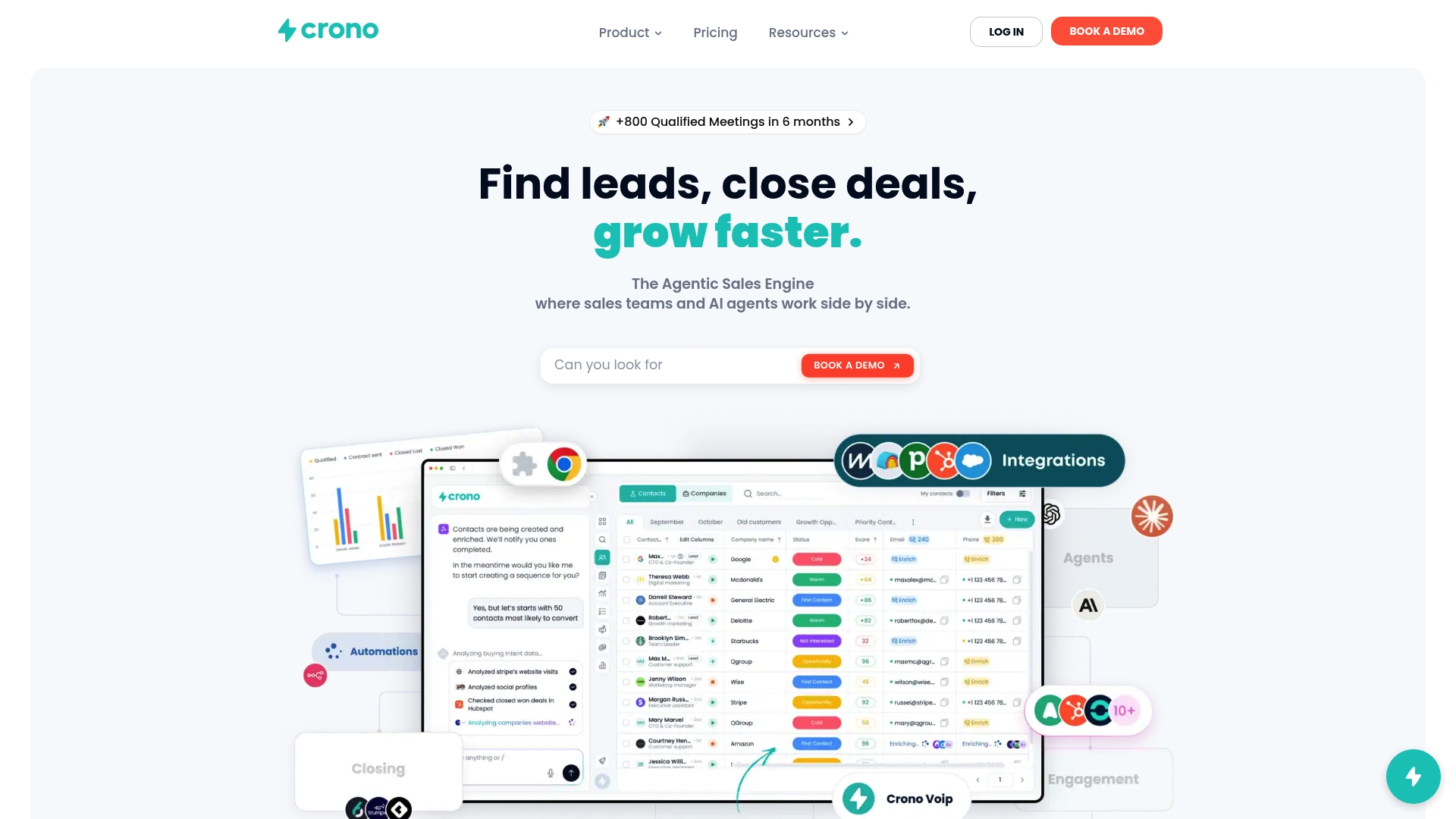
Crono is an Agentic Sales Engine built for modern B2B revenue teams. It combines AI agents, sales orchestration, workflow automation, and multichannel engagement in a single platform. Sales leaders use Crono to surface coaching moments automatically, standardize execution across the team, and give reps the right context at every stage of the deal. The AI tools for sales coaching guide shows exactly how AI-powered coaching integrates with your existing sales process to close skill deficits at scale. For teams ready to align skill development with pipeline execution, sales orchestration for revenue teams is the logical next step.
FAQ
What is the skills gap in B2B sales?
The skills gap in B2B sales is the measurable difference between the competencies sellers currently have and the skills needed to consistently win deals. It shows up in low quota attainment, poor discovery execution, and weak executive engagement.
How do I identify a skills gap in my sales team?
Run behavior-based assessments using simulated selling scenarios and link the results to CRM win-loss data. This approach produces observable benchmarks that are far more accurate than self-rating surveys.
What are the most common B2B sales skill deficits?
The most common deficits are value-based selling, discovery execution, executive engagement, multithreading, and risk detection. Poor discovery is the root cause of most late-stage losses and weak closing rates.
Why does sales training often fail to close the gap?
84% of sales training fails to change behavior after 90 days without ongoing reinforcement. One-off workshops transfer knowledge but do not build durable skills without spaced repetition and structured coaching.
How does AI help address the B2B sales skills gap?
AI-powered coaching tools analyze call recordings and pipeline data to surface personalized skill gaps and deliver targeted content at the right moment. Despite this potential, only 6% of sellers currently use AI for task prioritization, leaving significant performance gains unrealized.
