

The strongest sales books on the market right now share one quality: they replace gut-feel tactics with frameworks that actually hold up under pressure. Whether you’re new to a quota or running a full B2B revenue team, the right book about selling can compress years of hard-won experience into a few hundred pages. The titles below are the ones that sales professionals return to repeatedly, recommend to their teams, and cite when explaining why their numbers changed.
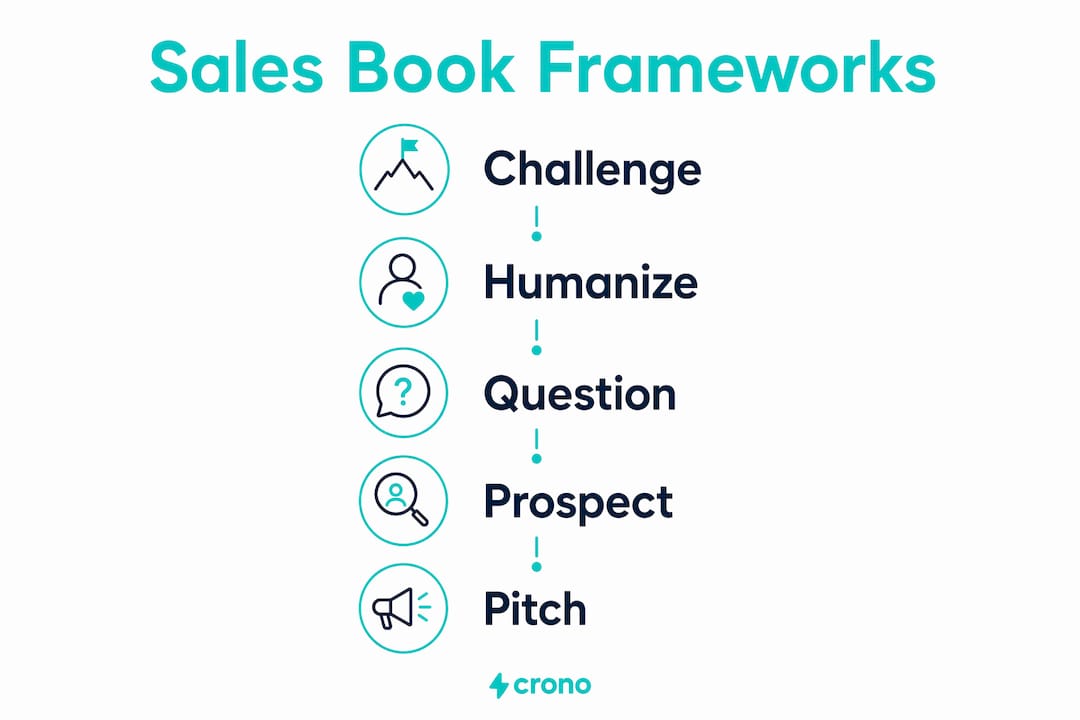
The top sales books every rep should know
Here is the curated shortlist, organized to give you an immediate sense of what each book delivers and who it serves best.
- The Challenger Sale by Matthew Dixon and Brent Adamson: Built on research across thousands of B2B reps, this book argues that the best performers challenge customer thinking with unique insights rather than relying on relationship-building alone. Essential for complex, enterprise sales.
- To Sell Is Human by Daniel Pink: Pink reframes selling as a universal human skill. His three-part model of attunement, buoyancy, and clarity replaces “Always Be Closing” with something more durable and ethical.
- SPIN Selling by Neil Rackham: The original research-backed sales methodology. Rackham’s Situation, Problem, Implication, and Need-Payoff question framework remains the gold standard for consultative selling.
- Fanatical Prospecting by Jeb Blount: A no-nonsense guide to keeping your pipeline full. Blount’s core argument is that empty pipelines are a choice, not bad luck.
- Pitch Anything by Oren Klaff: Klaff applies neuroscience to the pitch process, showing how to frame ideas so the decision-maker’s brain receives them as opportunities rather than threats.
- Predictable Revenue by Aaron Ross and Marylou Tyler: The book that popularized outbound specialization. It introduced the concept of separating prospecting from closing, a model now standard in many B2B teams.
- The Psychology of Selling by Brian Tracy: A classic on the mental side of sales. Tracy focuses on self-image, goal-setting, and the internal beliefs that separate top performers from average ones.
- Selling to Big Companies by Jill Konrath: Konrath addresses the specific challenge of breaking into large accounts where buyers are overwhelmed and gatekeepers are everywhere.
- Mastering the Complex Sale by Jeff Thull: Thull’s diagnostic selling approach helps reps navigate multi-stakeholder deals where the buyer’s own problem definition is often incomplete.
- The Sales Acceleration Formula by Mark Roberge: Roberge, former CRO at HubSpot, builds a data-driven hiring and coaching model that treats sales as an engineering problem.
- The New Rules of Marketing & PR by David Meerman Scott: Now in its 9th edition, this sales and marketing book has reached over 500,000 readers across 29 languages and integrates AI and content strategy into modern outreach.
- This Is Marketing by Seth Godin: Godin’s argument is simple and counterintuitive: stop interrupting people and start serving the smallest viable audience with genuine empathy.
- The 1-Page Marketing Plan by Allan Dib: The 2025 edition distills marketing strategy into nine core activities on a single page, cutting through complexity to focus salespeople on what actually drives revenue.
1. The Challenger Sale: challenge your buyers, win more deals
Matthew Dixon and Brent Adamson’s research identified five distinct rep profiles. Only one, the Challenger, consistently outperforms in complex B2B environments. Challengers teach customers something new about their own business, tailor the message to specific stakeholder concerns, and take control of the conversation rather than accommodating every objection.

The book’s most useful insight is that relationship-building, while not worthless, is not a differentiator. What separates top performers is their willingness to introduce productive tension. Challengers push back, reframe the buyer’s assumptions, and lead with a commercial insight the customer has not considered.
2. To Sell Is Human: reframe how you think about selling
Daniel Pink draws on behavioral science to make the case that selling is fundamentally human, not manipulative. His research found that one in nine American workers is formally in sales, but the rest spend roughly 40% of their time persuading, influencing, and moving others in non-sales contexts.

The three qualities Pink identifies, attunement, buoyancy, and clarity, are learnable. Attunement means taking the buyer’s perspective. Buoyancy is the ability to stay motivated through rejection. Clarity is helping buyers see their own problems in a new way, which is often more valuable than presenting a solution they already understand.
3. SPIN Selling: the question framework that changed B2B sales
Neil Rackham’s SPIN methodology came from one of the largest studies of sales calls ever conducted. The framework works because it mirrors how buyers naturally process decisions. Instead of pitching features, reps ask Situation questions to establish context, Problem questions to surface pain, Implication questions to make that pain feel urgent, and Need-Payoff questions to let the buyer articulate the value of solving it.
SPIN Selling is particularly effective in longer sales cycles where the buyer needs to convince internal stakeholders, not just themselves.
4. Fanatical Prospecting: fill your pipeline before it’s empty
Jeb Blount’s core message is blunt: most reps fail because they stop prospecting when they get busy. The book covers phone, email, social, and in-person outreach with specific scripts and time-blocking strategies. Blount’s 30-Day Rule, the idea that the prospecting you do today determines your pipeline 30 days from now, is one of the most practical frameworks in any good sales book.
5. Pitch Anything: structure your pitch for the decision-maker’s brain
Oren Klaff’s STRONG framework, Setting the frame, Telling the story, Revealing the intrigue, Offering the prize, Nailing the hook point, and Getting a decision, is built on neuroeconomics. The central insight is that the brain’s oldest, most primitive region evaluates pitches first, and it responds to novelty and status, not logic. Klaff teaches reps to establish a dominant frame before presenting any content.
6. Predictable Revenue: build a repeatable outbound machine
Aaron Ross and Marylou Tyler’s book introduced the “Cold Calling 2.0” methodology at Salesforce, where it helped generate significant new revenue. The core idea is role specialization: separate your prospectors from your closers, and build a system where each function can be measured and improved independently. This model is now foundational for most B2B outbound teams.
7. The Psychology of Selling: master the mental game first
Brian Tracy’s argument is that your outer performance is always a reflection of your inner beliefs. The book covers goal-setting, self-concept, and the specific mental habits of top earners. Tracy’s focus on the “self-image” of a salesperson, how you see yourself relative to your quota and your customers, is the kind of insight that rarely appears in process-focused sales training.
8. Selling to Big Companies: break into accounts that ignore you
Jill Konrath wrote this book specifically for reps trying to reach executives at large organizations who have no time and no patience for a standard pitch. Her approach centers on crafting a “customer-focused” message that leads with business outcomes rather than product features. Konrath also covers how to use LinkedIn and targeted research to get past gatekeepers before the first call.
9. Mastering the Complex Sale: diagnose before you prescribe
Jeff Thull’s diagnostic approach treats the sales process like a medical consultation. Before proposing any solution, the rep must help the buyer fully understand the scope and cost of their problem. This matters most in enterprise deals where the buyer’s internal definition of the problem is often incomplete or politically shaped.
10. The Sales Acceleration Formula: treat sales like an engineering problem
Mark Roberge built HubSpot’s sales team from zero to over $100 million in revenue using a data-driven hiring and coaching model. The book details how to define the attributes of a successful rep in your specific market, build a scoring system for hiring, and create a coaching cadence tied to measurable skill gaps rather than gut instinct.
11. The New Rules of Marketing & PR: integrate content into your outreach
David Meerman Scott’s 9th edition is the most current version of a book that has shaped how B2B teams think about content-driven outreach. With over 500,000 readers across 29 languages, it covers AI-generated content, real-time marketing, and how to build authority that brings buyers to you rather than requiring cold outreach.
12. This Is Marketing: sell by serving, not interrupting
Seth Godin’s book is the philosophical counterweight to high-pressure tactics. His argument is that empathy and emotional labor are the actual mechanisms of effective marketing and sales. Godin’s concept of the “smallest viable audience” pushes reps and marketers to stop trying to reach everyone and instead serve a specific group so well that word spreads naturally.
13. The 1-Page Marketing Plan: simplify your strategy to what works
Allan Dib’s 2025 edition organizes the entire marketing and sales process into nine activities across three phases: before, during, and after the sale. The single-page format forces prioritization. Dib’s point is that most businesses fail at marketing not because they lack ideas but because they pursue too many at once.
How to choose the right sales book for your goals
The best sales book for you depends on three things: where you are in your career, what kind of selling you do, and how you learn best.
Start with your sales environment. If you work in complex B2B deals with multiple stakeholders, The Challenger Sale, SPIN Selling, and Mastering the Complex Sale are the most directly applicable. If you’re in a high-volume, transactional role, Fanatical Prospecting and The Psychology of Selling will move the needle faster.
Match the book to your skill gap. Ask yourself what is actually limiting your results right now.
- Pipeline volume: read Fanatical Prospecting or Predictable Revenue
- Closing rate in complex deals: read The Challenger Sale or SPIN Selling
- Pitch quality: read Pitch Anything
- Mental performance: read The Psychology of Selling
- Marketing and content integration: read The New Rules of Marketing & PR or This Is Marketing
- Strategy clarity: read The 1-Page Marketing Plan
Check the author’s credibility and edition date. Rackham’s SPIN research, Dixon and Adamson’s CEB study, and Roberge’s HubSpot data are all grounded in real performance analysis, not anecdote. For books covering digital outreach and AI, recency matters. The 9th edition of The New Rules of Marketing & PR and the 2025 edition of The 1-Page Marketing Plan reflect the current environment in ways earlier editions cannot.
Go deep before going wide. Reading one book thoroughly and applying its framework for 90 days produces more change than skimming five. Once you have internalized one methodology, adding a second becomes much faster because you already have a mental model to compare it against.
Pro Tip: Pair any book on sales technique with a complementary resource on buyer psychology. The Science of Selling by David Hoffeld, which uses neuroscience-backed selling techniques to align your pitch with how brains actually make buying decisions, works well alongside almost any methodology book on this list.
What modern research says about selling effectively
The best sales and marketing books published in the last decade share a common thread: they draw on psychology, neuroscience, and behavioral economics rather than motivational anecdote. This shift reflects a real change in how top performers approach the craft.
Daniel Pink’s research makes the case that human-centric selling outperforms pressure tactics in a world where buyers have access to as much information as sellers. The old information asymmetry that gave salespeople their leverage has largely disappeared. What buyers now value is a rep who helps them think more clearly about their own problem, which is exactly what Pink’s clarity principle and the Challenger methodology both address from different angles.
David Hoffeld’s work in The Science of Selling goes further, showing that incremental commitments align with how the brain processes buying decisions. Asking for small agreements throughout a conversation, rather than one large close at the end, mirrors the brain’s natural decision architecture. Hoffeld has lectured at Harvard Business School and been featured in The Wall Street Journal and Harvard Business Review, and his approach is grounded in peer-reviewed research rather than sales folklore.
Seth Godin’s contribution is different in kind. Where most top books on sales focus on the rep’s behavior, Godin focuses on the market’s psychology. His argument that empathy and genuine service drive more revenue than any funnel or script is increasingly supported by buyer-side research from institutions like Gartner on buyer enablement. Modern buyers want to be helped to buy, not sold to.
For teams looking to apply these principles at scale, AI-driven sales coaching tools now make it possible to reinforce book-based frameworks in real call reviews and pipeline analysis. The ideas in these books are more executable than ever when paired with the right technology.
Pro Tip: If you’re applying insights from these books in a multichannel B2B environment, strategic marketing planning with AI can help you operationalize frameworks like Dib’s 1-Page Plan or Godin’s audience-first model at a pace that manual planning cannot match.
What sales professionals say about these books
The titles on this list have earned their reputations through consistent endorsement from practitioners, not just reviewers. The Conversion Code, for example, carries a 4.6 out of 5 rating across more than a thousand reader reviews, with practitioners citing its immediate applicability as the primary reason they recommend it. The book’s structure, which includes 20 specific actions readers can take while still reading, reflects a design philosophy that prioritizes execution over theory.
The Challenger Sale is routinely cited by enterprise sales leaders as the book that changed how they think about rep development. Its research-backed finding that relationship-building alone does not predict high performance in complex sales was genuinely disruptive when it was published, and it remains a standard reference in B2B sales training programs.
The Science of Selling has been named one of the 20 most highly rated sales books of all time by HubSpot, a recognition that reflects both its research rigor and its practical applicability. David Hoffeld’s background running a research-backed sales training firm means the book reads less like a motivational text and more like a field manual grounded in social psychology.
To Sell Is Human consistently draws endorsements from professionals outside traditional sales roles, including educators, healthcare workers, and entrepreneurs, because Pink’s framework applies wherever one person needs to move another to action. That breadth of relevance is what keeps it on recommended reading lists more than a decade after its original publication.
Reading the right book about selling is one of the highest-return investments a sales professional can make. Crono helps revenue teams put those frameworks into practice at scale, connecting buying signals, AI agents, and multichannel execution into a single workflow. Explore B2B sales techniques that complement everything these books teach, or see how social selling fits into a modern outbound motion.
Key Takeaways
The most effective approach to improving sales performance is pairing a research-backed methodology book with consistent, deliberate practice in your specific sales environment.
| Point | Details |
|---|---|
| Match book to environment | Complex B2B reps benefit most from The Challenger Sale and SPIN Selling; high-volume roles gain more from Fanatical Prospecting. |
| Prioritize research-backed titles | Books grounded in data, like The Science of Selling and The Challenger Sale, outperform anecdote-driven guides for skill development. |
| Modern selling is human-centric | Daniel Pink’s attunement, buoyancy, and clarity model replaces pressure tactics with skills that hold up when buyers are well-informed. |
| Reach of top sales literature | The New Rules of Marketing & PR has reached over 500,000 readers across 29 languages, reflecting the global demand for integrated sales and marketing thinking. |
| Go deep before going wide | Applying one framework thoroughly for 90 days produces more measurable change than reading multiple books without sustained practice. |
