
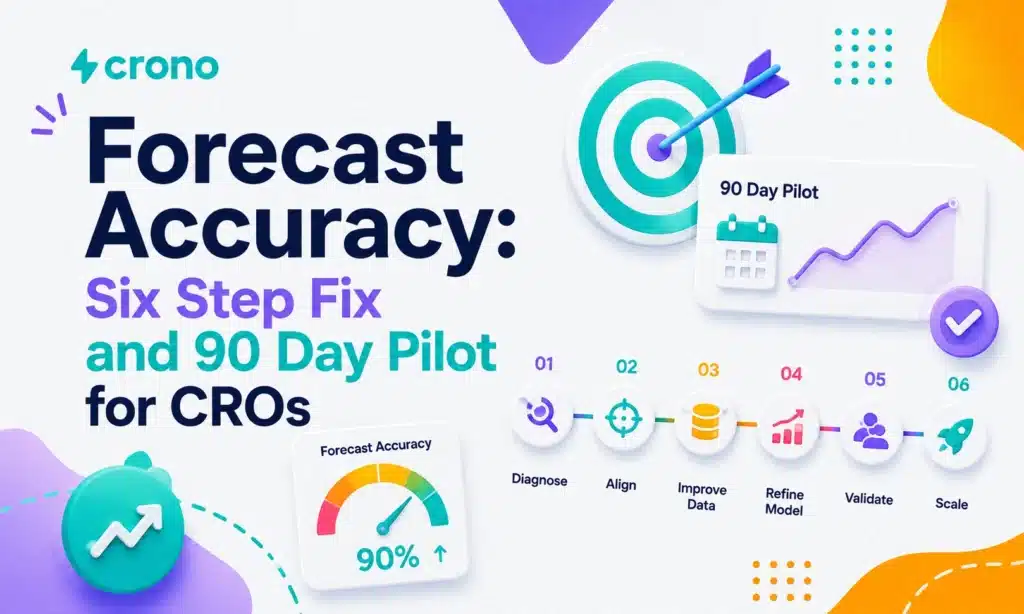
The single most reliable forecast accuracy improvement comes from enforcing buyer-evidence stage exits and running an objective statistical model alongside rep commits, not from replacing your CRM. Most B2B teams miss by 20 to 40 percent; disciplined teams get Commit accuracy within 5 to 10 percent and quarterly pipeline accuracy within 10 to 15 percent.
Crono customer BetterDays used this approach to improve close rates significantly.
Table of Contents
- Why Forecasts Go Wrong: Diagnosing Root Causes in Your Pipeline
- A Six-Step Operational Playbook to Improve Forecast Accuracy
- Metrics and Dashboards to Measure Forecast Health
- A Practical 90-Day Pilot Plan for Forecast Accuracy
- What Sales Forecast Accuracy Actually Measures
- How Market Conditions and External Factors Distort Forecasts
- Advanced Statistical and Machine Learning Methods for Forecasting
- Building Training and Change Management Around Forecast Discipline
- Tools and Technology Platforms That Support Better Forecasting
- Balancing Discipline and Technology in Forecasting
- Run a Forecast Accuracy Pilot With Crono
- Sources
Why Forecasts Go Wrong: Diagnosing Root Causes in Your Pipeline
Every inaccurate forecast traces back to one of five failure points, and most sales organizations have at least three of them running simultaneously. Rep optimism bias sits at the top of the list. A rep who needs $40,000 more to hit quota will unconsciously round every “maybe” deal up to “probable,” and a manager who got burned last quarter will do the opposite and sandbag the number to protect their own credibility.
Missing qualification fields do quieter damage. When a deal sits in “Proposal” without a confirmed budget owner or documented decision process, the stage label is fiction. Root causes like qualification gaps and stage gates that don’t enforce buyer actions are the most commonly cited reason forecasts miss, according to practitioner research.
Stale pipeline compounds the problem. A deal that hasn’t moved in six weeks but still shows a close date next month is phantom coverage, not a real chance. Close-date drift, where reps push dates forward every cycle rather than resetting the stage, hides this rot until the quarter ends.
CRM hygiene issues finish the job: logging a call instead of what the call proved, and never linking activity to buyer commitment.
The pattern to watch for in your pipeline review:
- Deals with no economic buyer identified past the “Qualified” stage
- Close dates that have moved more than twice without a stage change
- Commit-stage deals with zero mutual action plan
- Reps whose forecast accuracy varies wildly quarter to quarter
Statistic to anchor your diagnosis: Four dominant causes of persistent misses are dirty data, biased rep commits, unchecked stage conversion drift, and forecasts that ignore capacity. Capacity is the one most teams never check at all.
A Six-Step Operational Playbook to Improve Forecast Accuracy
Fixing forecast accuracy is not a software purchase. It’s a sequence. Skip a step and the ones after it inherit the same bad data. Fixing inputs like stage definitions and qualification gates delivers more leverage than switching forecasting software, because tools only amplify whatever process feeds them.
Define buyer-action stage exits. Every stage needs a criterion tied to something the buyer did, not something the rep believes. A MEDDPICC-aligned exit list works well here: confirmed economic buyer, documented decision criteria, agreed decision process, and evidence of pain quantified in the buyer’s own words. If a MEDDPICC-style completeness check can’t be satisfied, the deal doesn’t move.
Gate Commit and Best Case with evidence. A deal only enters Commit when there’s a confirmed economic buyer, verified budget, and a mutual close plan signed by both sides. Best Case gets a lighter bar but still needs more than a rep’s gut feeling.
Run a weekly evidence-first forecast review. Managers inspect what the buyer did this week, not what the rep plans to do next week. Weekly evidence-first forecast reviews that inspect buyer actions rather than rep intentions separate teams that forecast well from teams that guess well.
Layer in a weighted-pipeline model. Once stage data is clean, run historical stage-to-stage conversion rates as a second, independent number next to the rep commit. A weighted pipeline model built on historical conversion rates works well once CRM data is clean and there’s at least 12 months of consistent history, and it needs periodic recalibration as your ICP or motion shifts.
Audit CRM hygiene continuously. Enforce close-date discipline (no pushing a date without a stage change), require last-activity logging tied to buyer evidence, and auto-flag deals with no movement in 21 days.
Reconcile against ramp-adjusted capacity. A forecast that assumes eight full-quota reps when three are still ramping is fiction dressed as math. Track rep-level accuracy over time to catch structural issues before they show up in the number.
Pro Tip: Run your weighted model and rep commits side by side for at least one full quarter before trusting either one alone. The gap between them is often more diagnostic than either number by itself.
Tools that unify pipeline data and automate qualification tracking, like the workflows described in B2B sales orchestration, make steps 1 through 5 far less manual once the underlying discipline is in place.
Metrics and Dashboards to Measure Forecast Health
You can’t calibrate what you don’t measure on a rolling basis. Six metrics tell you whether your forecast accuracy improvement effort is actually working, or just looks better on paper this month.
- Forecast vs. actual by category (Commit, Best Case, Pipeline), tracked as a rolling variance over 8 to 12 weeks rather than a single quarter snapshot.
- Rep-level forecast accuracy, because a team average of 12% variance can hide one rep at 40% and another at 3%.
- Stage-to-stage conversion rates and velocity by cohort, which reveal whether a stage is speeding up, slowing down, or quietly leaking deals.
- Close-date accuracy at stage entry, measuring how often the original close date holds versus getting pushed.
- Stale-deal rate, the percentage of open pipeline with no logged buyer activity in three weeks or more.
- Pipeline coverage ratio, adjusted for rep capacity rather than raw headcount.
Where the bar sits: most B2B teams miss by 20 to 40 percent, while top performers hold monthly Commit accuracy within 5 to 10 percent and quarterly pipeline accuracy within 10 to 15 percent. If your team is newer or has recently changed its motion, aim to move from ±20 to 40 percent variance into the ±10 to 15 percent band over two to three quarters of disciplined inspection, rather than expecting a jump to elite accuracy overnight.
A Practical 90-Day Pilot Plan for Forecast Accuracy
Assign owners and deadlines, or the playbook stays theoretical. Here’s a phased rollout that most RevOps teams can execute without pausing the quarter.
- Days 1 to 30: Document every stage and its exit criteria in writing. Run a full CRM data quality audit. Make the economic-buyer field mandatory for any deal past stage two.
- Days 31 to 60: Launch weekly evidence-first forecast calls. Start running the weighted-pipeline model in parallel with rep commits, purely for comparison. Disqualify any deal with no activity in three weeks.
- Days 61 to 90: Recalibrate stage probabilities using the quarter’s real conversion data. Publish rep-level accuracy dashboards visible to the whole team. Reconcile the forecast against actual ramp-adjusted capacity.
Pro Tip: Require manager sign-off on every Commit-stage deal before it’s submitted. This one rule catches more optimism bias than any dashboard.
Two enforcement rules matter more than any dashboard: a stale deal gets demoted automatically after a set inactivity window, and late-quarter pull-ins from next quarter’s pipeline are capped and flagged for review.
What Sales Forecast Accuracy Actually Measures
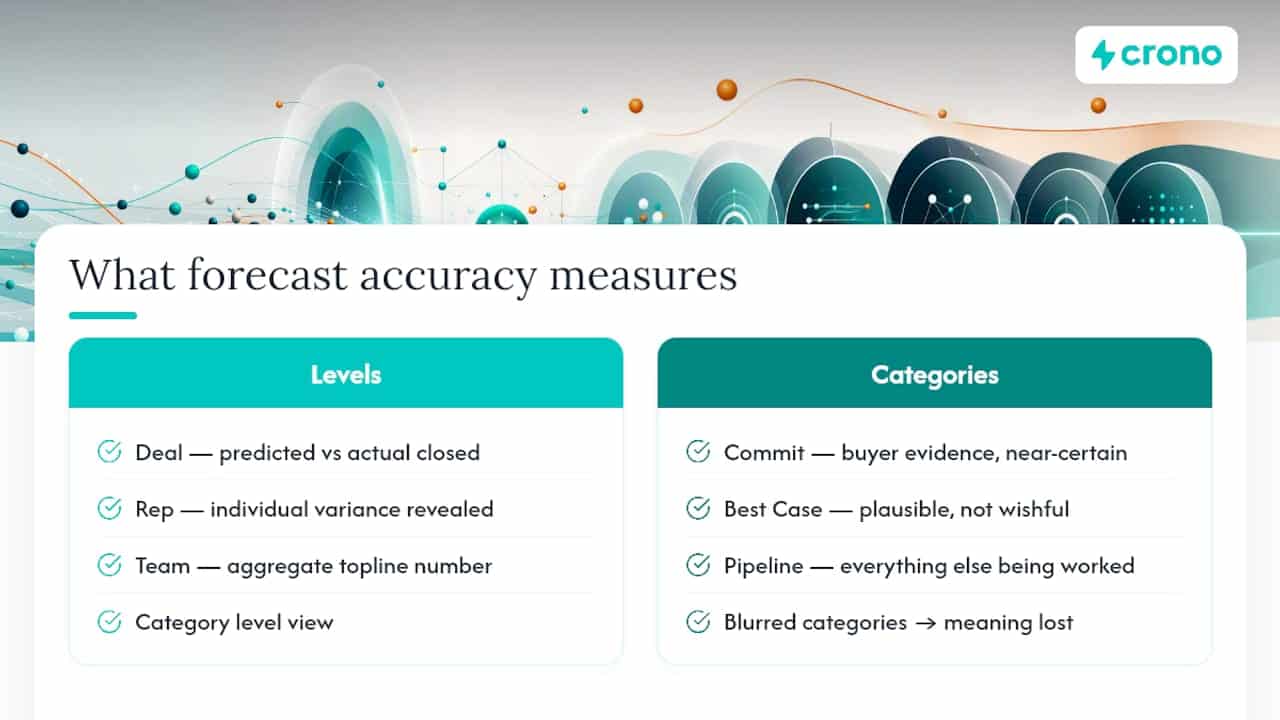
Sales forecast accuracy is the gap between what your CRM and pipeline process predicted you’d close and what actually closed, expressed as a percentage variance. It applies at the deal level, the rep level, the team level, and the category level (Commit, Best Case, Pipeline), and each of those views tells you something different.
A team can have a nearly perfect aggregate forecast while individual reps are wildly off in opposite directions that cancel each other out. That’s why rep-level tracking matters as much as the topline number: it exposes whether your accuracy is real discipline or statistical luck.
Accuracy also needs to be measured against a consistent time window. A forecast made 90 days before quarter close will naturally carry more variance than one made in the final two weeks, since more can change. Comparing a Q1 90-day forecast to a Q2 two-week forecast and calling the difference “improvement” is a common, and misleading, mistake.
The categories matter too. Commit should represent deals with buyer evidence and near-certain close probability. Best Case should represent real possibility, not wishful thinking. Pipeline is everything else still being worked. When these three categories blur together, the aggregate number stops meaning anything, even if it happens to land close to actual revenue by coincidence.
How Market Conditions and External Factors Distort Forecasts
Even a disciplined process can get thrown off by forces outside the CRM. Budget freezes, procurement slowdowns, and buying-committee expansion all stretch sales cycles in ways that stage exit criteria alone won’t catch, because the deal can still look “on track” internally while the buyer’s environment changes underneath it.
Seasonality is the most predictable external factor and the most commonly mishandled. If your historical conversion data doesn’t separate Q4 budget-flush behavior from a typical Q2 cycle, your weighted model will systematically misprice deals in the wrong quarter.
Macroeconomic shifts, industry-specific downturns, and competitive product launches all move the buyer’s urgency and risk tolerance independent of anything your reps do. The fix isn’t predicting these events. It’s building a review cadence, like the weekly evidence-first call described earlier, that surfaces changed buyer behavior fast enough to adjust the forecast before it hardens into a bad commit. Teams that only inspect the forecast monthly discover market shifts a month late, right when they can least afford the surprise.
Advanced Statistical and Machine Learning Methods for Forecasting
Once your stage data is clean and consistent for a meaningful history, statistical and machine learning methods add real precision on top of manual judgment. Weighted pipeline models, which apply historical stage-to-stage conversion rates to current open deals, are the entry point most teams should master first.
Beyond that baseline, regression-based models can incorporate deal size, industry, and rep tenure as variables affecting the probability of close. More sophisticated approaches use pattern recognition across thousands of closed and lost deals to flag which “healthy looking” deals in your pipeline actually resemble historical losses. Predictive AI approaches are most effective when applied to clean, sufficiently large historical datasets rather than bolted onto a messy CRM as a shortcut.
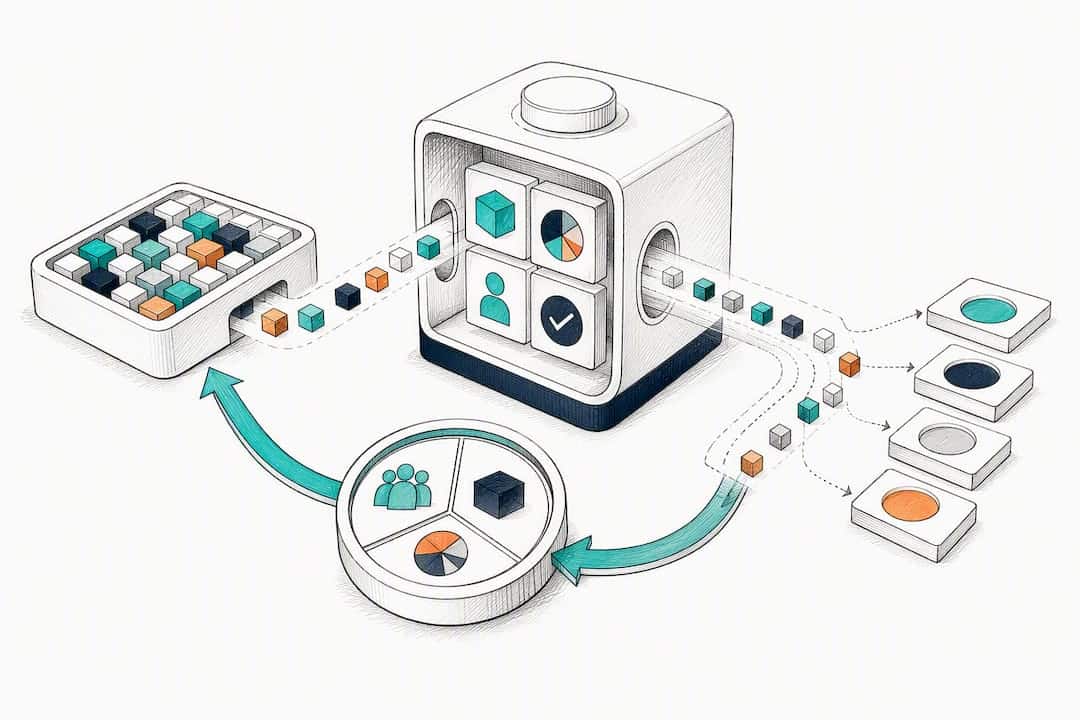
The caveat that gets skipped too often: these models need periodic recalibration. A model trained on last year’s ICP and deal sizes will quietly degrade as your go-to-market motion shifts upmarket, adds a new product line, or enters a new vertical. Before trusting a model’s output over a manager’s read, it’s worth evaluating whether the underlying analytics platform’s accuracy holds up against your own closed-deal history, not just its vendor’s marketing claims.
Building Training and Change Management Around Forecast Discipline
New stage definitions and qualification gates fail without change management behind them. Reps who’ve spent years forecasting on instinct will resist a system that suddenly asks them to justify every Commit-stage deal with documented buyer evidence.
Training needs to start with why, not just what. Show reps the variance between their historical self-reported confidence and actual close outcomes. That gap, when a rep sees it in their own numbers, usually does more to change behavior than any policy memo.
Managers need separate training from reps, since their job shifts from approving numbers to interrogating evidence. A manager who’s used to nodding along in a forecast call needs practice asking “what did the buyer specifically say or do that supports this,” and holding the line when the answer is thin.
Enforcement has to be consistent to stick. If one rep gets away with a Commit deal that lacks an economic buyer because they’re a top performer, the entire qualification gate loses credibility for everyone else on the team. AI-driven coaching tools that surface rep behavior patterns can help managers spot coaching moments without turning every forecast call into a confrontation.
Tools and Technology Platforms That Support Better Forecasting
Technology should reinforce the discipline already described, not substitute for it. A platform that unifies CRM records, engagement history, and enrichment data in one place removes the manual reconciliation that eats up RevOps time and introduces errors. AI sales platforms with predictive analytics capabilities can flag deals where logged activity doesn’t match the stage a rep has assigned, catching evidence gaps before they reach the forecast call.
Multichannel engagement tools matter here too, since a big share of buyer evidence lives in emails, calls, and LinkedIn conversations rather than CRM notes fields. Platforms that automatically capture and surface that activity give managers something concrete to inspect during weekly reviews, instead of relying on a rep’s summary. Prospecting and enrichment tools that keep contact and account data current also reduce the “dirty data” failure mode that undermines even well-designed stage gates, as covered in sales prospecting software evaluations.
The right stack doesn’t replace the six-step playbook. It makes each step faster to execute and easier to audit at scale.
Balancing Discipline and Technology in Forecasting
Discipline creates the signal; technology just amplifies whatever signal already exists. A weighted model trained on sloppy stage data will produce a confident, precise, and wrong number. Use AI to sharpen inspection, spotting deals whose activity pattern doesn’t match their stage, not to replace the weekly evidence-first review with an algorithm nobody questions. Buy tooling only after a full quarter of clean data and consistent stage discipline. Before that, a platform just automates the guessing.
Run a Forecast Accuracy Pilot With Crono
Crono maps directly onto the six-step playbook: it unifies CRM and engagement data in one execution layer, uses AI scoring to flag deals whose evidence doesn’t match their stage, and automates qualification gate tracking so managers spend forecast calls inspecting evidence instead of chasing updates. Multichannel activity across LinkedIn, email, and calls gets captured automatically, giving your weekly review real buyer signal instead of rep summaries.
That combination is why BetterDays grew close rate by 25% after adopting Crono to bring qualification discipline and AI scoring into one workflow, a result documented in Crono’s sales engagement platform resources. If your team already has clean stage data and a quarter of consistent discipline behind it, a focused pilot, running Crono’s evidence capture and AI scoring alongside your existing rep commits, gives you a direct comparison between the two numbers within a single sales cycle. Start with one team, one quarter, and see how Crono’s platform fits your existing CRM before rolling it out further.
Sources
- B2B Sales Forecast Accuracy: Common Causes of Inaccurate Forecasts and How to Improve Them | B2BLead
- Forecast Accuracy: Why B2B Forecasts Miss | Closing Foundry
- Sales Forecasting for B2B SaaS: Beyond the Spreadsheet | VEN Studio
- How to forecast B2B sales accurately (2026) | MAVEN LB LTD
- Why Your Sales Forecasts Keep Missing (2026) | Lative
