

Most SDRs need three to six months to hit full quota, with the median landing around 3.1 to 3.2 months and best-in-class teams closing the gap to just 60 to 90 days.
The single fastest lever to compress that timeline is structured onboarding paired with deliberate practice, meaning 20 to 50 role-play conversations before a rep’s first live dial, tracked against explicit weekly milestones.
What SDR Ramp Time Actually Measures
That two-month qualifier matters. A single strong month can be luck, a generous territory, or a warm list. Two months in a row is a repeatable skill.
The benchmarks vary more than most sales leaders expect. Reports show a typical range of 3 to 6 months for SDR ramp, with the industry median sitting closer to 3.1 to 3.2 months. Meanwhile, best-in-class programs compress that window to 60 to 90 days by front-loading structured onboarding and daily practice instead of letting new hires learn on the job through trial and error.
What drives the gap between a 3.2 month median and a 60 day floor? Four variables account for most of the variance:
- Role scope: pure outbound prospecting ramps faster than a hybrid role that also owns inbound qualification or light account management.
- Product complexity: a single-SKU tool with a clear ICP ramps faster than a platform selling into five verticals with different buying committees.
- Tooling maturity: reps inheriting a clean CRM and pre-built sequences ramp faster than reps building their own stack from scratch.
- Prior experience: a rep with 18 months of SDR experience at a comparable company often skips the first 30 days of pure learning entirely.
None of these variables are fixed. They are levers a sales leader can pull before a single rep is hired, which is the whole premise behind treating ramp time as a design problem rather than a waiting game.
How Do You Build a 30-60-90 Day Ramp Plan?
A staged quota cadence with zero quota in month one, partial quota in month two, and progressively higher quota in month three protects rep confidence and produces better long-term output than throwing new hires into full quota on day one. Multiple onboarding playbooks converge on this exact staging, and the logic holds up under scrutiny: a rep who hits quota too early by cutting corners on discovery or messaging quality learns bad habits that take months to unlearn.
Here is how that cadence breaks down in practice:
- Days 1 to 30: Learn, zero quota. The rep studies the product, ideal customer profile, and messaging frameworks while shadowing senior reps on live calls. Before their first live dial, they should complete 20 to 50 role-play sessions covering cold opens, objection handling, and discovery questions. No quota pressure yet. The goal is repetition, not results.
- Days 31 to 60: Guided execution, 50% activity target. The rep starts live outreach against a protected, lower-stakes account list. Daily coaching checkpoints replace the shadowing model. Leaders typically expect the first booked meeting milestone by around week 6.
- Days 61 to 90: Independence, 75 to 100% quota. Coaching shifts from foundational skill building to conversion optimization: refining talk tracks, tightening follow-up cadence, and improving meeting-to-opportunity rates. By day 90, the rep should be operating close to full autonomy.
Red flags show up early if you’re watching for them. A rep with zero booked meetings by week 5, or one whose role-play scores plateau below a passing threshold heading into week 4, needs intervention now, not a wait-and-see approach at day 60. Waiting compounds the problem because bad habits calcify fast in outbound sales.
Pro Tip: Set the role-play pass threshold before the cohort starts, not after you see how someone performs. Retroactively lowering the bar to justify moving a struggling rep to live calls is the single most common way managers quietly extend their own ramp timelines.
Which Metrics Actually Predict a Successful Ramp?
Lagging indicators like quota attainment tell you what already happened. Leading indicators tell you what’s about to happen, and that distinction is why most ramp dashboards fail. A manager who only checks quota attainment at day 90 has no early warning system. By the time the number looks bad, six weeks of coachable moments are already gone.
The leading indicators worth instrumenting from day one:
- Time-to-first-booked-meeting: the clock from first live dial to first confirmed meeting on the calendar.
- Meeting-booked rate by week 6: reps who haven’t booked 3 to 5 meetings by week 6 are meaningfully less likely to hit full quota by week 12, making this one of the most reliable early-warning signals available.
- Conversation quality scores: tone, objection handling, and discovery depth, scored consistently across calls rather than judged case by case.
Lagging indicators, quota attainment and pipeline dollar contribution, still matter, but they confirm a trend rather than reveal one. Use them to validate that your leading indicators are calibrated correctly, not as your primary steering wheel.
A graduated quota schedule with checkpoint scoring at days 30, 60, and 90 turns this into a pass or fail decision framework instead of a gut call. A rep who clears the day-30 checkpoint but stalls at day-60 activity targets needs a coaching intervention. A rep who misses both checkpoints and shows no upward trend in call quality scores is a candidate for role reassignment, not a third round of the same coaching that already failed twice. Reviewing why some SDR teams miss quota entirely is worth doing before you assume the fix is always more coaching.
What Tactics Actually Shorten Ramp Time?
Deliberate practice beats on-the-job learning, and the data backs this up more strongly than most sales leaders assume. Programs that run new reps through 50 to 100 simulated conversations before meaningful live call volume consistently outperform programs that put reps on the phone in week one and let them figure it out.
The tactics that move the needle, in rough order of impact:
- AI role-play and automated call scoring scale practice volume beyond what any manager could deliver one-on-one, and AI-enabled role-play with fast feedback loops has been linked to a 20 to 40% reduction in time to quota in reported cases.
- Daily micro-coaching, five to ten minutes reviewing a single call or sequence, compounds faster than weekly one-hour reviews, but only if a manager isn’t stretched across too many new hires at once.
- Protected, low-stakes account lists for the first two weeks of live outreach let reps make mistakes on accounts that don’t sink a quarter’s pipeline.
- Sequence hygiene and reusable messaging templates remove the “what do I even say” friction that eats a new rep’s first month, an area where a solid marketing automation checklist can help formalize what good looks like.
Manager coaching capacity is the quiet constraint behind all of this. A manager coaching more than six or seven ramping reps simultaneously cannot deliver daily feedback at the depth that shortens ramp, no matter how good the training curriculum is. Technology that scales practice and surfaces coachable moments automatically raises how many reps a manager can bring on without sacrificing quality, which directly affects how fast a team can grow its SDR headcount.
Platform migrations deserve separate handling entirely. Switching outbound tools doesn’t just cost setup time. Expect a 4 to 8 week implementation clock for the platform itself, and a separate 6 to 12 week clock for reps to recover pre-migration proficiency. Conflating these two timelines is why migrations so often look like they “failed” when really the rep-recovery clock just hadn’t finished yet.
What Are the Most Common Ramp Mistakes?
The most expensive mistake is skipping deliberate practice and putting new reps on live calls in week one. It feels faster. It isn’t. Reps who learn through live-call trial and error internalize weak habits, awkward pauses, generic openers, poor objection recovery, that take longer to correct later than they would have taken to prevent up front.

A close second: setting full quota from day one. This punishes reps for taking the time discovery actually requires and rewards whoever cuts corners fastest, which trains exactly the wrong behavior across an entire cohort.
Vague or missing checkpoints cause the third major failure pattern. Without a defined day-30 or day-60 pass threshold, managers default to intuition, and intuition is inconsistent across even experienced leaders. Two reps performing identically get different verdicts depending on which manager reviews them.
The fix for all three follows the same pattern: build the checkpoint structure before the cohort starts, stage quota deliberately, and force practice volume before live exposure. None of this requires new headcount or budget, just a plan committed to on paper before hiring starts, not improvised once new reps are already three weeks in and struggling.
How Does Product Complexity Change Ramp Duration?
A rep selling a single-SKU tool with one clear buyer persona ramps faster than a rep selling a multi-product platform across five industries with different buying committees in each. This isn’t a minor adjustment. It can add weeks to the learning curve before that variable is even factored into other ramp drivers.
Complexity shows up in three specific places. First, the number of ICPs a rep has to internalize: one clean vertical is a matter of days to learn, while five verticals with distinct pain points and objections is a matter of weeks. Second, the sales cycle’s technical depth: a rep pitching a point solution with an obvious value prop moves faster than one navigating a platform sale that touches procurement, security review, and multiple stakeholders. Third, market maturity: prospects in an established category already understand the problem being solved, while a category-creation sale requires the rep to first teach the market what problem even exists before pitching a solution.
None of this means complex products can’t ramp fast. It means the 30-60-90 timeline needs adjusting at the front end. A team selling into a complex, multi-persona market should expect to spend more of the first 30 days on ICP and messaging training and correspondingly less time rushing reps to their first live dial. Compressing that learning phase to hit an arbitrary timeline just pushes the failure downstream to week 7 or 8 instead of eliminating it.
How Do Culture and Management Style Affect Ramp?
A manager’s coaching style shapes ramp speed as much as any training curriculum. Teams where managers give daily, specific feedback, not generic “keep it up” encouragement, consistently produce faster ramp than teams relying on weekly check-ins alone.
Psychological safety plays a bigger role than most leaders credit. Reps who fear that a bad call will get flagged to leadership tend to under-report struggles and avoid the tough calls that build real skill. Reps on teams where mistakes during the ramp period are treated as expected data points, not performance red flags, take more swings and improve faster because they’re not managing perception on top of managing the job itself.
Team culture also determines whether new reps learn from peers or in isolation. A pod structure where ramping reps sit alongside a tenured rep, hear real objection handling in real time, and get informal feedback between calls accelerates learning in ways that formal training sessions can’t replicate. Isolation, by contrast, forces every new rep to rediscover the same lessons the hard way, one at a time, which is a slow and expensive way to build a team.
None of this is soft or unmeasurable. Teams with lower ramp variance, where the fastest and slowest rep in a cohort aren’t wildly far apart, tend to share consistent coaching cadences and a culture that treats early mistakes as normal rather than as warning signs. Protecting that culture also protects against the kind of SDR burnout that quietly extends ramp by pushing struggling reps toward disengagement instead of improvement.
How Should SDRs Integrate With Sales and Marketing During Ramp?
Ramping SDRs in isolation from the rest of the revenue team slows everyone down. The reps who ramp fastest usually sit inside a feedback loop that includes account executives and marketing from week one, not after they’ve already proven themselves.
Pairing new SDRs with AEs on discovery calls during the first 30 days lets reps hear how qualified conversations actually sound before they run their own. It also gives AEs early visibility into what messaging is landing, which shortens the loop between what a rep says on a cold call and what actually resonates with a buying committee.
Marketing alignment matters just as much, particularly around messaging consistency. A ramping SDR working from talk tracks that contradict marketing’s positioning wastes weeks reconciling mixed signals from prospects. Sharing campaign context, recent content, and current positioning with new reps before their first live call closes that gap early instead of letting it surface as confusion three weeks in.
Regular three-way syncs between SDR managers, AE leadership, and marketing during a cohort’s ramp window also surface handoff friction fast. If AEs are consistently rejecting meetings booked by ramping reps, that’s a signal worth catching at week 5, not discovering during a quarterly pipeline review after the damage is already baked into the numbers.

What Do KPI Benchmarks Look Like by Industry and Company Size?
Ramp benchmarks shift meaningfully depending on deal complexity and company stage, even though the 3 to 6 month range holds as a general anchor across most B2B contexts.
Early-stage startups with under 50 employees often see faster ramp on paper, sometimes 60 to 75 days, but that speed is frequently a function of simpler products and smaller total addressable markets rather than superior training. The tradeoff is fewer resources for structured onboarding, which means more of the learning happens through direct founder or manager involvement rather than formal curriculum.
Mid-market and enterprise software companies with multi-persona sales motions tend to land closer to the 4 to 6 month end of the range, reflecting the added complexity discussed earlier around ICP breadth and stakeholder navigation. These teams also tend to have more mature enablement functions, which helps offset the complexity but rarely eliminates the added time entirely.
Highly regulated industries, financial services, healthcare, and enterprise security among them, often extend ramp further still, sometimes past 6 months, because reps need working knowledge of compliance language and industry-specific objections before a cold call even sounds credible to a buyer. Benchmarking your own team against a generic median without accounting for these factors sets an unrealistic bar in either direction. Understanding your meeting-to-opportunity conversion rates relative to industry norms gives a more grounded comparison point than ramp duration alone.
Where Should Sales Leaders Invest First?
The instinct to hire fast and sort out training later is understandable and almost always wrong. A cohort of five reps ramped through a sloppy, ad hoc process costs more in lost pipeline and turnover than the same five reps ramped through a deliberate 30-60-90 structure, even if the structured path looks slower on a hiring dashboard.
If you’re prioritizing where to invest first, put practice scale ahead of headcount growth. A manager who can only coach four reps well shouldn’t hire six. Tools that scale role-play and surface coachable moments automatically raise that ceiling, which is a better lever than simply hoping a stretched manager finds more hours in the day. Tooling decisions matter too, but only after the coaching and practice infrastructure is solid enough to support whatever platform sits underneath it.
How Crono Supports Faster SDR Ramp
Crono connects the CRM, sequencing tools, and enrichment data your ramping reps already touch into a single execution layer, so new hires aren’t learning five disconnected systems in their first month. That consolidation matters most in the guided execution phase, where a rep juggling too many disjointed tools can waste coaching time on logistics instead of skill building.
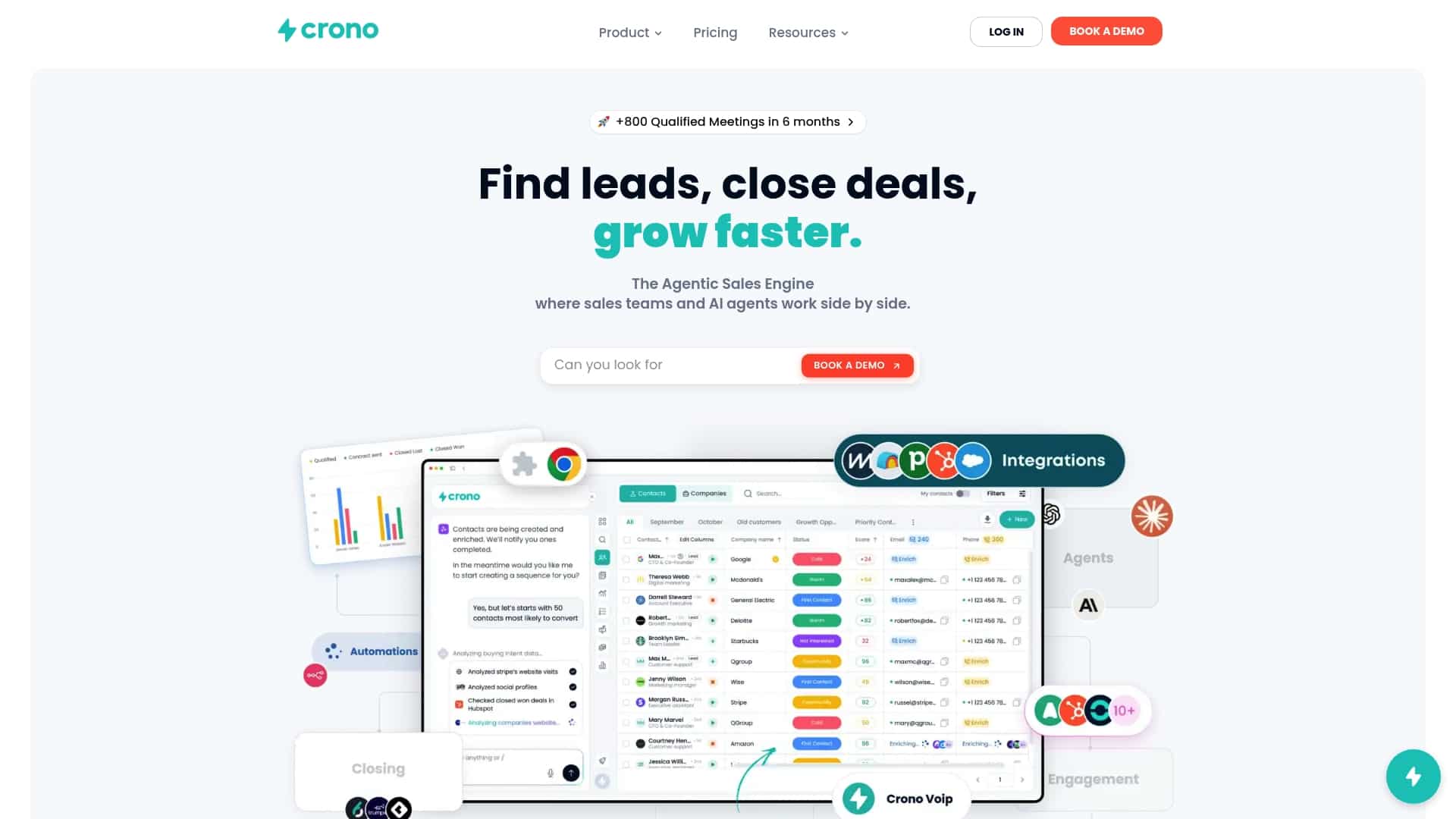
Where Crono addresses ramp specifically: AI agents handle repetitive prospecting and list-building work that would otherwise eat a new rep’s early weeks, freeing managers to spend limited coaching time on message quality and conversation skill instead of tool troubleshooting. Multichannel orchestration across LinkedIn, email, and calls also gives ramping reps a consistent sequence structure from day one, rather than forcing them to build cadences from scratch during the exact window when they should be practicing conversations. If AI-assisted coaching and role-play workflows are part of your ramp plan, Crono’s guide to AI tools for sales coaching walks through how that fits into a broader execution stack. See how the platform fits your team’s ramp plan with a demo of Crono.
Sources
Benchmarks and milestones above draw on the Zyverno industry ramp report, QUOTA Training’s ramp research, Cleverly’s 30-60-90 playbook, Apollo’s platform migration analysis, and Coursera’s SDR certificate program structure.
- SDR Ramp Time: Cut Time-to-Productivity by 40% in 2025 — QUOTA Training
- Just Hired Your First SDR? Here’s the Exact 30-60-90 Day Outbound Plan | Cleverly
- What Is the Expected SDR Ramp Time When Switching to a New Outbound Platform in 2026? | Apollo
