
An intent data platform is a technology solution that identifies companies actively researching solutions like yours by analyzing digital behavioral signals and converting them into lead intelligence. The industry term for this category is “buyer intent software,” and the two phrases describe the same core capability.
Sales teams using these platforms report higher conversion rates and faster pipeline acceleration by reaching buyers before competitors do. For B2B sales leaders and data analysts, this is no longer a nice-to-have. It is the difference between chasing cold lists and calling accounts that are already in-market.
What is an intent data platform and how does it work?
An intent data platform collects and scores behavioral signals from across the web to tell you which companies are actively researching topics related to your product. The core output is a prioritized list of accounts showing purchase intent right now, not three months ago.
The technology pulls from two distinct data sources. First-party intent data comes from your own website: page visits, content downloads, pricing page views, and demo requests. Third-party intent data comes from external networks of B2B publisher sites, review platforms, and research portals. Leading providers track 12,000 to 18,000 distinct research topics from large cooperative B2B website networks. That scale means you can detect interest in very specific topics, not just broad categories.
Once signals are collected, the platform applies an intent scoring model. Scores are weighted by signal type, frequency, and recency. A single visit to a generic blog post scores low. Multiple visits to a pricing page, combined with a product comparison search and a peer review site visit, scores high. Multi-individual engagement within the same account is one of the strongest signals of genuine purchase intent in B2B contexts. It suggests a buying committee is active, not just one curious employee.
Data enrichment runs alongside scoring. Platforms append firmographic details like company size, industry, and revenue, plus technographic data showing which tools an account already uses. This context helps sales teams tailor their outreach before the first call.

Pro Tip: Set up real-time or near-real-time signal ingestion from day one. Weekly refreshes are often too delayed for active sales evaluation stages, and stale signals waste your team’s time on accounts that have already made a decision.
How do intent data platforms benefit sales and marketing teams?
The clearest benefit is earlier identification of in-market accounts. Sales teams that reach buyers during the research phase, before a shortlist is formed, have a structural advantage. They shape the evaluation criteria rather than respond to them.
The practical applications break down into four areas:
- Pipeline acceleration. Identifying accounts in the research phase weeks earlier compresses the time from first contact to qualified opportunity. Intent data delivers up to 4x higher response rates and 2x faster deal cycles compared to outreach without intent signals.
- Account-based marketing (ABM) precision. Intent topics tell marketing exactly which themes resonate with a target account right now. A campaign built around the topics an account is actively researching outperforms a generic nurture sequence every time. Pairing this with effective lead nurturing strategies compounds the impact.
- Sales prioritization. Reps stop working alphabetical lists and start working ranked queues. High-intent accounts get called first, low-intent accounts get enrolled in automated sequences, and no opportunity falls through the gap.
- CRM and marketing automation integration. Intent signals delivered inside your CRM as alerts or enriched contact records drive action. Data sitting in a separate dashboard rarely gets used.
The response rate and deal cycle improvements cited above are significant. A 4x lift in response rates means your team reaches four times as many real conversations from the same number of dials. That is a fundamental change in sales productivity, not a marginal improvement.
For identifying high-intent B2B accounts that actually convert, the combination of intent scoring and firmographic enrichment is the most reliable method available today.
What features should you look for in an intent data platform?
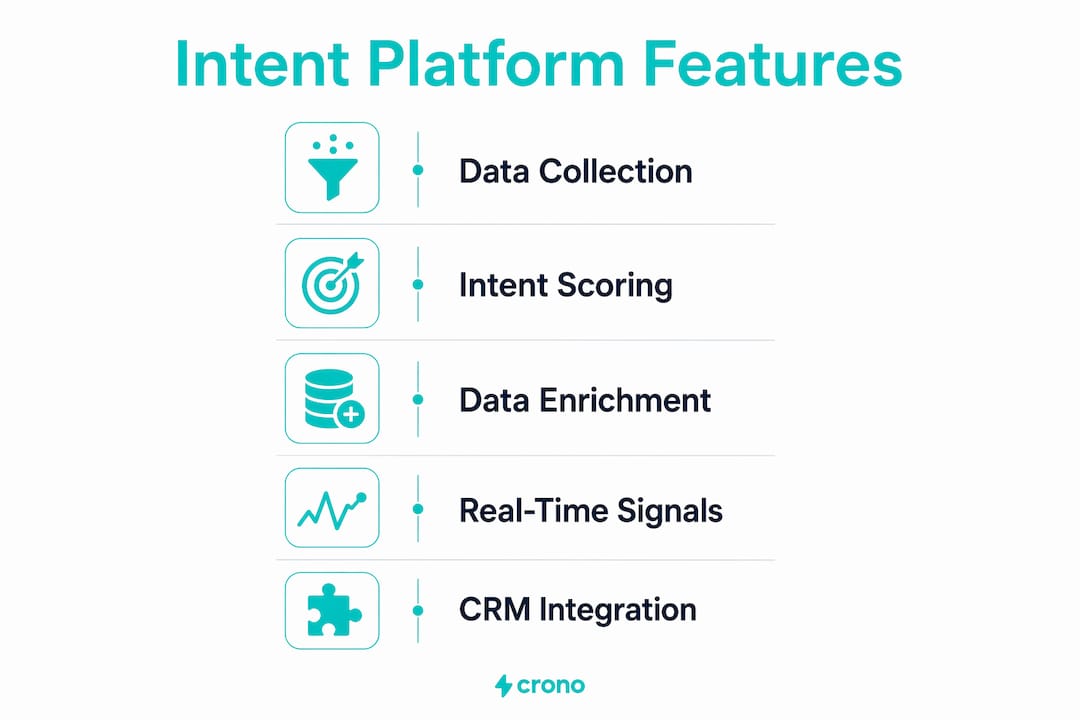
Choosing the right platform comes down to six criteria. Each one directly affects whether your sales team will actually use the data or ignore it.
- Real-time signal updates. Data latency severely hampers the usefulness of buyer intent signals. Platforms with real-time or near-real-time signals outperform those refreshing weekly. Ask vendors specifically about their ingestion frequency, not just their data coverage.
- Native CRM integration. The platform must push alerts and enriched records directly into Salesforce, HubSpot, or whichever CRM your team lives in. If reps need to log into a separate tool to see intent data, adoption will be low.
- Automated workflow triggers. When an account crosses a defined intent score threshold, the platform should automatically enroll it in a sales sequence or notify the account owner. Manual processes break down at scale.
- Granular intent scoring and multi-topic surge detection. A single intent score per account is not enough. You need to see which specific topics are surging, how many individuals within the account are engaged, and how the score has changed over time.
- Privacy compliance. GDPR and CCPA adherence are non-negotiable. Platforms must have transparent data handling and compliance safeguards built in. Verify this before signing a contract, not after.
- Data breadth and topic coverage. Broader topic networks produce more signal. Narrow networks miss activity happening outside their publisher set.
The table below summarizes what to evaluate at each stage of platform selection.
| Evaluation stage | What to assess |
|---|---|
| Data collection | First-party and third-party sources, topic coverage breadth |
| Signal freshness | Ingestion frequency, real-time vs. weekly refresh |
| Scoring model | Weighted signals, multi-topic surge, buying committee detection |
| Integration depth | Native CRM connectors, API availability, workflow automation |
| Compliance | GDPR, CCPA certifications, data sourcing transparency |
Pro Tip: Embed intent insights directly within your CRM or sales engagement platform rather than relying on standalone dashboards. Contextual data inside daily workflows drives far higher action rates than data that requires a separate login.
What are the common challenges with intent data platforms?
Intent data is powerful, but it is not a magic filter. Several pitfalls reduce its effectiveness when teams do not account for them.
- Not all signals carry equal weight. Pricing page views, product comparisons, and peer reviews indicate higher purchase intent than generic traffic. A company reading a thought leadership blog post is not the same as a company comparing your pricing to alternatives. Score these differently.
- Data latency kills relevance. A signal that is two weeks old may reflect a decision already made. If your platform refreshes weekly, you are often acting on yesterday’s news. This is especially damaging in competitive categories where buyers move fast.
- Over-reliance without context. Intent data tells you that an account is researching a topic. It does not tell you why. A company researching “sales automation” might be evaluating vendors, or they might be writing a blog post. Enrichment data and sales judgment fill that gap.
- Misaligned thresholds between sales and marketing. If marketing defines a “high-intent” account at a score of 60 and sales expects 85, the handoff breaks down. Both teams need to agree on definitions before the platform goes live.
- Regulatory exposure. Using third-party intent data without verifying its compliance provenance creates legal risk. This is not theoretical. Regulators in the EU and California actively enforce data privacy rules.
The solution to most of these challenges is the same: treat intent data as one input in a multi-signal system, not as a standalone qualification tool. Combine it with firmographic fit, engagement history, and sales context before acting.
Key Takeaways
An intent data platform delivers its highest value when signals are real-time, embedded in CRM workflows, and combined with firmographic enrichment rather than used in isolation.
| Point | Details |
|---|---|
| Define intent signal tiers | Prioritize pricing page views and product comparisons over generic content visits. |
| Demand real-time data | Weekly signal refreshes are too slow for active buying cycles. |
| Embed data in CRM | Intent insights inside daily tools drive action; standalone dashboards do not. |
| Align sales and marketing | Agree on intent score thresholds before platform launch to prevent handoff failures. |
| Verify compliance | Confirm GDPR and CCPA adherence before signing any intent data contract. |
Why intent data only works when your team is ready for it
I have seen sales teams buy intent data platforms and see almost no lift in the first quarter. The data was good. The platform was solid. The problem was that the team had no process for acting on a signal. Reps received alerts in their CRM and did not know what to do with them because no one had defined what a high-intent alert meant or what the follow-up sequence should look like.
The platforms that deliver results are not necessarily the ones with the most data. They are the ones whose signals land inside a workflow that already has a clear next step attached. Before you evaluate vendors, map out what your team will do when an account crosses your intent threshold. Write the sequence. Define the message. Then buy the platform.
Real-time data also changes the psychology of outbound sales in ways that are worth naming. When a rep knows that an account visited your pricing page twice in the last 48 hours, the call feels different. It is not cold. The rep has context, and that context shows up in the conversation. I have watched connect rates improve not just because of better targeting, but because reps called with more confidence.
The future of this category is tighter integration with AI agents that can act on signals automatically, without waiting for a rep to notice an alert. Crono is already moving in this direction, connecting buying signals and AI-driven workflows into a single execution layer. The teams that build this muscle now will have a compounding advantage as the technology matures.
How Crono turns intent signals into pipeline
Crono is built for exactly the moment when intent data arrives and your team needs to act fast. As the Sales Execution Layer for modern B2B revenue teams, Crono connects buying signals, data enrichment, and AI agents into one unified workflow. When an account crosses your intent threshold, Crono can automatically trigger a multichannel sequence, enrich the contact record, and route the opportunity to the right rep.
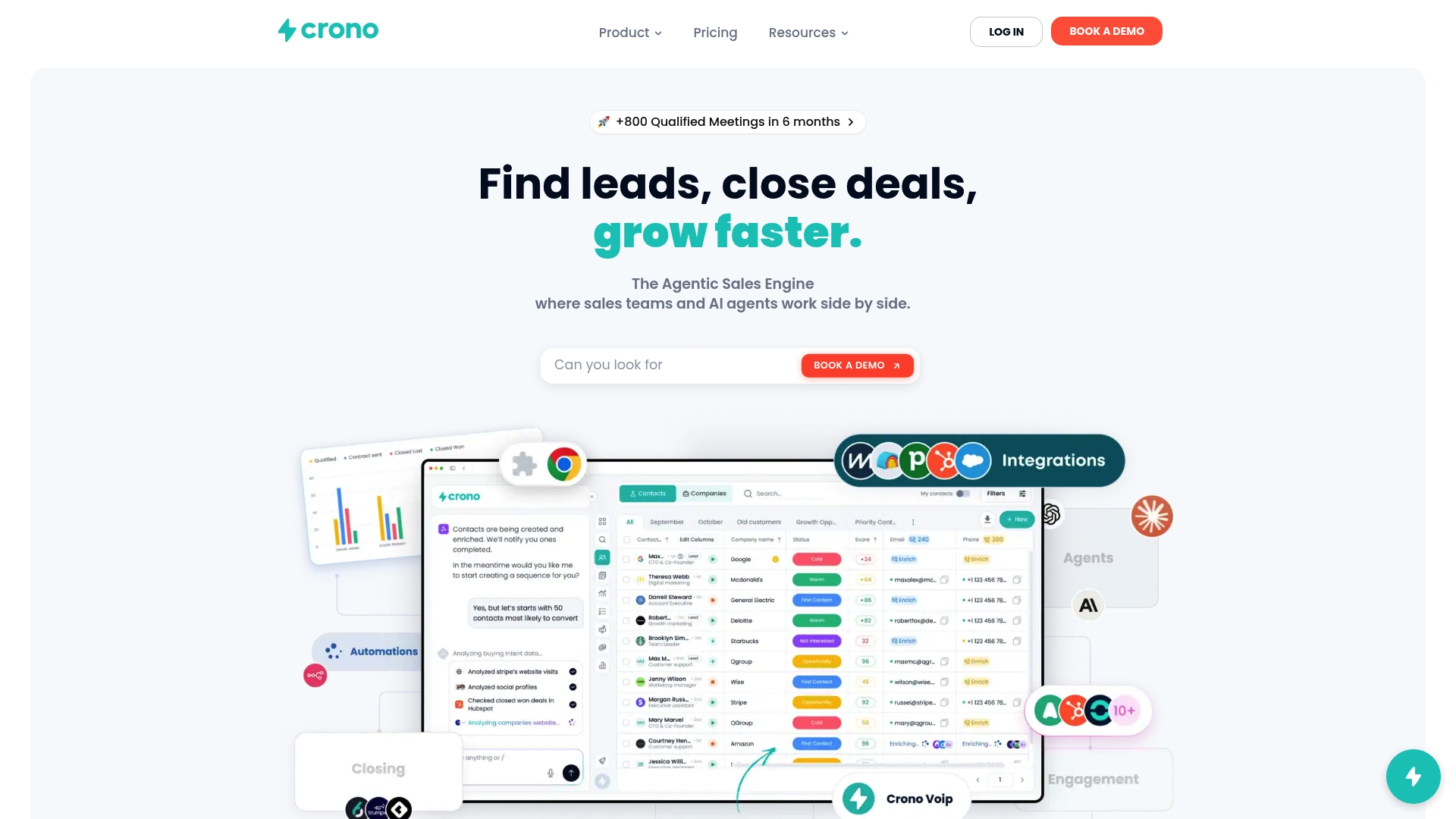
Sales leaders using Crono report that the gap between signal and action collapses from days to minutes. For teams serious about B2B sales performance, that speed is the competitive edge. Explore how Crono’s sales engagement platform can put your intent data to work inside the workflows your team already uses.
FAQ
What is an intent data platform?
An intent data platform identifies companies actively researching topics related to your product by analyzing behavioral signals like content consumption, pricing page visits, and competitor research. It converts those signals into scored, prioritized account lists for sales and marketing teams.
What is the difference between first-party and third-party intent data?
First-party intent data comes from your own website and owned channels, such as page visits and form fills. Third-party intent data is collected from external B2B publisher networks and review sites, covering research activity that happens outside your own properties.
How does intent scoring work?
Intent platforms score accounts by weighting behavioral signals based on type, frequency, and recency. High-intent behaviors like pricing page views and product comparisons score higher than generic blog traffic, and buying committee engagement within a single account amplifies the score further.
How do I integrate intent data into my sales workflow?
The most effective method is embedding intent alerts and enriched records directly into your CRM so reps see signals inside their existing tools. Platforms with native CRM connectors and automated workflow triggers produce the highest adoption and the fastest response times.
What compliance requirements apply to intent data platforms?
Platforms must adhere to GDPR and CCPA regulations, which govern how personal and behavioral data is collected, stored, and used. Always verify a vendor’s compliance certifications and data sourcing transparency before deployment.
