
A revenue intelligence platform fuses CRM, activity, conversation, and forecasting signals into explainable insights that improve forecast accuracy and surface deal risk early, and at Crono we build toward exactly that outcome for sales execution teams. The payoff is fewer forecast surprises and clearer next-best-actions. Teams should start evaluating one when they run multiple GTM systems, trust their forecast less than they’d like, and need automated guidance instead of static dashboards.
TL;DR:
- A revenue intelligence platform must accurately map IDs and integrate signals from CRM, email, calls, and product data to provide trustworthy insights.
- Combining multiple data sources, such as engagement depth and buying committee activity, significantly improves forecast reliability over single inputs.
- Continuous, explainable forecasting with human oversight reduces surprises and accelerates deal cycles compared to periodic, manual updates.
- Key risks include data lineage failures, forecast hallucinations, activity misassociation, and lack of governance, which can erode trust in insights.
- A phased implementation focused on clean data, pilot testing, and ongoing governance is essential for a successful revenue intelligence rollout.
Table of Contents
- Core capabilities of revenue intelligence platforms
- How revenue intelligence improves forecasting and pipeline management
- What revenue intelligence often misses and the category’s common risks
- Practical evaluation checklist for selecting a revenue intelligence platform
- Implementation roadmap: phased rollout and pilot design
- How Crono approaches the revenue intelligence job
- Author perspective: actionable priorities for RevOps in 2026
- Explore Crono’s sales execution layer
- FAQ
- Sources
Core capabilities of revenue intelligence platforms
A revenue intelligence platform differs from CRM reporting because it captures signals the CRM never sees on its own and turns them into guided action rather than static charts. Six capability areas show up across nearly every platform in this category, and each one carries its own risks.
- Activity capture and association: email, call, and calendar events get logged automatically, but the insight is only as good as the canonical IDs linking each activity to the right opportunity and contact.
- Conversation intelligence: transcription and topic extraction surface coaching moments and buyer sentiment, though this layer works best fused with activity and product signals rather than read on its own.
- Deal and pipeline intelligence: health scoring and stage-change detection flag deals that stall or drift, often before a rep notices.
- Predictive forecasting: multivariate models blend historical win rates, engagement depth, and deal velocity, and the strongest implementations expose how each input shaped the number.
- Next-best-action orchestration: playbooks translate a risk flag or engagement gap into a concrete task, a sequence step, or a coaching nudge routed to the right rep.
- Data and integration capabilities: enrichment quality, refresh latency, and data lineage determine whether the rest of the stack can be trusted at all.
Industry reporting on the category confirms this same core set of capabilities, activity capture, conversation intelligence, deal and pipeline intelligence, and predictive forecasting, and stresses that combining these signals produces more reliable forecasts than reading any one of them in isolation. The practical implication for buyers is that a platform strong in conversation intelligence but weak in data lineage will generate confident-sounding insights that are wrong just as often as they’re right.
How revenue intelligence improves forecasting and pipeline management
Forecast accuracy improves when a platform feeds its models more than one kind of signal. Analyst research on revenue operations points to multi-source signal fusion and data governance as the combination that produces reliable forecasting, rather than any single input like rep-entered stage or gut-feel confidence scores. A model trained only on CRM fields repeats the CRM’s own blind spots; one that also reads engagement depth, meeting cadence, and multi-threading catches risk the CRM alone would miss.
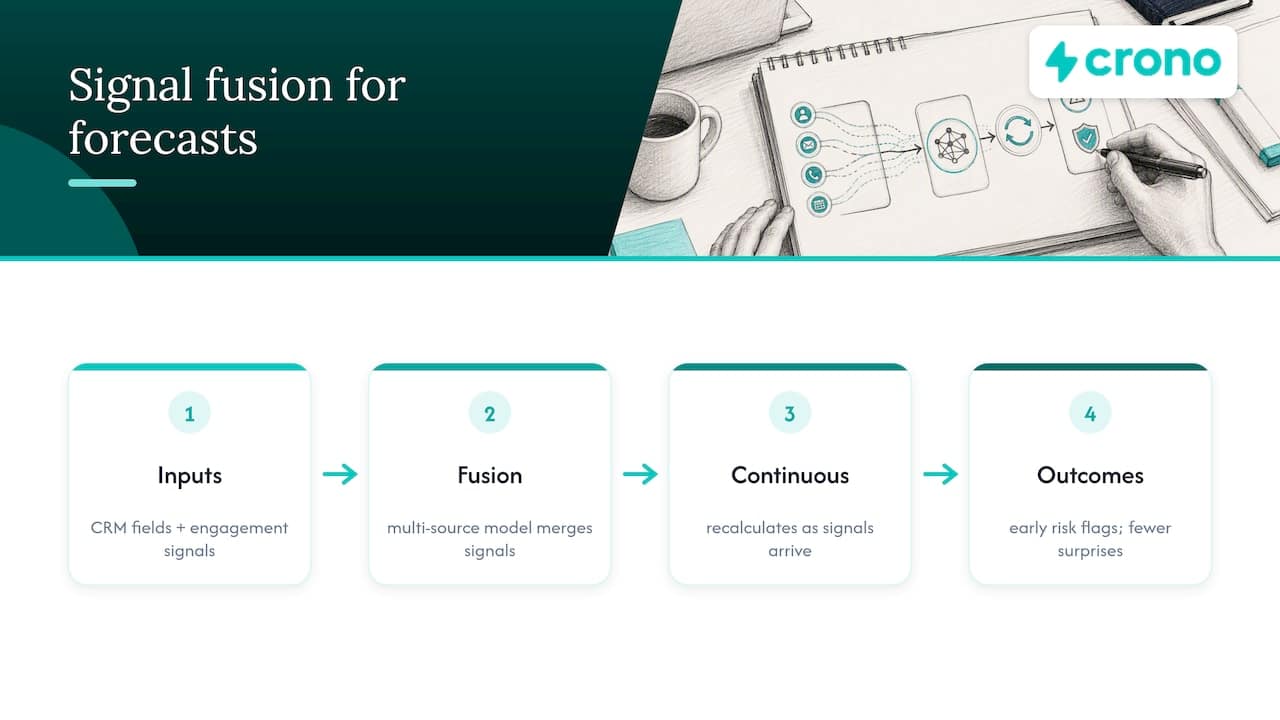
Early detection follows the same logic. A deal that looks healthy on stage and close date can show a stalled thread count, a single remaining champion, or a gap in executive engagement, and a platform that fuses these signals flags the risk weeks before a rep admits it. Coverage metrics, who on the buying committee has been engaged and who hasn’t, turn that flag into something actionable rather than just alarming.
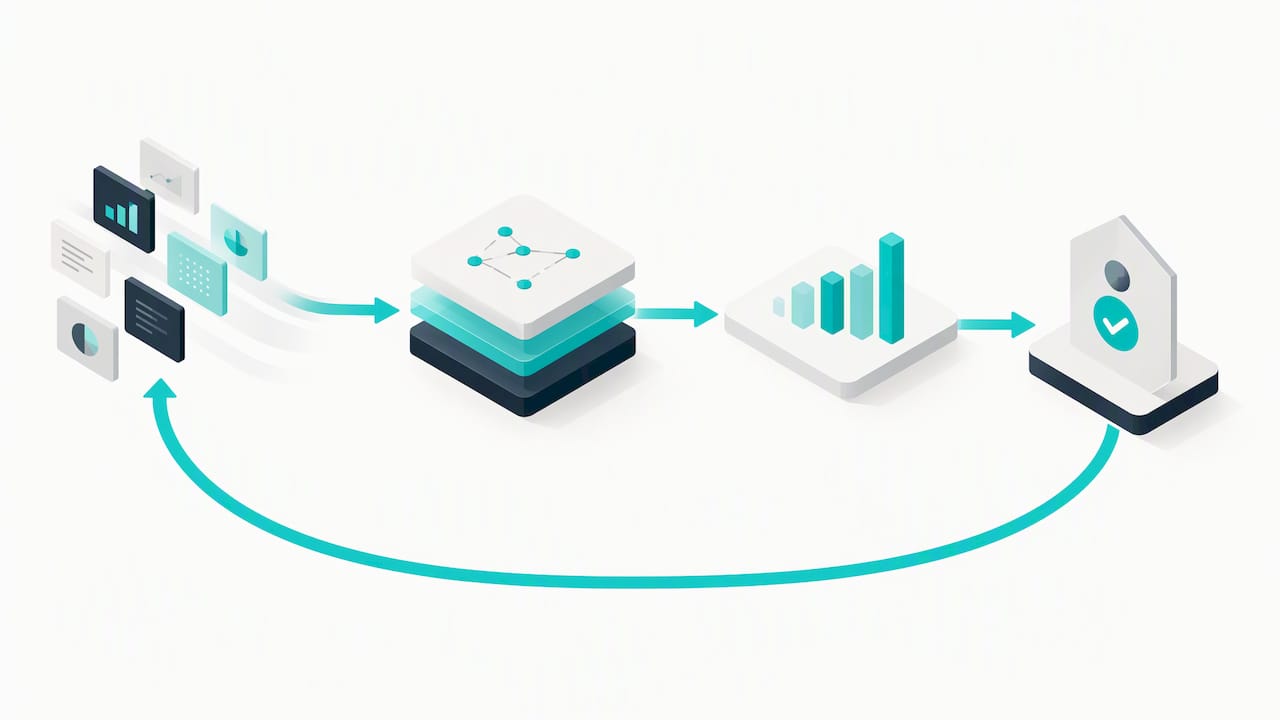
AI-driven revenue intelligence platforms are reshaping how enterprises forecast, according to the ISG Buyers Guide for 2026, which frames the category’s shift toward a decisioning layer that demands explainability and human oversight rather than opaque scores. That shift changes cadence too: continuous forecasting replaces the once-a-quarter scramble, since the model recalculates as new signals arrive instead of waiting for a rep to update a field. Teams that adopt this cadence tend to report fewer end-of-quarter surprises and faster deal cycles, because risk surfaces while there’s still time to act on it rather than after the deal has already slipped.
What revenue intelligence often misses and the category’s common risks
No platform fixes a broken process, and several failure modes show up often enough to plan for in advance.
- Data lineage and canonical ID failures: when opportunity, account, and contact IDs aren’t mapped consistently, insights point at the wrong deal or double-count activity.
- Hallucination and black-box forecast risk: a forecast number without a visible reason behind it is a number you can’t defend to finance, and it needs a human-in-the-loop check before it reaches a board deck.
- Activity-association errors: a multi-person meeting logged against the wrong opportunity creates a false risk signal that sends a manager chasing a deal that was never actually in trouble.
- Privacy and CRM writeback governance: automated writebacks without an audit trail make it hard to know who changed a field and why, which becomes a real problem the first time a deal is disputed.
The ISG Buyers Guide recommends that enterprises demand transparency for AI recommendations and governance for CRM writebacks as a baseline requirement, not an advanced feature. None of this solves a sales process that was broken before the tooling arrived. A platform can surface that a deal has one engaged stakeholder, but it can’t make a rep multi-thread the account.
Pro Tip: Require every forecast recommendation to show its top three contributing signals before you let it influence a commit number.
Practical evaluation checklist for selecting a revenue intelligence platform
Buyers who score platforms against a checklist, rather than a feature list, end up with fewer regrets after the contract is signed.
- Data model and association accuracy: ask for the vendor’s canonical ID strategy and whether it maps opportunity, account, contact, and calendar-event records deterministically, especially for multi-person meetings.
- Forecast method and explainability: confirm the model shows which signals drove a given number and how often it recalibrates against actual outcomes.
- Integration breadth and latency: check how quickly CRM, email, call, and product telemetry data flows into the model, since stale data produces stale forecasts.
- Human review workflows and audit logs: look for a visible approval step before any AI-driven CRM writeback, with a record of who approved what.
- Implementation scope and total cost: get a clear picture of rollout timeline, credit or seat-based pricing, and the support model for the first ninety days.
- Security, compliance, and data residency: verify where data is stored and processed, and whether that satisfies your own compliance obligations.
ISG’s scoring framework weighs product capability and platform experience most heavily, with customer experience covering validation and total cost of ownership, a useful structure to borrow for an internal RFP scorecard. Treat human-in-the-loop controls and audit logging as contractual requirements in any pilot statement of work, not nice-to-haves to revisit later.
Implementation roadmap: phased rollout and pilot design
A revenue intelligence rollout fails most often because teams skip the groundwork and jump straight to the pilot. Enterprise implementation guidance lays out a staged rollout that starts with data consolidation and ends with ongoing governance, and the stages hold up well in practice.
- Phase 0, data audit and canonical ID mapping: build a complete data dictionary before anyone touches a pilot. Practitioner guidance on 2026 RevOps implementations is blunt about this: projects often fail when teams skip a clean data dictionary and canonical ID mapping before deployment.
- Phase 1, narrow integration pilot: pick a defined segment or account list, connect only the systems that segment touches, and capture a baseline before the platform influences a single decision.
- Phase 2, model training and forecast validation: let the model run against real pipeline, compare its numbers to actuals, and set a recurring calibration cadence rather than treating day-one accuracy as final.
- Phase 3, workflow and coaching integration: connect next-best-action flags to real playbooks and coaching routines, and track adoption, not just whether reps can see the insight but whether they act on it.
- Phase 4, governance and quarterly revalidation: schedule recurring audits of data lineage and model accuracy, since a model that was well calibrated at launch drifts as the business changes.
Enterprises typically run many overlapping go-to-market systems before consolidation, and implementation frameworks show that mapping those systems into one consistent revenue data model is a precondition for the rest of the rollout to work. A pilot built around a 6 to 12 week window, with a holdout cohort of matched accounts excluded from the new workflows, gives a clean comparison of forecast delta and conversion lift against a control group.
Pro Tip: Set your pilot exit criteria before you start, forecast lift and cycle-time reduction against the holdout cohort, not subjective rep feedback.
How Crono approaches the revenue intelligence job
We built Crono as the sales execution layer for B2B revenue teams, designed to sit alongside the CRM rather than replace it. Instead of adding another dashboard, we connect the systems a revenue team already runs into one place where people and AI agents work from the same data.
- We read buying signals and enrich contact and account data automatically, so reps and managers see risk and opportunity in the same view.
- We automate repetitive execution work, prospecting, sequencing, follow-up, so the team’s attention goes to the deals that need it.
- We orchestrate multichannel engagement across LinkedIn, email, and calls from a single workflow rather than three disconnected tools.
For readers planning a pilot, our playbook on AI in B2B revenue teams covers governance patterns worth borrowing, and our guide to deploying AI sales agents walks through the human-in-the-loop approval controls a pilot statement of work should require.
Author perspective: actionable priorities for RevOps in 2026
My honest read on this category: the platforms that win in 2026 won’t be the ones with the flashiest forecast dashboard, they’ll be the ones that can show their work. Governance and data hygiene aren’t compliance overhead, they’re the difference between a forecast you can defend to the board and one you can’t. Pilot against measurable outcomes, forecast lift, cycle-time change, holdout comparison, not a feature checklist that looks impressive in a demo. Treat explainability and audit trails as baseline requirements, not premium add-ons, because the first time a flagged deal turns out to be a false signal from a bad canonical ID, trust in the whole system erodes fast.
— Alex
Explore Crono’s sales execution layer
If the evaluation checklist above left you wanting a platform built around execution rather than another dashboard to interpret, that’s the gap we built Crono to close. We connect your CRM, enrichment, multichannel outreach, and AI agents into one workflow, so the signals this guide describes turn into action instead of sitting in a report nobody opens.
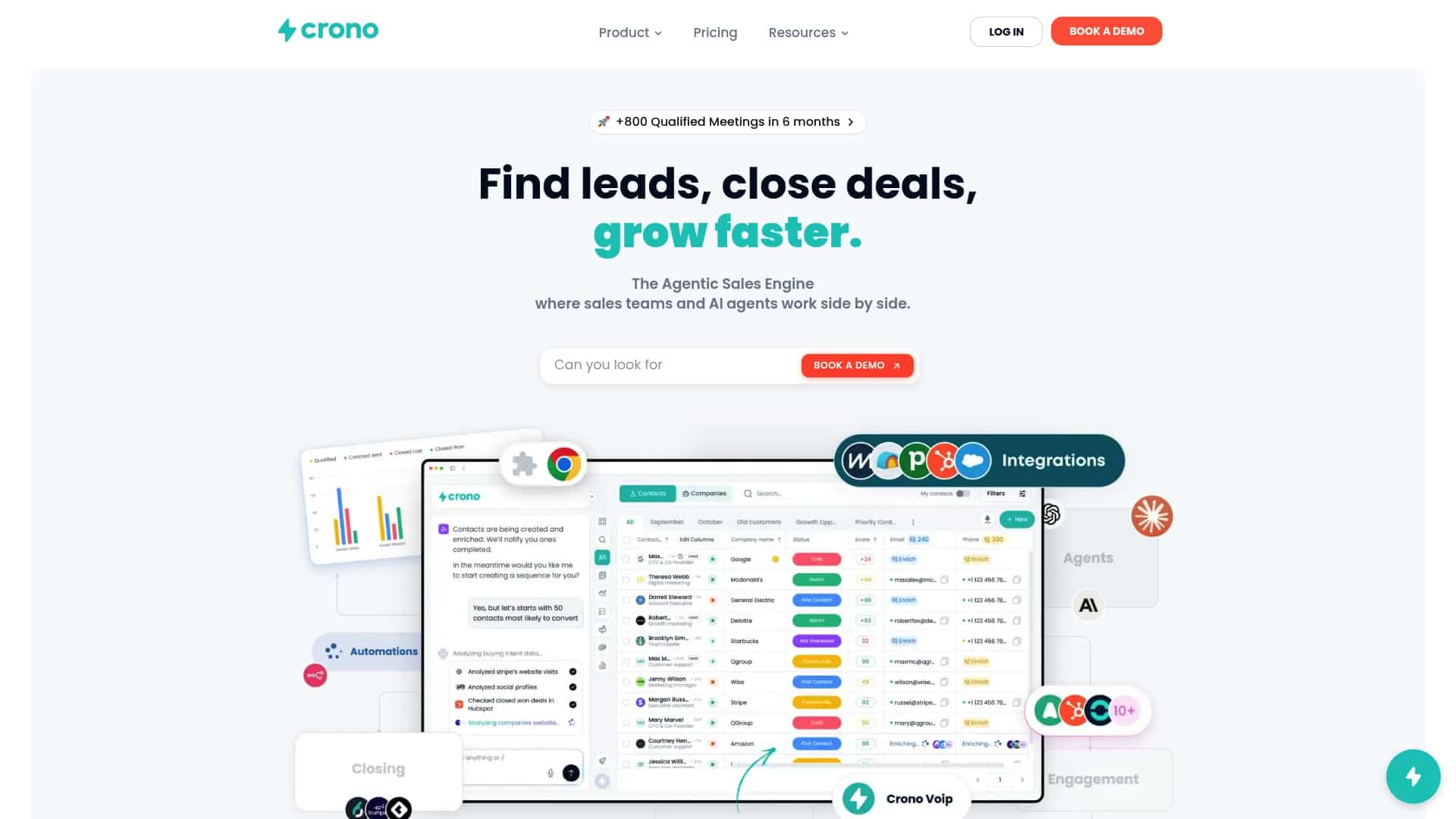
- For current plan details and pricing, please refer to our pricing page and the Agentic Sales Engine section on our website.
- Enterprise pricing is available on request for teams that need broader rollout support.
Check current plans and credit tiers on our pricing page and see which fits your team’s rollout stage.
FAQ
What is revenue intelligence software?
Revenue intelligence software combines CRM data, sales activity, conversation transcripts, and product usage signals into a single model that predicts deal outcomes and flags risk early. It differs from standard CRM reporting because it analyzes patterns across signals rather than just displaying fields a rep entered manually.
What are the best market intelligence tools on the market today?
There’s no single definitive ranking, since vendor fit depends on existing CRM, team size, and data maturity. The ISG Buyers Guide for revenue intelligence evaluates platforms on product capability, platform experience, and customer experience, and that scoring framework is a reasonable starting point for comparing options against your own requirements.
What is the best retail business intelligence software?
Retail-specific business intelligence tools typically focus on inventory, point-of-sale, and demand forecasting rather than B2B pipeline and forecast signals, so they sit outside the revenue intelligence category this guide covers. For B2B sales teams, the evaluation checklist above, data model accuracy, explainability, and governance, applies regardless of industry vertical.
What is the best way to forecast revenue?
The most reliable approach fuses multiple signal types, CRM data, engagement activity, conversation signals, rather than relying on a single input like rep-entered stage. Analyst guidance on revenue operations points to signal fusion paired with data governance as the combination that produces dependable forecasts, with regular calibration against actual outcomes.
Sources
- ISG Buyers Guide — Revenue Intelligence (2026)
- Revenue Intelligence implementation for enterprises — MarketsandMarkets (2025)
- Revops
- TMCNET coverage of ISG revenue intelligence findings (2026)
